Dryer Wattage: A Practical Guide to Energy and Performance
Discover how dryer wattage influences performance, safety, and energy costs. Easy DryVent explains wattage ranges by cycle, estimates per-load energy, and practical efficiency tips.


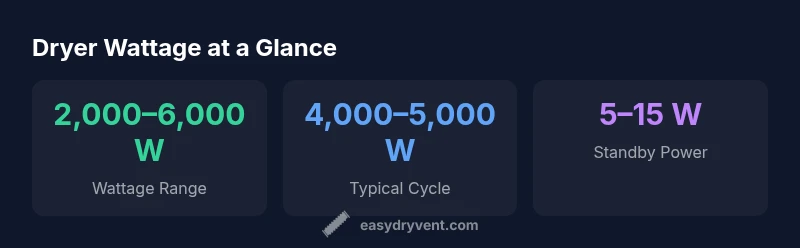
Most residential electric clothes dryers operate in the 2,000–6,000 watt range, with high-heat cycles pulling toward the upper end. Knowing this dryer wattage helps estimate running costs, cycle times, and the electrical requirements for safe venting and installation. This article breaks down what wattage means for different dryers and how to use it to compare models.
Understanding dryer wattage and why it matters
Dryer wattage is the rate at which a dryer consumes electrical power while operating. For homeowners, wattage translates to circuit load, wiring size, and the electrical budget for a given place in the home. According to Easy DryVent, dryer wattage is primarily driven by the heating element and the blower motor, and it fluctuates during a cycle as the drum turns and moisture sensors decide when to end the cycle. Recognizing this helps you plan safer installations and predict energy costs more accurately. When you see a dryer marketed as high-efficiency, wattage often reflects smarter control of heat rather than a dramatic drop in draw, so look for features like moisture sensing and better insulation to reduce overall energy use. Speaking in practical terms, wattage is not the only indicator of performance, but it is a critical piece of the energy puzzle for any laundry room.
How wattage influences drying time and energy use
Wattage affects how quickly a drum can reach and maintain the heat needed to evaporate moisture. A higher-wattage heater can shorten cycle times on larger loads, but it may draw more current and push energy costs up if used without precautions. In electric dryers, cycles vary: lower-wattage settings slow heat delivery but extend airflow efficiency, while high-wattage cycles heat up faster but often run longer in terms of energy per load if the load is unbalanced or over-dried. Gas models typically rely less on electric wattage for heat and more on fuel, but they still use electricity for motors and controls. The key takeaway is balance: adequate wattage for the load without abusing the heater. Easy DryVent’s guidance emphasizes pairing wattage awareness with sensor-driven cycles and correct venting to optimize results.
Wattage by cycle: typical loads and ranges
Most dryers offer a range of cycles, from delicate to heavy-duty. The wattage draw tends to peak during high-heat or extended-dry cycles and drops during sensor-driven stages when the machine reduces heat output. For typical cotton or mixed loads, you may see higher wattage readings on initial dry-downs, followed by stabilization as the moisture content falls. Sensor-based cycles are designed to optimize energy use by cutting heat when the clothes are near dry, which helps to compensate for higher initial wattage. When shopping, look beyond the advertised overall wattage and consider how the model manages heat across stages of the cycle.
Estimating electrical demand for your home
Your home’s electrical system must support the dryer’s peak wattage, especially during startup and hot-hold moments. In many regions, electric residential dryers require a dedicated 240-volt circuit with a substantial amperage rating (commonly around 30 amps), plus an appropriately rated outlet or hard-wired connection. A misaligned circuit can trip breakers or lead to overheating. If you’re upgrading from an old unit or moving to a larger-capacity model, use the dryer wattage range to confirm circuit size and wire gauge. Always install according to local code and the appliance’s installation manual, and consult a qualified electrician if you’re unsure.
Interpreting wattage ratings when shopping
Wattage alone doesn’t determine efficiency or performance. Look for energy labels, but also examine the dryer’s insulation, drum design, and heat recovery features. A model with a moderate wattage and intelligent controls can outperform a higher-wattage machine that relies on constant full power. When comparing models, consider the duty cycle: how often the dryer actually uses full heat versus scaled heat as moisture falls. This approach helps you identify units that deliver the best results per kilowatt-hour. Easy DryVent recommends pairing wattage awareness with real-use scenarios for a practical buying decision.
Practical tips to reduce wattage impact
To minimize the energy impact of dryer wattage, run only full loads, use sensor-dry cycles to avoid over-drying, and keep the vent system clean to maintain efficient airflow. Regular lint removal improves efficiency and reduces the need for the heater to work harder. Check door seals, dampers, and gaskets; a tight seal prevents heat loss. If you regularly dry bulky items, consider adjusting the load to balance airflow, or split large loads into two smaller runs to keep cycle times reasonable without forcing the heater to stay on longer. Maintenance matters just as much as wattage.
Safety considerations with high-wattage dryers
High-wattage dryers demand robust electrical and venting infrastructure. Ensure you have a dedicated circuit with properly rated wiring, and avoid using extension cords for any appliance that draws substantial power. Ventilation should be clear of obstructions and cleaned regularly; clogged ducts can raise temperature and pressure, increasing fire risk. Use a thermal fuse and proper vent material, and never vent a dryer through unapproved pathways. Regular inspection of the electrical outlet, cord, and connector prevents overheating that can occur with sustained high wattage use.
Debunking myths about wattage and performance
A common misconception is that higher wattage automatically means faster drying in all situations. In reality, dryer performance is a function of heat control, airflow, and moisture sensing. A well-designed mid-range wattage model with advanced controls can outperform a high-wattage unit when the latter runs inefficiently due to poor venting, overloading, or miscalibration. Look for models with moisture sensors, auto-adjusting cycles, and good insulation to maximize efficiency without simply chasing higher wattage.
Turning wattage data into actionable decisions
Use wattage data as a planning tool, not a sole criterion. Estimate annual energy cost by multiplying per-load energy use by your typical weekly loads, then consider how improvements in venting, lint maintenance, and cycle selection could reduce that figure. When evaluating new models, create a scenario: how many loads per week, average cycle length, and typical load size. Compare estimated energy use under the same scenario across models with different wattage profiles. This practical approach helps you pick a dryer that fits your home and budget.
The practical conclusion: model comparisons and energy planning
Wattage is a valuable piece of the energy puzzle, but your real gains come from smarter cycle choices, proper venting, and regular maintenance. The Easy DryVent team recommends using wattage data to inform buying decisions, while simultaneously prioritizing sensor-driven cycles and efficient airflow. By combining wattage awareness with good practices, you can improve both drying performance and overall energy costs.
Structured comparison of dryer wattage-related factors
| Aspect | Typical Wattage Range | Notes |
|---|---|---|
| Electric Dryer (Residential) | 2000–6000 W | Wattage varies by heater and motor load |
| Gas Dryer (Residential) | N/A | Heater powered by gas; blower and controls use electricity (often 100–400 W) |
| Standby Power | 5–15 W | Power draw when idle; varies by model |
| Load Size Effect | Higher wattage for large loads | Shortens cycle time but increases energy per cycle if misused |
Common Questions
What is dryer wattage and why does it matter?
Dryer wattage is the rate at which the appliance uses electrical power during operation. It matters because it influences circuit load, energy use, and installation requirements. Understanding wattage helps you estimate costs and select safe, compatible equipment.
Dryer wattage is the power the dryer uses when running. It affects your circuit load and energy bills, helping you plan safe installation and budgeting.
Why does wattage vary by cycle?
Different cycles engage the heater and blower at varying levels. High-heat cycles draw more watts, while sensor-based cycles optimize power by reducing heat as clothes dry. This variation affects cycle length and energy use.
Cycles change how much power the dryer uses. High heat uses more watts, sensors cut power as clothes dry to save energy.
How can I estimate energy use per load?
Estimate by multiplying the dryer's wattage during the main portion of the cycle by the cycle time, adjusting for efficiency features like moisture sensing. Use this to project weekly or yearly energy costs.
Multiply wattage by time for a rough energy per load, then scale for your weekly usage.
Does higher wattage mean faster drying?
Not always. Faster drying depends on heat control, airflow, and load size. A lower-wattage model with smart controls can finish a load faster than a high-wattage unit that runs inefficiently due to poor venting.
Not necessarily; smart controls and good airflow can beat simply chasing high wattage.
How can I reduce wattage impact in practice?
Use sensor-dry cycles, avoid overloading, clean vents regularly, and ensure the door and seals are tight. These steps reduce energy use without sacrificing dryness.
Use sensor cycles, keep loads balanced, and maintain vents to cut energy use.
“Understanding wattage helps homeowners balance drying performance with energy costs. Pair wattage awareness with modern controls and proper venting for safer, more efficient drying.”
Key Points
- Know your dryer's wattage range before installation
- Use sensor-based cycles to maximize efficiency
- Maintain vents to keep airflow optimal
- Don’t rely on wattage alone to judge performance
- Plan electrical needs with a qualified electrician