How to Put Dryer Hose Back On: A DIY Guide
Learn how to safely reattach your dryer's vent hose with our step-by-step guide. Easy DryVent shares practical tips for a secure connection, proper clamp use, and maintenance to prevent lint buildup and fire hazards.


To correctly put the dryer hose back on, unplug the dryer, inspect the vent and hose for damage, and reattach using a sturdy clamp or coupler. Ensure the connection is snug, free of kinks, and sealed with metal foil tape. Run a test cycle and inspect for leaks or lint at the joints. According to Easy DryVent, a secure hose connection improves safety and efficiency.
Why Reattaching the Dryer Hose Properly Matters
A correctly attached dryer vent hose is essential for safe, efficient drying. When the hose is loose or damaged, hot air and lint can escape into your laundry area, increasing the risk of fire and reducing dryer performance. A proper connection minimizes resistance, speeds up drying times, and lowers energy costs. The Easy DryVent team emphasizes that routine checks of the hose, clamps, and vent path are part of responsible home maintenance. By ensuring a tight, damage-free seal, you protect your home from fire hazards and improve overall dryer efficiency.
In addition to safety, a well-sealed vent path reduces lint accumulation in the surrounding area, which helps with indoor air quality and reduces the frequency of maintenance cleanouts. This is especially important in homes with pets or occupants who suffer from allergies. Regularly inspecting and reattaching the hose when needed is a small step with big returns for long-term reliability.
Assessing Your Hose and Vent System
Before you attempt a reattachment, take stock of the components. Inspect the dryer vent hose for visible cracks, holes, or crushing along its length. Look at the exterior vent outlet for any signs of corrosion or damage. Check clamps and couplers to ensure they grip the hose securely without slipping. If the hose has become brittle or cracked, replacement is safer than reattachment. Remember, a damaged hose can negate the benefits of a proper reattachment and may still pose a fire hazard. Easy DryVent recommends using metal hoses rated for high heat rather than flimsy plastic variants to improve safety and longevity.
Keep an eye on the path of the vent, avoiding sharp bends or squeezes that create back pressure. A smooth path helps airflow and reduces wear on the hose and dryer components. During inspections, remove lint from the exterior vent opening and the interior lint trap area to lower fire risk and improve efficiency.
Safety First: Power, Tools, and Personal Protective Gear
Always begin with safety: unplug the dryer from its power source to prevent accidental activation. Wear gloves to protect your hands from sharp edges and hot metal, especially if you’re handling metal clamps. Gather all needed tools before you start: screwdrivers, pliers, a utility knife, and replacement clamps or a new vent hose if needed. A safety-first approach reduces the chance of injury and helps you stay organized during the reattachment process. Easy DryVent stresses that working in a well-lit area with good ventilation makes the task safer and more comfortable.
Choosing the Right Hose and Clamps
Select a metal vent hose rated for dryer use and a compatible clamp or coupler. Metal hoses resist heat and lint better than plastic, reducing fire risk and maintaining airflow. When choosing clamps, prefer robust, screw-type hose clamps that you can tighten firmly. Foil duct tape is not a substitute for proper clamps; use it only to seal minor gaps when paired with a secure clamp. This combination provides a durable, weather- and lint-resistant connection that lasts longer and performs more reliably.
Step-By-Step Preparation Before Reattachment
Clear the area around the dryer and vent to give yourself space to work. Confirm the hose length is appropriate for the path and doesn’t create sharp bends. Clean any lint buildup from the dryer vent opening and the exterior vent cap. If you replaced the hose, attach the new hose to the dryer first, leaving room to maneuver. Make sure the hose ends are clean and dry before you connect them to prevent slippage and ensure a tight seal.
Step-By-Step In-Depth: Reattaching the Hose
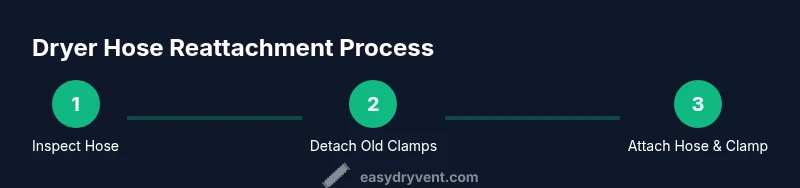
This is where the structured steps from the guide come into play. Start by aligning the hose with the dryer vent outlet, ensuring the opening is fully visible and unobstructed. Slide the hose onto the dryer outlet and secure it with a hose clamp. Tighten the clamp until it’s firm but not so tight that the hose is crushed. Use the same method at the wall vent or ceiling vent, ensuring both ends are aligned with the airflow direction. After installation, gently tug on the hose to verify a secure fit and that there are no gaps or loose segments.
If you encounter resistance when sliding the hose over the outlet, recheck for burrs or misalignment and remove any obstructions. Temperature changes can cause hoses to expand and contract slightly, so re-torque clamps after the system cools. Finally, verify there’s no visible air leakage around joints by feeling for warm air escaping during a short test run.
Maintenance Tips to Extend Hose Life and Safety
Establish a routine to inspect the hose and clamps every few months. Clean lint from the lint trap and the vent opening regularly to maintain airflow. Replace worn clamps promptly and consider upgrading to a metal vent hose if you notice kinks or wear. Keep the exterior vent cap clear of debris, and ensure the path remains straight with minimal bends. Regular maintenance reduces fire risk and keeps your dryer running efficiently.
Troubleshooting: When Reattachment Seems Fine but Problems Persist
If you still notice reduced airflow, excessive lint, or unusual dryer heat after reattachment, there could be a deeper issue in the vent system or the dryer itself. Recheck the entire vent path for blockages, and consider scheduling a professional inspection if you detect persistent leaks or if the dryer becomes unusually hot. Easy DryVent recommends addressing these concerns promptly to prevent further damage and potential fire hazards.
Tools & Materials
- Dryer vent hose (metal)(5- to 8-foot length is typical; resistant to high heat)
- Hose clamps (metal, screw-type)(One for each end; stainless steel preferred)
- Coupler or duct connector(Ensure compatibility with hose diameter)
- Screwdriver (Phillips #2 or flathead)(Used to tighten hose clamps)
- Pliers or adjustable wrench(For securing clamps and removing obstacles)
- Foil duct tape (UL-listed)(Use only to seal minor gaps if needed; not a substitute for clamps)
- Safety gloves(Protect hands from sharp edges and hot surfaces)
- Utility knife(Cutting tape or trimming hose if necessary)
- Dust mask (optional)(Reduces inhalation of lint particles)
Steps
Estimated time: 20-40 minutes
- 1
Unplug and prepare
Unplug the dryer from the electrical outlet and move it away from the wall. Clear the area so you can access both ends of the vent hose. This prevents accidental activation and gives you space to work safely.
Tip: Always verify the dryer is completely cool before touching hot components. - 2
Inspect hose and vent
Carefully inspect the hose for cracks, kinks, or signs of wear. Check the wall vent and the dryer outlet for obstructions or damage. Replace any compromised parts before reattachment.
Tip: If you find dents or holes, replace the hose rather than attempting a repair. - 3
Remove old clamps and cleanup
Loosen and remove existing clamps. Clean any lint from the hose ends and the outlets to ensure a tight seal when reattaching.
Tip: Dispose of damaged clamps properly and avoid reusing worn hardware. - 4
Attach the hose to the dryer outlet
Slide the hose onto the dryer's outlet, ensuring the opening is fully seated. Position the hose straight, avoiding twists or severe bends.
Tip: Leave just enough slack near the appliance to accommodate vibration without sagging. - 5
Secure with clamps
Place the hose clamps over each end and tighten securely with a screwdriver. Ensure the clamp sits flush and does not indent the hose.
Tip: Avoid over-tightening, which can crush the hose and restrict airflow. - 6
Seal joints if needed
If there are small gaps, apply a thin layer of foil duct tape around the joints after tightening clamps. Do not rely on tape alone for a long-term seal.
Tip: Tape should not be used as the primary fastening method; clamps do the heavy lifting. - 7
Connect to the wall vent
Repeat the attachment process on the wall or ceiling vent as applicable. Ensure the path remains straight and free of kinks.
Tip: Test fit first without tightening to confirm alignment before final securing. - 8
Test run and check for leaks
Plug the dryer back in and run a short cycle to verify airflow and seal integrity. Feel around joints for escaping air or lint leakage and address any leaks immediately.
Tip: If you smell burning or see excessive heat around joints, stop and recheck connections. - 9
Final inspection and cleanup
Do a final visual and tactile check, wipe away any remaining lint, and ensure the vent cap outdoors is clear. Schedule periodic inspections to maintain a safe, efficient vent system.
Tip: Record the date of reattachment for future maintenance.
Common Questions
How can I tell if the dryer vent hose is properly attached?
A securely attached hose will have clamps snug at both ends, no gaps, and will not pull away when gently tugged. There should be no visible lint escaping from joints during a test run. Regular inspection helps ensure the connection remains tight over time.
A properly attached hose is snug at both ends with no gaps, and it should stay put when you tug gently. If you see lint or air escaping, recheck the clamps and joints.
Is duct tape an acceptable method to secure the hose?
Duct tape should not be the primary fastening method. Use metal hose clamps to secure the hose, and reserve foil tape for sealing only small gaps after the clamps are in place.
Tape is not the main fix here—use clamps and only seal minor gaps with foil tape if needed.
How often should I inspect the hose and vent path?
Inspect the hose, clamps, and vent path every few months to catch wear, tears, or blockages early. More frequent checks are advised in households with high laundry volumes or pets that shed lint.
Check every few months, or more often if you do a lot of laundry. Look for wear and blockages.
Can I reconnect the hose without tools?
Basic hose reattachment usually requires at least a screwdriver to tighten clamps and pliers to adjust fittings. Some hoses use quick-release clamps, but most reliable methods rely on screw-type clamps for a secure seal.
You’ll typically need a screwdriver and possibly pliers to secure the clamps.
What safety signs indicate a clogged vent?
If your clothes take longer to dry, the dryer feels hotter than normal, or you notice a noticeable amount of lint around the vent opening, these can indicate a clogged vent. Regular cleaning helps prevent performance loss and reduces fire risk.
If drying takes longer or the dryer is unusually hot, check for a clog and clear lint.
Should I replace the hose if it’s cracked or damaged?
Yes. A cracked or damaged hose should be replaced rather than repaired. Damaged hoses reduce airflow and increase fire risk, so replacement with a compatible metal hose is the safer choice.
If it’s cracked or damaged, replace it with a compatible metal hose.
Watch Video
Key Points
- Unplug the dryer before starting any work
- Use a metal vent hose and secure clamps properly
- Inspect the vent path for damage and blockages
- Seal joints only after a secure clamp connection
- Test run and monitor for air leaks after reattachment