How to Get a Dryer Vent On: A Step-by-Step Guide
Learn how to get a dryer vent on safely and efficiently with Easy DryVent. This step-by-step guide covers planning, tool lists, installation tips, and safety precautions.


Goal: safely install or re-enable a dryer vent so heated air exits your home efficiently. You’ll verify the dryer is connected, route a compliant vent path to the outdoors, and seal joints to prevent leaks. Before you start, gather the right vent hose, duct clamps, and safety gear to avoid common hazards.
Why Getting a Dryer Vent On Is Essential
According to Easy DryVent Team, proper venting is essential for safety and efficiency. A correctly installed vent exhausts moisture, lint, and heat directly outside, reducing mold risk, energy waste, and the chance of dryer fires. Poor venting or blocked ducts leads to longer drying times, higher utility bills, and unnecessary wear on the dryer. Regular vent maintenance keeps airflow steady, lint from building up, and the unit running cooler. When you plan a vent, you’re not just chasing convenience—you’re protecting your home and family. Easy DryVent guidelines emphasize metal ducts, minimal bends, and a reliable exterior termination that opens freely. In short: a well-vented dryer dries faster, uses less energy, and is safer for daily use.
Safety First: Codes, Compliance, and Clearances
Vent installations must respect basic safety rules and local codes. Use metal ducts with smooth interiors; avoid plastic or foil ducts that trap lint and sag under heat. Ensure the run is as straight as possible and that the exterior vent is clear of obstructions, snow, or debris. Many jurisdictions require a minimum duct diameter and a proper exterior termination with a damper; check with your local building department for specifics. Follow manufacturer instructions for your dryer model and remember that a too-tight seal can impede airflow, while a loose one invites leaks. Easy DryVent's guidance notes that compliant venting reduces fire risk and improves drying efficiency; always prioritize a safe, code-compliant install.
Planning Your Vent Route: Indoor vs Outdoor
Think through whether you’ll route the vent through an interior wall or directly to an exterior wall. An exterior run with a short, straight path tends to perform best, but sometimes you must navigate joists, insulation, or closets. Plan for the fewest bends to maintain airflow and minimize lint buildup. If you’re venting through an attic or crawlspace, ensure there’s adequate airflow and avoid crushing the duct in tight spaces. Easy DryVent recommends mapping the route on paper first, then tracing on the wall to avoid surprises during installation. Consider weather exposure and potential blockage from leaves, snow, or debris when choosing a termination point.
Materials and Code Considerations for Your Vent
Your vent system should use rigid metal ducting for most of the run, with exterior vent hood and damper to control backdrafts. Avoid plastic, vinyl, or foil ducts as they deteriorate with heat and trap lint. Use UL-listed foil tape for joints and sturdy duct clamps to secure connections. Keep the diameter consistent (typically 4 inches) and ensure joints are clean and free of burrs. Check local codes for required clearances from windows, doors, and vents, as well as whether a permit is needed. Easy DryVent emphasizes following manufacturer guidelines and using metal ducts to maximize safety and efficiency.
Avoiding Common Mistakes: Practical Tips
Common mistakes include using flexible foil ducts, over-tightening joints, and losing the slope needed for moisture drainage. Do not place ducts in uninsulated spaces where condensation can form, and never vent into walls or attics. Regularly inspect the exterior termination for debris that could block airflow. Finally, document the vent path for future maintenance or upgrades. Easy DryVent notes that attention to detail during planning prevents costly retrofits later and keeps the system safe and efficient.
Tools & Materials
- Rigid metal duct (4-6 inch diameter)(Prefer straight runs; minimize elbows)
- Exterior vent hood with damper(Mounted on exterior wall; ensure damper opens freely)
- UL-listed foil tape(Seal all joints; avoid cloth-backed tape)
- Duct clamps(Secure joints; use with every connection)
- Safety glasses and work gloves(Protect eyes and hands during cutting and mounting)
- Tin snips or metal duct cutter(Clean, straight cuts)
- Measuring tape(Plan distance between dryer and exterior wall)
- Pencil or marker(Mark cut lines on duct)
- Stud finder (optional)(Locate studs for mounting support)
- Caulk or exterior sealant(Seal exterior gaps around vent hood)
Steps
Estimated time: 2-4 hours
- 1
Turn off and unplug the dryer
Power down the dryer and unplug the cord. Move the appliance to give yourself room to work and disconnect the existing vent if present. This prevents accidental startup during installation.
Tip: Always unplug the dryer before starting any vent work. - 2
Inspect the current vent path
Check the existing ducting for damage, lint buildup, or kinks. Note any bends that will affect airflow and plan replacements if needed.
Tip: Take a photo of the current arrangement for reference. - 3
Remove old or damaged duct
Carefully detach the old duct from the dryer outlet and exterior vent. Dispose of damaged sections and clean the area to prevent lint migration.
Tip: If you encounter rust or loose connections, consider replacing the entire run. - 4
Plan the shortest, straightest route
Map a route with the fewest bends to maximize airflow and minimize lint buildup. Avoid running ducts through insulation where heat could damage them.
Tip: Aim for less than three 90-degree bends when possible. - 5
Install the exterior vent hood
Mount the vent hood on the exterior wall, ensuring the damper moves freely and the hood is watertight. Seal around the exterior penetration to prevent moisture entry.
Tip: Use a gasket or silicone sealant around the hood flange. - 6
Run interior ducting
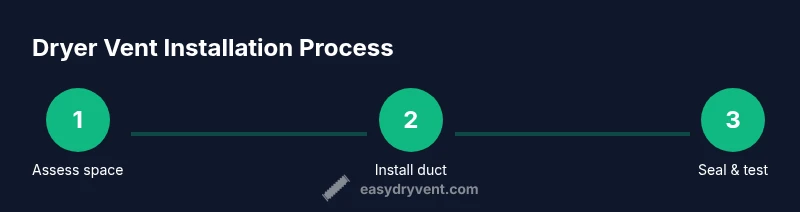
Connect rigid metal duct segments from the dryer’s exhaust to the exterior vent. Keep connections tight and straight; avoid crushing or crimping the duct.
Tip: Use foil tape on joints and secure with clamps; never use screws inside duct path. - 7
Seal joints and test for leaks
Seal all joints with UL-listed foil tape and re-check every connection. After assembly, run the dryer for a short cycle and feel for leaks around joints or a strong airflow from the exterior vent.
Tip: Check for lint near joints after the test, which indicates a leak. - 8
Final inspection and cleanup
Inspect the entire run for secure mounting and clearances. Clean up any loose lint and verify exterior airflow remains unobstructed. Document the route for future maintenance.
Tip: Keep a maintenance checklist in a safe place for future vent cleanings.
Common Questions
Do I need a permit to install a dryer vent?
Permit requirements vary by location. Many areas don’t require a permit for simple vent installation, but some jurisdictions do. Check with your local building department before starting.
Permit needs vary by location. Check with your local building department to be sure before you start.
Can I vent a dryer through a window instead of a wall?
Venting through a window is generally not recommended because it can leak hot air and moisture back into the home. A proper exterior wall vent with a damper is far safer and more efficient.
Venting through a window isn’t ideal; use a proper exterior wall vent with a damper for safety.
What duct material is recommended for new installations?
Use rigid metal ducting designed for high heat. Avoid plastic or foil ducts, which can sag, trap lint, and pose a fire risk.
Rigid metal ducting is recommended for safety and performance.
How often should I clean the dryer vent?
Inspect and clean the vent at least once a year, or more often if you notice longer drying times or excess lint.
Clean the vent at least once a year, or more if drying times slow down.
Is it safe to reuse an old vent?
You can reuse an old vent if it’s undamaged, properly aligned, and free of lint buildup. If you see corrosion, holes, or warp, replace it.
Reuse is possible if the vent is in good shape; otherwise, replace it.
Can improper venting cause problems inside the house?
Yes. Poor venting can lead to moisture buildup, mold risk, and lint in living spaces. Proper outdoor venting minimizes these issues.
Improper venting can cause moisture and lint issues indoors. Vent outside properly.
Watch Video
Key Points
- Plan a straight, short vent route for optimal airflow.
- Use rigid metal duct and exterior hood to reduce fire risk.
- Seal all joints and test airflow after installation.
- Follow local codes and safety guidelines; consider professional help if unsure.
- Schedule regular vent checks to maintain efficiency and safety.