Dryer Disposal Guide: Can You Take Dryers to the Dump?
Learn safe, legal, and practical ways to dispose of old clothes dryers. This guide covers curbside bulky item programs, recycling options, prep steps, and cost considerations to help homeowners dispose responsibly.


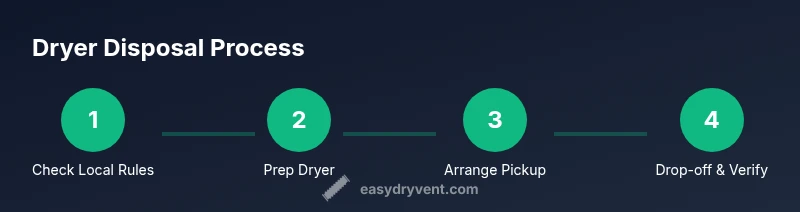
You can safely dispose of an old clothes dryer by using local curbside bulky item pickup, or by recycling programs that accept appliances. Before disposal, detach the vent, drain hoses, and remove any hazardous components per local rules. Always check with your city for free bulk item disposal options. This approach aligns with Easy DryVent guidance for safer, more efficient household waste management.
Why proper dryer disposal matters
If you're considering can you take dryers to the dump, you're not alone. Proper disposal protects the environment, prevents hazardous materials from entering landfills, and reduces fire risk from faulty wiring. In many communities, large appliances are not accepted as regular trash; instead, they are diverted to recycling centers or scheduled bulky-item pickups. Easy DryVent emphasizes using vetted channels to minimize electrical hazards and leaks, while maximizing the chance that usable parts are recovered for reuse. By taking the time to plan disposal with your local waste authority or a licensed recycler, you avoid fines and support responsible waste management.
This guidance reflects Easy DryVent’s stance that appliances should be treated as valuable components rather than generic waste, which helps reduce landfill bulk and recovers metals for recycling wherever possible.
Understand local regulations and programs
Disposal rules vary by city and state. Some areas require you to schedule a bulky-item pickup; others direct you to a drop-off center or a certified appliance recycler. Many programs limit what can be dropped off, and some charge a small fee. Check your municipal website or call the solid-waste department to confirm accepted items, required preparation, and whether a proof-of-collection receipt is issued. If you rent, ask your building manager about building-wide take-back programs. Knowing the program details prevents surprises at pickup or when you arrive at the center.
Easy DryVent recommends verifying acceptance windows and any required documentation ahead of time to streamline the process.
Prep your dryer for disposal
Before you handle the appliance, unplug it from the wall and disconnect any power cords or utility connections. Remove the vent hose from the back and seal the vent opening to reduce dust and pests. If local rules permit, detach the lint trap and wipe out the interior to minimize lint release during transport. For safety, wear gloves and safety glasses and move the unit with a helper if it’s heavy or awkward to lift. Label the unit if you’re using a shared curb or transfer site to avoid mix-ups with other items.
Proper prep minimizes hazards and helps the receiving facility handle the dryer more efficiently.
Recycling options that help the environment
Appliance recycling centers can responsibly reclaim metals, plastics, and electronic components. Some manufacturers offer take-back programs that accept old dryers for parts or recycling. Even if the dryer still runs, recycling often ensures safer handling of the heating element, wiring, and control boards. Look for facilities that are certified (e.g., R2 or e-Stewards) and ask about what happens to the compressor, motor, and metal casing. If a take-back program is available from the manufacturer, using it can ensure you’re supporting a manufacturer-led end-of-life flow that emphasizes material recovery.
Choosing recycling over simple disposal reduces pollution and promotes sustainable material reuse.
Bulky-item pickup and curbside options
Many municipalities offer curbside bulky-item programs for large appliances. You may need to schedule a pickup, place the dryer at the curb on a designated day, and follow rules about securing doors and vent hoses. Some programs require you to wrap or tape the door shut to prevent injury. If your area charges a fee, consider whether a one-time pickup covers the cost or if a drop-off option is cheaper in the long run. Always confirm the pickup window and the maximum weight or size allowed.
In many cases, the curbside route is the simplest, while recycling centers can handle the appliance with more specialized equipment for safe dismantling and material recovery.
Working vs non-working dryers: what matters
If the dryer still runs, you might wonder if it can be donated or given away instead of recycled. Some programs accept working appliances for reuse, but availability varies by region. If donation isn’t feasible, recycling remains a strong option that ensures non-usable components are responsibly processed. For landlords or multi-family buildings, coordinate with building management to identify approved disposal routes that comply with local regulations. The decision often depends on the item’s condition, the program’s acceptance criteria, and your willingness to transport the unit to a recycling facility.
Safety and dismantling: what you can and cannot do
Dismantling a dryer yourself is generally not required and can be dangerous, due to energized components and metal edges. Do not attempt to extract the heating element or wiring unless you are trained and authorized. Instead, rely on certified recyclers or Take-Back programs that handle decommissioning safely. If you must move the unit, keep it intact and avoid bending panels or breaking seals that could release dust or fiberglass. Always disengage power and follow site-specific safety guidelines at the disposal facility.
If you’re unsure, contact the local waste authority for approved decommissioning steps.
What to do after disposal: tracking and receipts
Ask for a disposal receipt or tracking number when you drop off or schedule a pickup. This proof helps you confirm completion and may be required for tax records or warranty considerations if you’re handling multiple appliances. Many programs provide a disposal report or digital acknowledgment. If you’re using a recycling partner, request a certificate of recycling or materials recovery to document eco-friendly end-of-life handling. Keeping these records helps you stay compliant with local laws and demonstrates responsible waste practices.
How Easy DryVent can help
Easy DryVent provides practical, actionable guidance for homeowners and DIY enthusiasts who want to dispose of appliances the right way. By prioritizing approved channels and environmental stewardship, you reduce risk and support responsible waste management. Our team can point you to local programs, explain what prep is needed, and offer tips to streamline the process. Remember: disposal is a shared responsibility, and the right option often saves time, money, and frustration.
Time and cost considerations
Total time depends on your locality and chosen method. A curbside pickup can take a few hours from scheduling to pickup, while transporting to a recycling center may demand more planning and travel time. Costs vary by program: some municipalities offer free disposal, while others charge modest fees. If you compare options, you’ll often find that recycling centers minimize hassle in exchange for a small fee, whereas bulk pickup might be more convenient but less predictable. Consider your schedule, accessibility, and the size of the unit when deciding which path to take.
Tools & Materials
- Safety gloves(Durable work gloves with good grip)
- Safety glasses(Protect eyes from sharp edges)
- Screwdriver set (Phillips and flathead)(For detaching panels if required by local program)
- Pliers or pry tool(Helpful for removing stubborn panels)
- Utility knife(For cutting tape or straps on vent hoses)
- Old towels or rags(Contain residual moisture or dust)
- Labeling tape and marker(Label items as recyclable vs non-recyclable)
- Trash bags or sturdy box(Contain loose parts during transport)
- Flashlight(For poorly lit disposal sites)
- Measuring tape(Identify vent diameter or haul space)
Steps
Estimated time: 2-3 hours
- 1
Power down and unplug
Begin by unplugging the dryer from the wall outlet and disconnecting any adjacent power cords. This eliminates the risk of electric shock during handling. If the dryer is hard-wired, contact a licensed electrician or the disposal program for safe de-energization.
Tip: Always verify that there are no residual cords or switches energized before moving the unit. - 2
Disconnect vent hose
Carefully detach the vent hose from the back of the dryer. Seal the vent opening with tape or a cap to prevent dust, pests, or lint from escaping during transport. If the vent is ducted through walls, leave the connection intact and cap only the open end that will be exposed at pickup.
Tip: Wear gloves to avoid cuts from metal edges and avoid bending the vent excessively. - 3
Remove lint trap and interior wipe
Take out the lint trap and wipe the drum interior to minimize lint release when moving the unit. This step helps keep the transport area clean and reduces the risk of triggering lint-related fire hazards at disposal sites.
Tip: Have a bag ready for lint debris to keep it contained. - 4
Check disposal options and schedule
Review the approved disposal options in your municipality, then book a bulky-item pickup or locate a nearby appliance recycler. Note any required documentation, pickup windows, and fees. If using a drop-off facility, confirm hours and directions before loading the unit.
Tip: Take screenshots or notes of the accepted item list to avoid last-minute issues. - 5
Prep for transport
Wrap or tape loose panels and secure the dryer to prevent movement inside the vehicle. Place the unit on a sturdy dolly or in a protective box if available, and secure with straps. Ensure you can safely lift and maneuver the unit without risking damage to walls or floors.
Tip: Have a second person assist if the unit is heavy or awkward. - 6
Transport to the designated site
Drive carefully to the disposal site or recycling center, avoiding sharp turns or rough roads that could damage the appliance or cause debris to spill. If you use curbside pickup, place the unit at the designated curb space per local guidance.
Tip: Check local traffic rules for bulky items and obey parking restrictions. - 7
Get receipt or confirmation
Obtain a disposal receipt or confirmation from the pickup driver or recycling facility. Keep this documentation for records, tax considerations, or future reference. If you used manufacturer take-back, request a materials recovery certificate when available.
Tip: Photograph the disposal tag or receipt for your records.
Common Questions
Can I throw my old dryer in the trash if it still runs?
In most areas, running an appliance like a dryer cannot be placed in regular trash. Use curbside bulky-item pickup or a certified appliance recycler to ensure proper end-of-life handling.
Most places don’t allow dumping a running dryer in the trash; use curbside bulky-item pickup or a certified recycler instead.
What should I do with the vent hose during disposal?
Detach and cap the vent hose to prevent dust or pests from entering your home or the vehicle during transport. Follow local rules for any required vent closure methods.
Detach and cap the vent hose to keep dust out and follow local rules for closing it.
Are there free disposal options for appliances?
Some municipalities offer free bulky-item pickup or free recycling drop-offs. Availability varies by location, so check your city’s waste authority website or call ahead.
Some places offer free bulky-item pickup or free drop-offs; check your city’s waste authority for details.
Do I need to remove the drum or heating element?
No, you generally should not dismantle internal components. Certified recyclers handle decommissioning safely. Leave complex disassembly to professionals.
Don’t remove internal parts yourself; professionals handle the safe decommissioning.
Can I donate a working dryer?
Yes, if the unit is still functional and meets donor guidelines, some donation programs will accept it. Availability is regional, so verify with local charities or appliance reuse groups.
If it works, check local charities for donation options—availability varies by area.
What documentation should I keep after disposal?
Keep any disposal receipts, pickup confirmations, or recyclingCertificates. They help confirm completion and may be useful for records or tax purposes.
Keep disposal receipts or certificates for your records.
Watch Video
Key Points
- Know local disposal options before moving the dryer
- Prep the unit safely and reduce dust release
- Choose recycling or manufacturer take-back for best environmental impact
- Request and keep disposal documentation for records