Free Dryer Pick Up: A Practical Guide to Safe, No-Cost Removal
Explore how free dryer pick up works, who offers it, and how Easy DryVent helps homeowners recycle bulky appliances safely. Learn eligibility, preparation steps, safety tips, and practical options to maximize curbside disposal or donation.


You can arrange free dryer pick up to remove an old or bulky dryer curbside, often with no paid disposal required. This quick answer outlines who offers the service, eligibility, and the essential preparation steps, so you can recycle or donate responsibly and safely.
What is free dryer pick up and why it matters
Free dryer pick up is a curbside removal option offered by many municipalities and participating haulers that lets homeowners dispose of bulky appliances without paying a disposal fee. According to Easy DryVent, this service reduces landfill waste and simplifies the disposal process for busy households. The concept is straightforward: you schedule a pickup window, prepare the unit according to local guidelines, and the appliance is removed at no direct charge. Availability varies by location, so it’s essential to check with local waste management or recycling partners. Beyond convenience, free pickup supports responsible recycling of metals and components and helps keep venting systems safe by removing old, nonfunctional units from living spaces. For DIYers and homeowners, understanding eligibility and preparation is the key to a smooth experience.
How free dryer pick up works with Easy DryVent
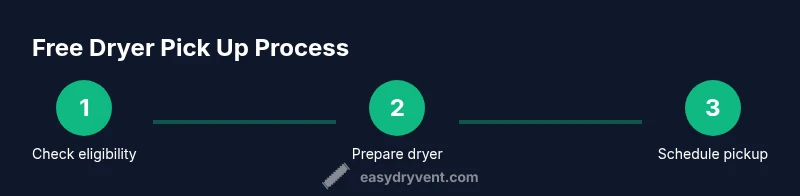
Free dryer pickup with Easy DryVent follows a simple sequence designed for clarity and safety. First, confirm whether your area supports no-cost removal by visiting the Easy DryVent partner directory or calling customer support. If eligible, you’ll select a pickup window that fits your schedule and prepare the appliance. On the day of pickup, a trained technician or authorized hauler arrives, confirms the item, and removes it from curbside or a designated staging area. Throughout the process, you’ll receive updates via SMS or email so you know when to expect the team. Easy DryVent’s analysis indicates that areas with accessible pickup options tend to achieve higher recycling rates for bulky appliances, reinforcing the value of no-cost disposal for households.
What items qualify for free pick up
Qualifying items typically include standard electric or gas clothes dryers of a conventional size. Larger, unusually shaped, or heavily damaged units may require additional assessments or fees in some locales. It’s common for the program to exclude other appliances or installations that pose safety concerns, such as dryers with recalled parts or units that require special handling due to refrigerants or hazardous materials. Before scheduling, verify that your specific model is eligible, and prepare a quick description or model number to share with the coordinator. This helps minimize delays and ensures the pickup team brings the right equipment for safe removal.
Scheduling and eligibility criteria
Eligibility is often defined by location, the type of appliance, and the condition of the unit. Some programs cover only curbside pickup within a certain radius, while others partner with local donation centers or recycling facilities. If you live in a multi-unit building, you may need building management approval or a delivery/NA number to grant access on pickup day. The scheduling process usually involves an online form or a phone call, after which you’ll receive a confirmed window. In all cases, the sooner you verify eligibility and book, the more likely you are to secure a preferred time slot. Easy DryVent recommends starting the process at least a few days in advance to avoid last-minute constraints.
Preparing the dryer for pickup
Preparation is the linchpin of a successful pickup. Start by unplugging the unit from the power source and removing any attached cords or hoses where safe. If you have a gas dryer, do not attempt any gas line work yourself; arrange professional disconnect if required and follow local safety guidelines. Detach the vent duct and ensure the area around the dryer is clear of obstacles. If possible, remove the dryer's doors to reduce the risk of injury during transport and secure loose parts with tape or protective wrap. Photograph the unit before pickup for your records, and place the dryer in a visually accessible location that does not block sidewalks or driveways. These steps help ensure a quick, damage-free removal.
Safety considerations when moving appliances
Moving an old or bulky dryer can present risks, so prioritize safety. Wear gloves and sturdy shoes, use a dolly or helper for heavy units, and never lift with a rounded back. Keep pets and children away from the staging area, and tape down floor mats or rugs to prevent slips. If the dryer is in a tight space, measure doorways and hallways beforehand to avoid getting stuck. Check that there are no exposed wires or gas lines, and maintain a clean route from the appliance to the curb. Proper lifting technique and clear pathways reduce the chance of injuries and appliance damage.
Donating, recycling, and resale options
In some cases, the free dryer pick up option can be paired with donation or recycling pathways. If the unit is still operational, you may be able to donate it to a local charity or reuse center. If it’s beyond repair, confirm that the pickup service will deliver the unit to a certified recycler or metal recycler rather than dumping it in a landfill. Recycling facilities will separate metals, plastics, and circuitry for responsible processing. Even non-working dryers can sometimes be salvaged for parts. Checking with local nonprofits and recycling partners can maximize the environmental benefit and potentially provide you with a donation receipt for tax purposes.
How to book and what information you’ll need
Booking usually requires basic details: your address, preferred pickup window, and brief information about the dryer (make, model, condition). You may also be asked to provide accessibility notes—such as whether the unit is at ground level or requires stairs—and any building access instructions. Have photos ready in case you’re asked to confirm the unit’s condition. If you are Canceling or rescheduling, do so as early as possible to avoid fees or service charges. After booking, you’ll receive confirmation with a tracking number and day-of instructions. Keep that information handy in case the driver calls for directions or changes.
What to do if pickup is delayed or not available in your area
If your area doesn’t offer free pick up or if a preferred time slot isn’t available, consider alternatives such as donation drop-offs, local appliance recycling programs, or paid removal services. Some municipalities periodically expand their no-cost options, so it’s worth checking back. You can also inquire with manufacturers’ take-back programs for responsible disposal. While waiting, store the unit safely to prevent vandalism or weather damage. Easy DryVent recommends staying informed about program updates and checking social media or municipal notices for any changes to service coverage.
Cost savings and environmental impact
The primary benefit of free dryer pick up is cost savings—no disposal fee and less time spent coordinating a complex move. The environmental impact is also meaningful: removing bulky appliances from homes reduces improper disposal, enables better recycling, and helps conserve resources through component recovery. Even when a dryer can’t be donated, diverting it from landfills supports broader sustainability goals. As Easy DryVent notes, maximizing reuse and recycling aligns with responsible home maintenance and community welfare, making free pickup a practical choice for many households.
Final checklist to maximize success
- Confirm eligibility and booking details in advance. \n- Unplug, vent, and secure the dryer as described. \n- Clear a safe path to the curb and prepare a staging area. \n- Photograph the unit before pickup and keep documentation. \n- Verify access for the pickup team and share any codes or instructions. \n- Receive confirmation and tracking updates, then test the space after removal.
Note on post-pickup documentation and next steps
After the dryer is removed, you may receive a pickup receipt or certificate of disposal. Keep this for your records, especially if you itemize deductions or want proof of environmentally responsible disposal. If you donated the unit, ask for a donation receipt for tax purposes. If you recycled the unit, you might receive details about recovered materials. Easy DryVent emphasizes keeping records to verify the disposal pathway and the environmental benefits achieved.
Tools & Materials
- Internet-enabled device (phone or computer)(To schedule pickup, track status, and receive updates)
- Dryer model and serial number (optional)(Helpful for eligibility checks or donation intake)
- Protective gloves(For safe handling of dusty or heavy units)
- Dolly or moving straps(Helpful for heavy or awkward placement; avoid injuries)
- Clear staging area (path to curb)(Ensure 3–4 feet of clearance and no tripping hazards)
Steps
Estimated time: Total time: 30-60 minutes
- 1
Assess and inventory
Take a quick inventory of the dryer and any accessories. Note its condition and any damage. This informs eligibility and helps you communicate with the pickup team.
Tip: Photograph the unit from multiple angles before moving to document its current state. - 2
Check eligibility
Visit the Easy DryVent partner directory or call support to confirm no-cost pickup in your area and understand any size limitations.
Tip: Share the make, model, and condition to speed up eligibility confirmation. - 3
Prepare the unit (safely)
Unplug the dryer and disconnect any power cords. If gas, do not tackle the disconnect yourself; arrange professional assistance as needed. Detach venting where safe and accessible.
Tip: Remove dryer doors to reduce risk during transport and wrap loose parts. - 4
Clear the staging area
Move the unit to a clear path with at least 3 feet of clearance to the curb. Remove obstacles, cords, and rugs to prevent trips during loading.
Tip: Use a dolly or helper for heavy lifting to protect your back. - 5
Schedule and confirm
Complete the scheduling form or call to set a pickup window. Confirm access instructions and share gate codes or contact numbers if needed.
Tip: Ask for a pickup window extension if your schedule changes. - 6
Document the pickup
Keep the confirmation number and note any special access instructions. If you’re donating, request a donation receipt if available.
Tip: Capture a brief video or photo after the unit is loaded. - 7
Prepare for the driver’s arrival
Ensure the path is open, the curb is clear, and the driver has safe access to load the dryer. Be ready to greet and answer quick questions.
Tip: Have a phone nearby in case the driver needs directions. - 8
Verify pickup completion
When loading finishes, confirm the unit is removed and that the staging area is clear. Check for any debris that needs tidying.
Tip: Ask for a brief note of completion or a receipt if provided. - 9
Post-pickup documentation
Review any disposal certificates or receipts and store them with your records. If donated, confirm tax-deductible status with the charity.
Tip: Store records in a dedicated folder for easy access. - 10
Evaluate alternatives if needed
If pickup is delayed or unavailable, explore donation centers, municipal drop-offs, or paid removal as alternatives. Consider repurposing parts if feasible.
Tip: Check local recycling guidelines to maximize material recovery. - 11
Review and reflect
Reflect on the process to improve future appliance disposal, such as timing, preparation, and communication with service providers.
Tip: Note what worked well for future reference.
Common Questions
What does free dryer pick up include?
Free dryer pick up typically covers curbside removal of a standard electric or gas dryer when eligible. It may exclude certain situations or require additional fees for unusual items or inaccessible locations.
Free dryer pick up generally includes curbside removal of a standard dryer, depending on eligibility and location. Some cases may require extra steps or fees.
Are there size or weight limits for free pickup?
Most programs set general size limits and may handle typical household dryers. Very large or irregularly shaped units could require special handling or alternative options.
Size or weight limits vary by location. Check with your provider for specifics on your model.
Do I need to be home during pickup?
Scheduling usually allows you to set a pickup window when you or a representative can grant access. Some programs require someone to be present, while others allow curbside access with pre-arranged codes.
Most pickups need someone available during the scheduled window, but rules vary by area.
Can I use free pickup for a dryer in a rental building?
Yes, many programs accommodate multi-unit buildings, but you may need building management approval or specific access instructions. Always verify with the service provider.
Many services work in apartments, but confirm access details with the provider.
Will I receive a receipt or proof of disposal?
Most providers issue a pickup confirmation and may offer disposal or donation receipts. Request documentation if you need it for records or tax purposes.
You can usually get a pickup confirmation and sometimes a disposal receipt.
Can free pickup be combined with other items?
Some programs accept multiple bulky items in a single pickup, while others require separate bookings. Verify item compatibility and scheduling options when you book.
Check if additional items are allowed in one pickup when you book.
Watch Video
Key Points
- Verify eligibility before prepping the unit.
- Prepare the dryer safely and clearly.
- Schedule the pickup and confirm access details.
- Consider donation or recycling to maximize environmental impact.
- Keep documentation for records and potential tax benefits.