Difference Between a Dryer Cord and a Range Cord: Guide
Understand the difference between a dryer cord and a range cord, plus selection, installation, and maintenance tips for safety and code compliance.


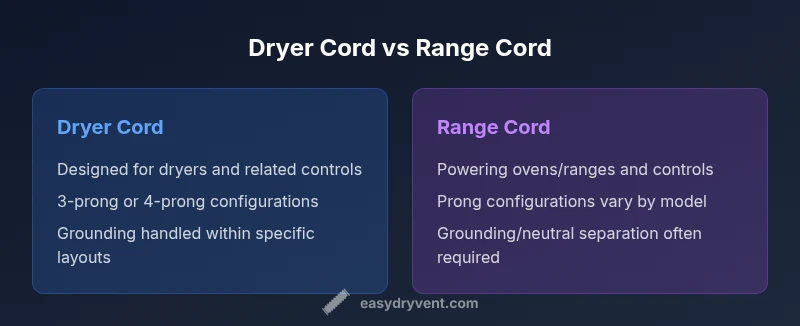
The difference between a dryer cord and a range cord is rooted in appliance type, outlet configuration, and safety requirements. Dryer cords are designed for clothes dryers and typically come in 3- or 4-prong configurations to support 240V operation, while range cords are tailored to ovens/ranges and may use different prong layouts based on local codes and appliance design. Always verify compatibility with both the appliance manual and the outlet before purchasing or installing any cord.
Why the Cord Difference Matters
In households across North America, clothes dryers and electric ranges share electrical infrastructure, yet they rely on different cord designs and outlet standards. The difference between a dryer cord and a range cord matters for safety, reliability, and code compliance. Using the wrong cord can disrupt grounding, create heat buildup, or cause tripped breakers. For homeowners and DIYers, recognizing these distinctions is the first step toward safer installations and longer appliance life. According to Easy DryVent, safe cord selection starts with matching the appliance type to the appropriate outlet configuration. This alignment reduces the risk of electric shock, wiring damage, and noncompliance with local electrical codes. As you read, keep in mind that cords are not universal parts; they are purpose-built for specific devices and environments.
Evolution of Cords and Codes
Cord designs evolved alongside electrical codes to improve safety. In the United States, the National Electrical Code (NEC) sets standards for outlet configuration, grounding, and cord termination. Over time, many jurisdictions adopted four-prong configurations for ranges and dryers to separate neutral from ground for better fault protection. Even when a cord physically fits an outlet, improper grounding or mixed configurations can undermine safety. The result is a practical rule: always pair the appliance with the cord type specified by the manufacturer and permitted by your local code. This pairing is not merely a suggestion; it is a safety baseline that protects families and property.
What a Dryer Cord Is Typically Designed To Do
A dryer cord is crafted to deliver stable 240V power to heat the drum and operate the drum motor and controls. Cords come in several prong configurations, most commonly 3-prong and 4-prong layouts. The 3-prong cord combines ground and neutral in a single conductor, while the 4-prong cord separates them to reduce electrical leakage and improve safety. The exact configuration your dryer uses depends on both the appliance model and the outlet. When replacing a cord, consult the user manual to confirm the required prong count, conductor gauge, and length. If you’re upgrading from a 3-prong to a 4-prong cord, verify that the outlet and the dryer’s grounding system support the change and that a compatible grounding strap is installed if needed.
What a Range Cord Is Typically Designed To Do
Range cords are built to power ovens and ranges that may require different voltage or current characteristics than a typical clothes dryer. Because ranges often have more complex control circuitry and extra heating elements, cord configurations can vary by model and region. Some ranges use a 3-prong cord for older installations, while many modern ranges use a 4-prong cord, with additional grounding considerations. In some jurisdictions, you may see a 5-prong configuration for certain commercial or specialty ranges. The key takeaway is to follow the appliance’s manual and confirm the outlet type before buying.
Wiring and Outlet Configurations: How They Shape Cord Choice
The cord you select must align with both the appliance and the outlet. Reverse-matching can compromise safety. For many homes, the dryer outlet is 30A or 50A, while range outlets can differ in amperage and prong arrangement. The outlet should correspond to the cord’s prong pattern, conductor gauge, and insulation rating. If you discover a mismatch—such as a dryer outlet paired with a range cord—do not proceed. Instead, install the correct outlet or replace the receptacle as needed under professional guidance. Always ensure the wall box and wiring are rated for the appliance’s demands.
Safety Considerations and Common Mistakes
Common mistakes include using an extension cord, using a damaged cord, or forcing a cord into an incompatible outlet. These actions pose shock and fire risks and can void warranties. Inspect cords regularly for cracks, exposed wires, or scorch marks. Do not bend cords sharply near connectors, and avoid tucking cords behind heavy appliances where heat and moisture accumulate. Use manufacturers’ recommended cords and have a licensed electrician verify the installation if the outlet or wiring appears outdated or damaged.
How to Determine Which Cord You Need: A Practical Step-by-Step
Step 1: Locate the appliance model number and check the manual for the recommended cord type and outlet configuration. Step 2: Inspect the outlet outlet type and prong layout in the wall. Step 3: Compare the cord’s prong pattern, gauge, and insulation rating with the manual’s specifications. Step 4: If you are unsure, contact the manufacturer or a licensed electrician for confirmation. Step 5: When in doubt, replace both the outlet and cord to meet current standards rather than attempting a workaround. This method minimizes risk and ensures compliance with codes.
Installation Tips That Save Time and Minimize Risk
Prepare before you connect by powering off the circuit at the breaker panel and confirming the appliance is cool. Keep the cord flat and away from heat sources. Route the cord so it won’t become pinched behind the appliance, and avoid proximity to water features or damp locations. Use proper strain relief and secure the cord along the back of the appliance. If you suspect the outlet is worn or has corrosion, have it inspected and replaced by a qualified electrician. These proactive steps help avoid intermittent faults and extend the life of both the appliance and the home wiring.
Maintenance Checklist for Cords and Outlets
Create a seasonal maintenance routine that includes visual inspection of both cord and outlet connectors for signs of wear or overheating. Clean the plug prongs with a dry cloth to remove dust and debris, and keep the area around the outlet free of clutter. Check for loose wall plates and verify that the cord remains properly seated in the outlet. If you notice discoloration, a char mark, or warmth during operation, stop using the cord and have an electrician evaluate the circuit and appliance. A proactive maintenance mindset reduces the risk of electrical fires.
Cost, Availability, and Replacement Considerations
Cord availability varies by region and model, and prices can reflect gauge, length, and prong configurations. In general, expect a range of options for both dryer cords and range cords, with compatibility and safety taking priority over price. When replacing cords, choose certified parts with correct labeling and listing. If you are replacing an outlet as well, ensure the wiring method and box rating match the cord’s amperage and the appliance’s requirements. Investing in high-quality components mitigates the risk of future failures and improves reliability.
Common Scenarios and Troubleshooting: Real-World Examples
You might encounter a situation where a range is wired for a four-prong cord but the installed outlet is a three-prong design. In such cases, do not force-fit a four-prong cord into a three-prong outlet; instead, correct the configuration to meet code requirements. Another scenario involves a dryer that heats but stops mid-cycle due to a loose connection at the wall plug. In these situations, unplug, inspect both ends for corrosion, and reseat firmly. If the outlet hums or becomes warm during use, shut off power and seek professional help. These examples illustrate why matching the cord to the appliance and outlet is not a minor detail—it’s a safety-critical step.
Practical Decision Framework for DIYers and Pros
Develop a quick decision framework: (1) verify appliance model and manual recommendations, (2) confirm outlet type and regional code applicability, (3) assess cord suitability (prong count, gauge, insulation), (4) ensure safe installation with correct strain relief and grounding, and (5) schedule professional inspection if wiring or outlet age exceeds safe limits. This framework keeps the process repeatable and minimizes the likelihood of unsafe configurations. By following these steps, homeowners can make informed decisions without guessing, and technicians can perform consistent, compliant work.
Comparison
| Feature | Dryer Cord | Range Cord |
|---|---|---|
| Typical prong configurations | 3-prong or 4-prong (dryer) | 3-prong or 4-prong/5-prong (range) |
| Primary purpose | Powering clothes dryers and their controls | Powering ovens/ranges and controls |
| Grounding approach | May combine ground and neutral in older 3-prong cords | Often separates ground and neutral in 4-prong cords |
| Outlet compatibility (general) | Outlet paired with dryer specification | Outlet paired with range specification |
| Code alignment | NEC rules for dryers; depends on local code | NEC rules for ranges; depends on local code |
| Common risks if mismatched | Grounding issues, overheating, shock risk | Grounding/neutral issues, fire risk, appliance fault trips |
The Good
- Enhances safety when correctly matched to appliance
- Clear compatibility guidance reduces mismatches
- Standardized listings help sourcing correct cords
- Protects warranties by ensuring proper installation
- Facilitates compliant upgrades or replacements
Negatives
- Requires exact appliance and outlet knowledge
- Wrong cord can void warranties and create hazards
- Regional code variations can complicate choices
Choose the correct cord for each appliance and outlet to maximize safety and compliance
Accurate cord selection prevents grounding and overheating risks. Always follow the manufacturer’s guidance and local codes; when in doubt, consult a licensed electrician.
Common Questions
What is the main difference between a dryer cord and a range cord?
The main difference is the appliance type they serve and the corresponding outlet configurations. Dryer cords are designed for clothes dryers, while range cords are designed for ovens or ranges. Each is built to meet specific safety standards and local codes, so using the correct cord is essential for safe operation.
The dryer cord serves a clothes dryer, and the range cord powers an oven or range. Each cord matches its appliance and outlet to meet safety standards.
Can I use a dryer cord for my oven or range?
No. A dryer cord is not interchangeable with a range cord because the outlet, prong configuration, and grounding requirements differ. Using the wrong cord can create shock or fire hazards and may violate code or warranty terms.
No, you should not interchange dryer and range cords. Use the cord specified by your appliance and local code.
How do I know which cord is compatible with my appliance?
Begin with the appliance manual to identify the recommended cord type and outlet configuration. Check the outlet’s prongs and ground setup, then verify the cord’s prong pattern, gauge, and insulation rating. If in doubt, contact the manufacturer or a licensed electrician.
Check the manual, confirm the outlet type, and compare cord specs. When unsure, consult a professional.
What safety precautions should I follow when replacing cords?
Always power down at the breaker, allow the appliance to cool, and ensure no moisture near the outlet. Inspect the cord and outlet for wear or damage, and use the correct strain relief and grounding provisions. If you see signs of damage, replace components and seek professional help.
Power off at the breaker and inspect for wear. If in doubt, have a pro handle the replacement.
Are cord replacements regulated by code?
Yes. Cord choices, outlet types, and grounding practices are governed by NEC and local codes, which may require specific prong configurations or four-prong grounding. Always verify current regulations for your region and appliance.
Yes. Follow NEC and local rules for cord type and grounding, and verify regional requirements.
Key Points
- Identify appliance and outlet type before buying
- Match prong configuration to the appliance and code
- Avoid extensions and damaged cords for safety
- Consult manuals or a pro for uncertain setups