Most Common Dryer Outlet: A Homeowner's Guide to Safe and Efficient Drying
Explore the most common dryer outlet configurations, safety implications, and practical installation tips to ensure safe, efficient operation in your home.


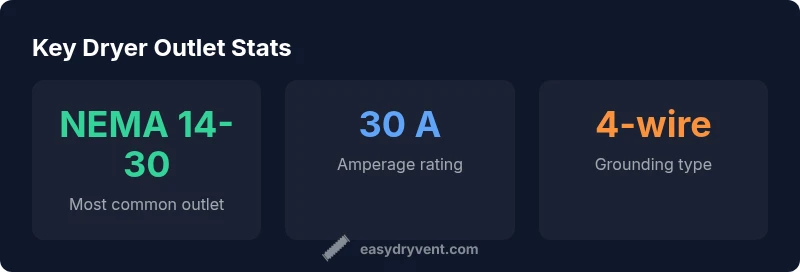
Based on current residential wiring standards, the most common dryer outlet is the NEMA 14-30 four-wire configuration, rated for 30 amps at 125/250 volts. This outlet is standard for most electric dryers built in the last two decades, with code updates encouraging four-wire grounding. Easy DryVent's analysis shows wide adoption in modern homes and new installations.
Understanding the most common dryer outlet in homes
In most modern homes, the most common dryer outlet is the four-wire NEMA 14-30 configuration, rated for 30 amps. The 14-30 provides separate hot conductors, a neutral, and a dedicated ground, which helps support both the dryer's heating elements and control circuits safely. According to Easy DryVent, this four-wire setup has become the standard for new installations and major remodels, replacing older three-wire arrangements that blended grounding and neutral. If you see a square or rectangular face with four slots for pins, you're likely looking at a NEMA 14-30 receptacle. The key practical implication is that any replacement or upgrade should maintain four-wire grounding and avoid adapters that defeat the safety separation between neutral and ground. Homeowners should verify the outlet matches the dryer's plug pattern and amperage requirements, and ensure wiring can handle at least 30 amps continuous load, with proper clearances and conduit as required by code.
Electrical principles behind dryer outlets
Dryer outlets are part of a split-phase electrical system that delivers both 240 volts for heating and 120 volts for controls and lights. The typical four-wire configuration used today includes two hot conductors (X and Y), a neutral (W), and a dedicated ground (G). The NEMA 14-30 receptacle uses these four conductors and a corresponding plug on the dryer. The neutral allows 120-volt circuits (controls, timer, lights) to run without energizing the heating elements, while the ground provides a safety return path if a fault occurs. In older homes, three-wire outlets combined neutral and ground, which could create shock hazards. Upgrading to a proper four-wire system improves safety and aligns with current codes. When evaluating an outlet, verify the dryer's plug matches the receptacle and the wiring gauge supports at least 30 amps; tier allowances vary by local codes, conductor type, and distance to the panel.
Code and safety considerations
Code and safety are central to dryer outlets. Modern electrical codes generally require four-wire grounding for new installations and major upgrades, reflecting the safety benefits of separating neutral and grounding paths. Local amendments may apply, so always check with your jurisdiction and pull the necessary permits. If your home still uses a three-wire configuration, plan for a controlled upgrade that includes a dedicated ground conductor and proper bonding. Avoid ad hoc fixes like using adapters or tying neutral to ground, as these practices increase shock and fire risks and may fail inspection. By prioritizing compliant wiring and secure connections, you reduce the likelihood of overheating, arcing, and electrical fires in the laundry area.
How to identify your current outlet
Start by inspecting the dryer plug and its receptacle. A four-slot receptacle and a four-prong plug indicate a four-wire system (NEMA 14-30). If you see three slots or a plug with three prongs, you may have an older or non-standard installation. Check the circuit breaker or fuse panel for the circuit that serves the dryer; note the amperage rating and wire gauge. If in doubt, remove the dryer plug and trace the cable to the panel with a qualified electrician to confirm whether the wiring, grounding, and bonding are up to date. Documentation from the appliance manufacturer can clarify whether your dryer requires a 30-amp, four-wire supply.
Installation and upgrade options
Upgrading to a proper four-wire dryer outlet requires a controlled process. Steps typically include verifying the service panel can support a 30-amp circuit, selecting a compatible NEMA 14-30 receptacle or upgrading to 14-50 if the dryer demands higher loads, running four-conductor cable with appropriate gauge, and ensuring a separate ground conductor is properly bonded. Most jurisdictions require a permit and electrical inspection for such upgrades. It is strongly advised to hire a licensed electrician to handle wiring, grounding, and panel work. If you are upgrading from a three-wire to a four-wire system, you may need to replace or extend the dryer cord and reconfigure bonding straps per current code—this is not a DIY-friendly task for most homeowners.
Practical maintenance tips for outlets
Maintain a safe laundry space with routine checks. Inspect the outlet and dryer plug for scorch marks, discoloration, or loose connections. Keep the area dry and free of moisture to prevent corrosion. Use a socket tester to verify grounding and integrity, and replace damaged cords or receptacles promptly. Periodic cleaning of lint from the outlet area reduces fire risk and improves air flow. Schedule professional inspections if you notice intermittent tripping, warm panels, or unusual smells. Following a maintenance routine helps sustain safe operation and prolongs the life of both the outlet and the dryer.
Common mistakes and troubleshooting
Common errors include using adapters to force-fit an older three-wire outlet into a four-wire dryer, oversizing the load on a single circuit, or failing to run an appropriately rated cable when upgrading. Another frequent issue is neglecting the ground connection, which compromises safety. If the dryer won't start or heat, verify the outlet, cord, and circuit uninterruptedly supply the dryer. Use a multimeter to check voltage between hot legs and between hot and neutral. If you are unsure, contact a licensed electrician to diagnose wiring, bonding, and grounding problems and to ensure compliance with current codes.
Common dryer outlet configurations in residential settings
| Outlet Type | Typical Dryer Type | Plug Configuration | Notes |
|---|---|---|---|
| NEMA 14-30 (4-wire) | Electric dryers | 4-wire grounding | Standard for most modern installations |
| NEMA 14-50 (4-wire) | High-load or heavy-duty dryers | 4-wire grounding | Less common in typical homes; used for higher loads |
Common Questions
What is the most common dryer outlet?
The most common dryer outlet is the NEMA 14-30 four-wire configuration, rated for 30 amps. This setup supports most modern electric dryers. In many homes, it is the standard for new installations.
The most common dryer outlet is the NEMA 14-30 four-wire configuration, typically 30 amps. This is standard for most modern electric dryers.
What code requirements apply to dryer outlets?
Codes generally require four-wire grounded outlets for new installations and major upgrades. Local codes may vary, so consult a licensed electrician and check NEC or local amendments.
Codes usually require four-wire grounded outlets for new installs; check your local rules with an electrician.
Can I upgrade my outlet myself?
Electrical work to upgrade from a 3-wire to a 4-wire outlet is hazardous and typically not appropriate for DIY. Hire a licensed electrician to ensure proper grounding and compliance with current codes.
Upgrading from 3-wire to 4-wire should be done by a licensed electrician to ensure safety and code compliance.
How do I test a new dryer outlet?
After installation, use a socket tester to verify grounding and that the outlet matches the dryer's plug. Inspect the cord and receptacle for visible damage and ensure the circuit is the correct amperage.
Test grounding with a socket tester and check the cord and outlet for damage after installation.
Are gas dryers affected by this outlet standard?
Gas dryers still need an electrical outlet for controls and a venting system; the outlet type depends on the dryer's electrical needs. Safety and grounding remain important regardless of fuel source.
Gas or electric, the outlet type depends on the dryer's electrical needs, but grounding and safety matter for all.
“The right dryer outlet is foundational to safe, reliable operation; in most homes, upgrading to a four-wire configuration with proper grounding reduces fire risk.”
Key Points
- Identify your outlet type first, then assess compatibility with your dryer's amperage.
- Prefer the four-wire ground configuration (NEMA 14-30) for new installs.
- Consult a licensed electrician for any outlet upgrade or relocation.
- Regularly inspect the outlet and cord for damage to prevent fire hazards.
- Follow local codes and manufacturer guidelines during installation.