How to Style Already Dry Hair: Practical Home Guide
Learn how to style already dry hair with moisture balance, heat protection, and gentle techniques. This practical, step-by-step guide helps you refresh, define, and finish a healthy look at home.


This guide helps you learn how to style already dry hair safely and effectively. You'll start with moisture balance, lightweight products, and low-heat techniques to avoid frizz and breakage. By following the step-by-step method, you can achieve a polished look without over-drying or weighing down your strands. This approach emphasizes safety, product compatibility, and gentle handling.
Why styling dry hair requires a gentler approach
Dry hair behaves differently from damp or freshly washed strands. It drinks up products unevenly, frizzes in humidity, and can feel stiff if overloaded with heavy oils. According to Easy DryVent, the safest approach blends light moisturizers, heat protection, and gentle handling to maintain flexibility without stripping essential oils. In this guide, we outline why dryness changes styling dynamics and how to build a routine that leaves hair looking natural, soft, and controlled. By prioritizing moisture balance and minimal heat, you can achieve a smooth, lasting finish without sacrificing hair health. The concepts here set the stage for a practical, repeatable routine you can rely on.
This section reinforces the idea that small, consistent steps beat dramatic, one-off hacks when it comes to dry hair.
Assessing your hair's current state
Understanding your starting point helps tailor styling for dryness. Examine texture, elasticity, and shine under good lighting. If strands feel coarse or appear dull, porosity is likely high, which means moisture leaves quickly. Conversely, very slick strands may indicate low porosity and require lighter products to avoid heaviness. Quick tests—like a strand slip and humidity exposure check—give clues about how much product to use and which techniques will work best. This assessment aligns with Easy DryVent's emphasis on customizing routines rather than applying a one-size-fits-all method. A precise read on your hair state sets the foundation for successful styling that preserves natural oils and reduces breakage over time.
Knowing your hair state supports targeted product choices and technique selection for the best outcomes.
Prep steps before styling
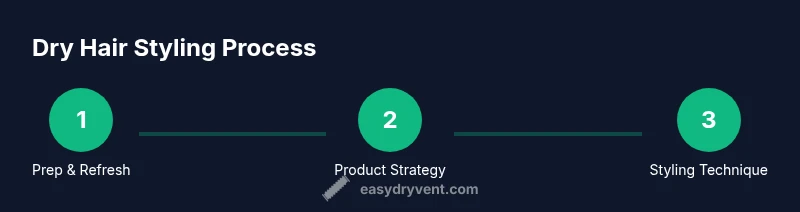
Even when your hair is dry, a light refresh helps unlock smoother results. Begin with a gentle spritz of water or a leave-in conditioner spray to reintroduce moisture without oversaturation. Detangle with a wide-tooth comb from ends to roots, then blot with a microfiber towel to reduce friction. Apply a small amount of leave-in conditioner along the mid-lengths and ends, followed by a heat-protectant product if heat styling will be used. The goal is a pliable base that holds shape without weighing hair down. These preparatory steps set up how to style already dry hair for a balanced, manageable result.
Layering moisture and protection now pays off in the final look.
Product choices for dry hair
Selecting products that hydrate while supporting hold is essential for dry hair. Look for a lightweight leave-in conditioner to restore moisture without buildup. Choose a curl cream or styling cream for definition and a small amount of lightweight oil or silicone-free serum to seal ends. Always pair these with a heat protectant when heat tools will be used. Avoid heavy butters or oils applied near the roots, which can flatten volume. If your hair tends to frizz, consider a smoothing cream or anti-frizz lotion focused on mid-lengths to ends. The aim is to create a flexible, breathable base rather than a stiff, glossy shell that cracks with movement.
Smart product selections reduce weigh-down and preserve natural texture.
Styling techniques with minimal heat
The core of how to style already dry hair lies in low-heat techniques and moisture-smart methods. Air-drying with gentle shaping or using a diffuser on a cool/low setting reduces heat exposure while promoting natural texture. For defined waves or curls, consider finger-coiling individual sections or performing a light twist-out rather than heavy roller-setting. For straight or smooth finishes, a light curling cream followed by a quick pass with a low-heat iron or a satin-wrapped headband technique can yield controlled shine without dryness. Finish by smoothing product with hands or a microfiber cloth to avoid disrupting the natural texture. This approach keeps hair flexible and comfortable throughout the day.
Practice makes progress; small adjustments yield better texture outcomes.
Finishing touches and protection
To seal moisture and lock in shape, apply a small amount of finishing serum or lightweight oil to the ends only. A flexible-hold spray can set the style without stiffness; use short bursts from a comfortable distance. If you used heat, allow hair to cool completely before touching it, then check for any flyaways and smooth them with a tiny amount of product. Sleep on a satin pillowcase or cap to minimize friction overnight, which helps retain moisture and keep the finish intact for the next day. Finishing touches are what separate casually styled hair from a polished look.
Common mistakes to avoid
Dry hair styling goes awry when you overload products at the roots, skip heat protection, or choose products with heavy silicones or waxes that weigh strands down. Over-brushing while dry can cause breakage. Another pitfall is rushing through steps or applying heat at high settings without testing strand comfort. Lastly, neglecting scalp health—such as buildup from styling products—can dull shine and impede styling success. Avoid these by prioritizing light moisturizers, slow blending of products, and mindful heat usage. Consistency matters more than intensity.
Maintenance tips for long-term health
Maintain hair health with a consistent routine that respects dryness and texture. Hydrate from within, and pair hydration with regular conditioning masks or oil treatment once a week. Schedule periodic trims to remove split ends and maintain shape. If your climate or water quality affects your hair, adapt with humidity-friendly styling choices and occasional clarifying to prevent buildup. Easy DryVent suggests keeping a simple, repeatable routine so styling remains predictable and healthy over time. By treating dryness as a long-term condition rather than a one-off challenge, you’ll enjoy easier styling and a better-looking finish.
Tools & Materials
- Fine mist spray bottle(4-6 oz; for light moisture refresh)
- Leave-in conditioner(Lightweight formula; apply mid-length to ends)
- Styling cream or curl cream(For definition and moisture)
- Heat protectant spray/serum(Apply before any heat styling)
- Wide-tooth comb or detangling brush(Distribute products evenly; gentle on tangles)
- Microfiber towel or soft cotton T-shirt(Blot, don’t rub, to minimize frizz)
- Silk or satin pillowcase (optional)(Reduces friction during sleep)
Steps
Estimated time: 30-60 minutes
- 1
Gather and arrange products
Set up your products in the order you’ll use them and within easy reach. This reduces searching mid-routine and helps keep the workflow smooth. Confirm all items are ready before you start.
Tip: Arranging items left-to-right mirrors the flow of the steps to speed up execution. - 2
Refresh and detangle
Lightly mist the hair or apply a small amount of leave-in conditioner to mid-lengths and ends. Detangle from ends upward with a wide-tooth comb to minimize breakage and ensure even distribution of moisture.
Tip: Work slowly through knots; forcing combing can damage dry strands. - 3
Apply moisture and protection
Distribute a pea-sized amount of styling cream to the mid-lengths and ends. Follow with a heat protectant if you plan heat styling. Avoid roots to prevent buildup and flattening.
Tip: Always test product on a small strand first to gauge response. - 4
Choose a styling technique
Decide on air-drying, finger-coiling for definition, or a light diffuser pass on low heat. Keep handling gentle to preserve texture and avoid unnecessary damage.
Tip: If you’re unsure about heat, start with air-drying and transition to light heat only if needed. - 5
Set the finish
Apply a small amount of finishing serum to the ends and use a flexible-hold spray to set the style without stiffness. Let hair cool fully to set the shape.
Tip: Hold spray at a distance to prevent over-application and stiffness. - 6
Assess and adjust
Check for uneven texture or flyaways. Add a touch more product only where needed and adjust the style with hands to keep natural movement.
Tip: A light touch beats heavy-handed corrections.
Common Questions
What is the safest way to refresh dry hair between washes?
Mist lightly with water or a leave-in conditioner spray, detangle gently, and reapply a small amount of product to the mid-lengths and ends. This refresh keeps texture while avoiding heaviness.
Mist lightly, detangle gently, and reapply product to mid-lengths and ends for a quick, safe refresh.
Can I use heat tools on already dry hair?
Yes, but only with a heat protectant and on the lowest effective setting. Limit passes and allow hair to cool between applications.
Yes, with heat protection and low heat; limit passes and let hair cool.
What products work best for dry-hair styling?
A lightweight leave-in conditioner, a styling cream for definition, and a small amount of lightweight oil or serum to seal ends. Pair with a heat protectant if using heat.
Use lightweight moisture, definition, and a tiny amount of oil; don't skip heat protection.
How often should I trim to maintain dry hair health?
Trim as needed to remove split ends and maintain shape. Regular maintenance helps styling stay neat and reduces breakage over time.
Trim as needed to keep ends healthy and maintain shape.
Is air-drying safer than blow-drying for dry hair?
Air-drying reduces heat exposure and is gentler, but a low-heat diffuser can be a safe compromise for faster results.
Air-drying is gentler; use a diffuser on a low setting if you need speed.
What common mistakes should I avoid?
Avoid heavy root products, skip heat protection, and rush through steps. Build your routine slowly to prevent buildup and damage.
Don’t skip heat protection and don’t overload roots with product.
Watch Video
Key Points
- Prioritize lightweight moisture and protection.
- Use low-heat methods to minimize damage.
- Distribute products from mid-length to ends only.
- Finish with a flexible hold to keep texture.
- Maintain a regular refresh routine for long-term health.