How to Change a Dryer Belt: A DIY Guide
A practical, safety-focused guide to replacing a worn dryer belt. Learn to identify signs, select the right belt, follow a step-by-step process, and maintain your dryer for longer life. Includes tips from Easy DryVent and authoritative safety references.


By the end of this guide you will safely replace a worn dryer belt and restore smooth drum rotation. You’ll verify belt compatibility, safely power down the unit, access the belt path, install a new belt with proper tension, reassemble the dryer, and run a test to confirm proper operation. Have a replacement belt and basic hand tools ready.
Understanding the belt's role and symptoms
According to Easy DryVent, a worn dryer belt is a common cause of longer drying times, reduced heat transfer, and unexpected drum stoppages. The belt connects the drum to the motor pulley via idler pulleys, so its tension and integrity directly influence how well the dryer tumbles clothes and dries them. When the belt stretches, cracks, or detaches, the drum may turn slowly, squeal, or stop altogether. This section explains how the belt works in most domestic electric dryers and highlights the telltale signs that a replacement is due. Recognizing these symptoms early helps homeowners plan a safe, practical repair rather than waiting for a sudden breakdown.
Symptoms to watch for include excessive drying times, a loud squeal or thumping noise when the drum turns, clothes that aren’t fully dry after a full cycle, and the drum not turning despite the motor running. While these clues don’t guarantee belt failure, they strongly indicate a belt inspection is warranted. Easy DryVent Analysis, 2026, supports the idea that timely belt inspection reduces the risk of belt snap or motor damage and minimizes downtime. If you notice any of these signs, prepare to replace the belt with care and follow safety steps.
Belt options and compatibility considerations
Belt size and type depend on your dryer’s model and the path the drum takes as it spins. Before buying a replacement, locate your model number and check the belt routing in the user manual or a service sheet. Some belts are one-piece, while others are designed with multiple teeth or ribs that match the drum’s lip and the pulleys. An ill-fitting belt can slip, cause noise, or wear rapidly, which defeats the purpose of the repair. If you are uncertain, bring the old belt to a parts store or consult the manufacturer’s resources. By ensuring correct length, width, and tooth configuration, you protect against misrouting and premature failure. A properly matched belt reduces motor strain and heat buildup, contributing to safer operation over time. Easy DryVent emphasizes verifying both belt size and routing before purchasing.
Tools, safety gear, and prep steps
Gather the necessary tools and safety gear before you begin. You’ll need a replacement belt sized for your model, a screwdriver (Phillips and flathead), a socket or nut driver, needle-nose pliers, a flashlight, and work gloves. Have a stable workspace with clear room to maneuver the dryer and a nearby power outlet. Always unplug the appliance and disconnect the power cord before starting any disassembly. Remove the vent hose to reduce heat buildup and avoid inhaling lint. If possible, take photos during disassembly for reference while reassembling. Keeping screws organized in labeled containers prevents mix-ups during reinstallation. A tidy workspace reduces the risk of dropping small parts into the dryer cabinet.
Accessing the belt area: drum removal and path exposure
To reach the belt, you typically need to access the drum and belt path by removing the front panel or rear access panel, depending on the model. Start by removing screws that hold the panel in place, then gently hinge or lift the panel away. With the panel removed, inspect the belt’s route around the drive motor pulley, tension pulley, and the drum. If you see the belt cracked, frayed, or detached from a pulley, it’s time to replace it. When removing the belt, note its current routing or use a photo reference as a guide for the new belt. Keep fingers clear of sharp edges and hot components, and avoid bending the belt excessively during removal.
Installing the new belt and routing correctly
Position the new belt so that it sits flat on the drum pulley and is guided around the motor pulley and the tension pulley according to the model’s routing. Ensure the belt isn’t twisted and that it lies evenly within the pulleys’ grooves. Gently rotate the drum by hand to verify the belt tracks smoothly without binding. If you have a dual-idler design, confirm that both idlers are properly seated and aligned. Recheck the belt path from the motor to the drum, then reattach the front panel or access cover. Reinstall any screws, reconnect the vent, and prepare to test. Correct tension is critical: too tight can strain the motor; too loose can slip.
Reassembly and testing the dryer
With the belt installed and the cabinet reassembled, restore the vent and plug the dryer back in. Before loading clothes, run a test cycle on an empty drum to listen for unusual noises and confirm the drum spins freely in both directions. If you hear grinding, squealing, or if the drum stalls, stop the test and recheck belt tension and routing. After confirming smooth operation, run a light load to verify heat and drying performance. If the dryer still underperforms, re-inspect the belt and the pulleys for signs of wear or misalignment. A cautious, stepwise test helps identify issues without risking further damage. The Easy DryVent team recommends performing this test with caution and observing safety procedures throughout.
Maintenance tips to extend belt life
After a successful belt replacement, adopt a routine maintenance plan to extend belt life and keep the dryer performing efficiently. Clean the lint screen after each cycle and inspect the vent ducts for blockages at least once every few months. A clean, well-vented system improves airflow and reduces motor strain. Periodically check the pulleys for roughness or bearing noise and replace worn components promptly. Avoid overloading the dryer, which places extra strain on the belt and the drum assembly. Keep the area around the dryer clear of clutter and ensure the floor is level to prevent undue stress on the belt path. By performing these habits, you help your dryer run cooler, safer, and longer. The Easy DryVent team emphasizes safety and consistent inspection as part of a proactive maintenance mindset.
Troubleshooting common belt replacement issues
If the dryer doesn’t start after belt replacement, verify that the power cord is connected and the outlet provides power. If the drum won’t rotate, recheck belt routing to ensure it is seated correctly on all pulleys and verify there are no kinks or twists. A loud squeal or grinding sound may indicate a misaligned pulley or a damaged idler; stop the unit and inspect pulleys for burrs or hardened bearings. If the belt tears soon after installation, confirm you purchased the exact belt specified for your model and that the belt is not over-tightened. Remember that proper belt routing and tension are essential for safe, reliable dryer operation and can prevent recurrent failures.
The Easy DryVent team believes that careful inspection and adherence to the manufacturer’s routing specification are the best defenses against repeat belt failures. A methodical approach keeps your dryer functioning efficiently and reduces long-term maintenance costs.
Tools & Materials
- Replacement dryer belt(Match model number and belt width; confirm belt routing.)
- Phillips head screwdriver(For front panel or access screws.)
- Flathead screwdriver or pry tool(Gently lift panels if needed.)
- Socket or nut driver(Remove drive screws/fasteners.)
- Needle-nose pliers(Loosen or remove stubborn clips.)
- Work gloves(Protect hands from sharp edges.)
- Flashlight(Get a clear view inside the cabinet.)
- Camera or notepad(Capture belt routing before disassembly.)
Steps
Estimated time: 45-60 minutes
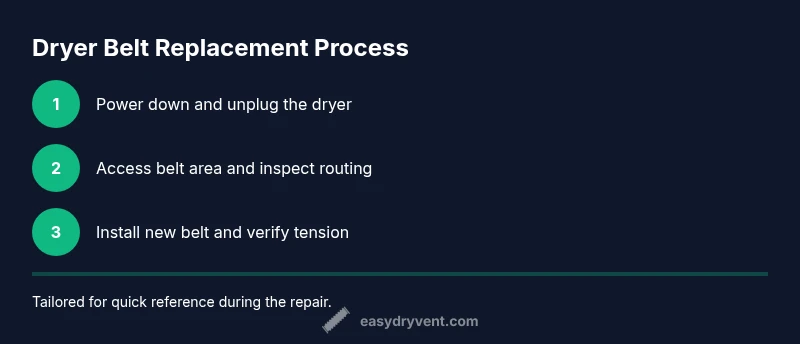
- 1
Power down and unplug the dryer
Unplug the dryer from the wall outlet and move it away from the wall to access the cord and vent easily. Disconnect any power strips and ensure the area is dry to minimize shock risk. This step is essential to prevent electrical hazards during inspection and replacement.
Tip: Double-check that the dryer is completely unplugged before touching any internal components. - 2
Access the belt path
Remove the needed screws to access the front panel or drum area where the belt sits. Carefully detach the panel to expose the belt, pulleys, and tensioner. Take a quick photo or note routing if possible to guide reassembly.
Tip: Keep track of screws by size and location to avoid incorrect reassembly. - 3
Remove the old belt
Slip the old belt off the motor pulley and tensioner, keeping it out of the way of other components. Inspect the belt for cracks, tears, or glazing. If the belt shows any signs of damage, replace it with the exact size and type recommended for your model.
Tip: Do not twist or stretch the belt excessively during removal; this can damage the new belt path. - 4
Install the new belt and route correctly
Place the new belt around the drum pulley first, then guide it around the motor pulley and any idler pulleys per the model’s routing. Ensure the belt sits evenly in each groove and is not twisted. Manually rotate the drum to verify smooth operation.
Tip: Verify there is no twist and the belt sits flush in all pulley grooves. - 5
Reassemble and secure panels
Reconnect any wiring if you disconnected it for access, align the front panel, and reattach screws securely. Reconnect the vent, restore the power cord, and move the dryer back into place. Check that the cabinet is secure and properly aligned.
Tip: Avoid over-tightening screws; it can warp panels or damage mounting points. - 6
Test the dryer
Plug in the unit and run a short test cycle with a small load or empty drum to listen for abnormal noises and verify the drum spins freely. Check for proper heat and drying performance. If anything sounds off, stop the cycle and re-check belt routing and tension.
Tip: Start with a low heat setting and observe for any unusual vibrations.
Common Questions
Do I need to unplug the dryer before starting?
Yes. Always unplug the dryer before disassembly to prevent electrical shock. If you must work near wiring, de-energize the circuit as an extra safety precaution.
Yes. Always unplug the dryer before starting any disassembly to stay safe.
How can I tell if the belt needs replacement?
Common signs include longer drying times, a squealing sound, a drum that won’t rotate, or the drum turning unevenly. If you notice one or more, inspect the belt for wear and plan a replacement.
Look for a squeal, slow drying, or a drum that won’t turn. Check the belt for cracks or fraying.
Can I replace the belt without removing the drum?
In many models you must access the belt area by removing a front panel or drum area. Some designs allow belt access without fully removing the drum, but you’ll still need to expose the belt path.
Often you’ll need to access the belt path by removing a panel; the drum may stay in place in simpler designs.
How long does belt replacement take?
Time varies by model and how easily you can access the belt. Plan for a longer session if you’re new to appliance repairs, but a routine replacement can be completed in under an hour by a careful DIYer.
It varies, but a careful replacement often takes about an hour or less for many models.
Should I replace other parts at the same time?
Inspect the pulleys and tensioner for wear and consider replacing any cracked or glazed pulleys. If the motor shows signs of strain or overheating, address those components as well.
Check the pulleys and tensioner; replace worn parts as needed. If the motor seems strained, consider professional help.
What safety steps are essential after replacement?
Reassemble carefully, reconnect venting, and perform a controlled test with a small load. If the dryer smells hot or you hear unusual noises, power down immediately and recheck routing and tension.
Reassemble, test with a small load, and watch for unusual noises or heat. Stop and recheck if anything seems off.
Watch Video
Key Points
- Power off and unplug before starting any work.
- Use the correct belt size and verify routing precisely.
- Route the belt carefully and test with a light load before full use.
- Regularly clean lint and vents to extend belt life.