Can You Dry Shoes in a Dryer? Safe Techniques for Home Drying
Learn practical, safe methods to dry shoes in a dryer. This guide covers which shoes are safe, how to prepare, step-by-step procedures, and safer air-drying alternatives. Easy DryVent provides practical maintenance guidance for safer, more efficient drying.


Yes, you can dry many shoes in a dryer, but you should follow safety steps to avoid damage. Use a low heat setting, place shoes in a mesh bag or pillowcase with towels, and run short cycles while checking frequently. According to Easy DryVent, air-drying is safer for delicate footwear whenever possible.
Can You Dry Shoes in a Dryer? Basics and Authority
If you’ve ever wondered can you dry on shoes using a household dryer, you’re not alone. Yes, you can dry many shoes in a dryer, but safety steps matter. The Easy DryVent team emphasizes choosing the right materials, settings, and support so you don’t end up with misshapen footwear or lingering odors. Start with low heat, use a protective bag, and balance the load with towels or a pair of socks. Never rely on hot air alone; hot cycles can damage glues, soles, and fabrics. If possible, air-dry is often the safest option, especially for leather, suede, or high-end sneakers. This article outlines practical steps to dry shoes safely, plus safer alternatives when feasible. The question many readers have is can you dry on shoes under typical home-dryer conditions, and the answer depends on material, construction, and care labels.
Materials and Methods: Air Dry vs. Tumble Dry
Air-drying leverages natural evaporation to preserve delicate surfaces and finishes; it’s typically the safest method for leather, suede, and specialty footwear. Tumble-drying on a low heat setting is more convenient but carries risks like shrinkage, deformation, and odor entrapment. Easy DryVent analysis suggests using a blended approach: gentle air-drying to remove most moisture, followed by a brief, controlled tumble if the fabric tolerates it. Always consult the shoe’s care label and test a small area if you’re unsure. The key is balancing speed with material safety, not rushing the process.
Shoe Types and Drying Compatibility
Not all shoes tolerate the dryer equally. Canvas sneakers and athletic shoes with synthetic uppers are generally more forgiving, while leather, suede, and delicate fabrics require caution. Boots with leather trim or high-value dress shoes are best dried by air, or professionally dried, to preserve shape and finish. For rubber-soled sneakers with minimal embellishments, a careful, short tumble can work, but avoid exposing adhesives and decorative elements to heat. When in doubt, air-dry and monitor moisture levels.
Dryer Setup and Safety Tips for Shoes
Before you start, prepare the dryer to minimize risk: ensure the drum is clean, remove any metal hardware, and use a mesh bag or pillowcase to cushion each shoe. Pair shoes to balance the load, adding towels or socks to fill gaps and stabilize airflow. Set the dryer to a low heat or air-dry option and avoid long cycles. Keep the cycle short and check progress frequently to prevent over-drying or heat-related damage. Consider using dryer-safe balancers or forms to help retain shape and prevent squashing the toe box.
What to Expect After Drying: Odors, Residue, and Maintenance
Expect variable results depending on materials and the dryer model. You may still notice moisture in stubborn areas; in that case, finish by air-drying on a rack with good ventilation. Odors can develop if moisture becomes trapped; a quick deodorizing routine with baking soda after drying helps keep footwear fresh. Finally, always clean the lint filter after any dryer run and inspect the seal and drum for wear that could affect performance. When used correctly, drying shoes in a dryer can be safe and convenient, but it won’t replace air-drying for every shoe type or scenario.
Tools & Materials
- Mesh laundry bag or pillowcase(Protects surface and prevents small parts from tumbling loose)
- Old towels(Balance load and absorb moisture)
- Dryer with temperature control(Set to low heat or air-dry option)
- Shoe forms or balancers (optional)(Helps maintain shape)
- Insoles and laces (dry separately)(Prevent moisture overload in the drum)
Steps
Estimated time: 2-6 hours total, depending on shoe type and moisture level
- 1
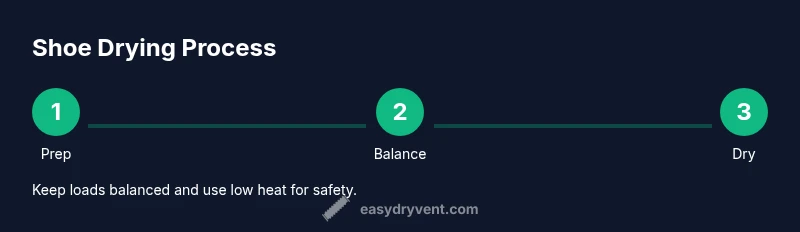
Prep shoes and remove components
Remove laces and insoles if possible; wipe away dirt and dried mud. This reduces staining and helps even drying. For delicate items, consider washing before drying.
Tip: Dry laces separately to prevent soggy pockets inside shoes. - 2
Balance the load
Place shoes in a mesh bag or pillowcase with towels to balance weight and separation. Proper balance improves airflow and minimizes deformation.
Tip: Pair similar weights together to equalize dryer action. - 3
Set the dryer temperature
Choose a low heat setting or an air-dry cycle if your machine has one. High heat is a common cause of shrinkage or glue failure.
Tip: If you’re unsure, start with 10–15 minutes and reassess. - 4
Run a short cycle and check
Start with a short run, pause, and inspect the moisture distribution. Rotate or reposition shoes as needed to prevent hotspots.
Tip: Check every 10–15 minutes during the first cycle to avoid over-drying. - 5
Finish with air-dry
If moisture remains, remove items and finish drying on a rack or shoe tree away from heat sources. Air-drying reduces risk of warping.
Tip: Keep footwear out of direct sun or heat sources during air-drying. - 6
Reassemble and deodorize
Reinsert insoles, relace shoes, and consider a deodorizing method after fully dry. Avoid storing damp footwear to prevent odor formation.
Tip: Use baking soda or a shoe deodorizer to maintain freshness.
Common Questions
Can you dry leather shoes in a dryer?
Leather is prone to shrinking and cracking with heat. It’s generally safer to air-dry leather, or use the dryer only with extreme caution on a very low heat setting and for a short time. Always test on a small area first and consult the care label.
Leather shoes may crack or shrink if heated too much, so air-drying is usually safer.
Is it safe to dry sneakers in a dryer?
Sneakers made of synthetic materials can tolerate a gentle dryer cycle with a protective bag, but avoid high heat and long cycles. Check periodically and consider finishing with air-drying for best results.
Sneakers can be dried in a dryer on low heat, but monitor closely.
How long does it take to dry shoes in a dryer?
Drying times vary by material and moisture level. Start with short, monitored cycles and finish with air-drying if needed to reach full dryness without damage.
Time varies; start with short checks and finish outdoors or on a rack.
What about odor after drying?
If moisture becomes trapped, odors can develop. Use airing-out, baking soda, or a gentle deodorizer after drying to maintain freshness.
Air out shoes and use baking soda if smells linger.
Can the dryer vent cause safety issues with shoes?
Frequent cycles with damp items can increase lint buildup and heat exposure. Ensure lint filters are clean and monitor vent temperatures. If uncertain, limit usage for footwear and rely on air-drying when possible.
Keep the lint filter clean and don’t run damp items for long cycles.
Watch Video
Key Points
- Dry shoes with low heat and protective cushioning
- Balance the load to protect shape and finish
- Air-dry when possible, especially for leather and suede
- Check moisture and odors; finish with airflow-only drying
- Clean lint filter after any dryer-based shoe treatment