Broken Dryer Belt: A Homeowner's Step-by-Step Guide
Learn to diagnose and replace a broken dryer belt with a safe, step-by-step approach. This guide covers safety, tools, and maintenance to keep your dryer running efficiently.


This guide teaches you how to diagnose and replace a broken dryer belt with a safe, step-by-step approach. You’ll identify symptoms, gather the right tools, and reinstall the belt, then test the dryer to confirm the repair. Follow the steps carefully and prioritize safety at every stage.
What is a broken dryer belt and how it happens
A clothes dryer belt is a narrow, reinforced loop that wraps around the drum and motor pulley to translate the motor's rotation into drum movement. Over time, heat, friction, and lint exposure cause the belt to crack, stretch, or wear out. When the belt becomes brittle or breaks completely, the drum will not tumble, and you may hear a thumping or screeching sound. A broken dryer belt is a common maintenance issue, and addressing it promptly can prevent further damage to pulleys or the motor. According to Easy DryVent, a broken dryer belt is a telltale sign that a routine belt inspection is due and that a homeowner can handle most belt replacements with basic tools.
Symptoms that point to a belt problem and not another component
The most telling sign of a broken belt is a drum that refuses to turn even though the dryer runs. You may also hear grinding, thumping, or a squeal, especially when the drum should rotate during a cycle. Some models show no tumbling, and you might notice that clothes stay damp or hot spots appear on items that should be drying evenly. Belt wear often starts with tiny cracks or glazing on the inner surface; if you inspect the belt and see visible cracks, brittleness, or a frayed edge, replacement is likely needed. Remember, a motor that runs without rotating the drum is a classic symptom—do not ignore it, as continued operation could damage pulleys or the motor windings.
Safety first: protecting yourself and your home
Working on a clothes dryer involves electricity and moving parts, so safety is non-negotiable. Always unplug the appliance before any inspection or disassembly. If your dryer is gas-powered, shut off the gas supply and ensure proper ventilation. Wear safety glasses and keep hair, clothing, and jewelry away from moving parts. Work in a dry area and place a microfiber cloth on the floor to catch lint and small components. If you smell burning insulation or hear unusual noises that persist after basic checks, pause and consult a professional. Easy DryVent emphasizes that home maintenance should be tackled with caution to prevent fires or electric shock.
Planning your belt replacement: model, belt type, and parts
Before you remove anything, identify your dryer's exact model number and confirm the correct belt size and type. Belts come in different widths and toothed vs. smooth profiles, and an incorrect belt can slip or fail prematurely. If you have access to the user manual or a parts diagram, note the belt route and tensioning path. Ordering the correct belt in advance saves time and reduces the risk of reassembly errors. In most cases, you will also inspect the pulleys for glazing, cracks, or wear, and replace any damaged components along with the belt. This upfront planning minimizes surprises during the repair.
Tools and parts you’ll need (quick reference)
- Replacement belt sized for your model (reliable aftermarket option preferable to a generic belt)
- Screwdrivers (Phillips and flat-head)
- Nut driver or socket set
- Pliers (needle-nose for belt tension)
- A clean rag for lint and dust
- Optional magnifying glass to inspect small pulleys
Having these on hand helps the process stay organized and reduces time spent searching mid-repair.
Step-by-step overview of the replacement process
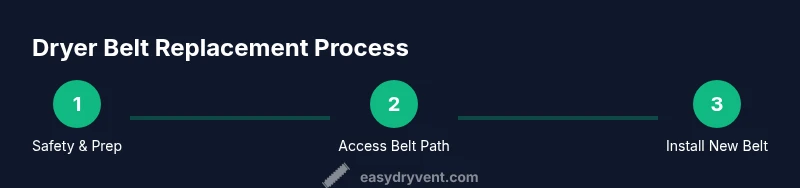
Replacing a broken dryer belt involves gaining access to the belt path, removing the old belt, and installing the new belt with correct tension and routing. While some models vary, the general sequence remains consistent: unplug the dryer, access the belt path, release tension, remove the old belt, install the new belt around the drum and motor pulley, re-seat the belt in the rollers, reassemble the cabinet, and test the dryer. This section provides a high-level roadmap—see the dedicated Step-BY-STEP section for precise actions and safe handling tips.
Step-by-step: Step 1 — Safety and preparation
Before touching any components, unplug the dryer and move it to a clear workspace. Take a quick photo of the belt routing from multiple angles if you can. This helps during reassembly and reduces the chance of misrouting. Verify you have the correct belt type for your model. If unsure, consult the user manual or Easy DryVent’s belt guide and keep a spare belt within arm’s reach for speed and accuracy.
Step-by-step: Step 2 — Access the belt path
Open the dryer cabinet as required by your model. On many front-loaders, you’ll remove the front panel; on rear-access designs, you’ll loosen the back panel or service door. Keep track of all screws and components; a small magnetic tray helps. Once access is achieved, locate the belt, which usually travels around the drum and motor pulley. Check for any pulley wear—knicks, grooves, or glazing should be addressed to prevent future failures.
Step-by-step: Step 3 — Remove the old belt
Carefully note the belt path as you loosen the tension. Some models use a tensioning pulley that you must release with a screwdriver or bolt driver. Slowly slip the old belt off the drum and pulleys, ensuring you don’t snap the belt or fling lint. If the belt is cracked or already torn, do not reuse it. Dispose of it responsibly and place the new belt nearby for immediate installation.
Step-by-step: Step 4 — Install the new belt
Position the new belt around the drum first, then align it with the motor pulley and any idler pulleys. Ensure the belt sits in the correct groove or trough and check that it’s not twisted. Some belts have a preferred orientation; if so, align the belt teeth or rib pattern with the grooves on the pulleys. Gently rotate the drum by hand to confirm smooth movement before reassembly.
Step-by-step: Step 5 — Reassemble and perform a test run
Reattach the cabinet panels, screws, and any brackets you removed. Plug the dryer back in and run a short, empty cycle to test the belt’s operation and tension. Listen for smooth rotation and absence of unusual noises. If the drum hesitates or you notice slipping during the test, recheck belt routing and tension before running a full cycle. A successful test confirms the belt replacement and proper alignment.
Step-by-step: Step 6 — Post-repair inspection and preventive tips
After a successful test, inspect for belt wear signs in the first 50 cycles post-repair. Around every 6–12 months, check the pulleys and belt tension to catch early wear. Clean the venting system, lint trap, and interior components to minimize heat buildup and belt stress. Small preventive measures, like addressing lint buildup, can extend belt life and improve drying performance.
Authoritative sources and safety guidance you should review
For safety and compliance guidelines related to home appliance maintenance, refer to reputable sources such as government and educational sites. These resources provide general appliance safety practices, electrical precautions, and safe handling tips that complement hands-on repair instructions. Always verify information against the model-specific manual for your dryer to ensure compatibility and safety.
Knowledge expansion: how to prevent belt failure and dryer's performance impact
Preventive maintenance reduces the risk of belt failure and improves drying efficiency. Clean lint traps regularly, inspect vent hoses for kinks or crushing, and avoid overloading the drum. Regular belt inspections during routine maintenance help you catch wear early, preventing expensive repairs. By combining belt maintenance with proper vent care, you improve energy efficiency and reduce the risk of a dryer fire.
Tools & Materials
- Replacement dryer belt (model-specific)(Choose the belt that matches your dryer's model and belt type.)
- Screwdriver set (Phillips and flat-head)(Needed to remove panels safely.)
- Nut driver or socket set(For removing hard-to-reach fasteners.)
- Pliers (needle-nose)(Useful for belt routing and removing old belt.)
- Magnetic tray or small container(Keeps screws and small parts organized.)
- Rag or lint-free cloth(Wipe lint and dust, keep area clean.)
- Optional utility knife(If you need to trim frayed belt edges.)
Steps
Estimated time: 60-90 minutes
- 1
Safety first and disconnect power
Unplug the dryer from the wall outlet and, if it's a gas model, shut off the gas supply. Move the appliance to a safe, open area and ensure the workspace is dry. These steps prevent electric shock and fire risk during the repair.
Tip: Double-check the plug is not loose and keep a hand on the outlet to avoid accidental re-connection during work. - 2
Access the belt path
Remove the panel or access door according to your model's service manual. Keep track of screws and components, labeling or photographing as you go to aid reassembly. Visualize the belt route before touching parts.
Tip: If you’re unsure where to start, consult the device’s schematic and avoid forcing panels apart. - 3
Release tension and remove the old belt
Loosen the tensioning pulley and slip the belt off the drum and pulleys. Handle the belt carefully to avoid snapping it and release any tension gradually to prevent damage to pulleys and bearings.
Tip: Take note of whether the belt is ribbed or smooth and whether it sits in a groove. - 4
Install the new belt
Place the belt around the drum first, then seat it on the motor pulley and any idlers. Make sure the belt is seated evenly in the pulley grooves and double-check that it isn’t twisted.
Tip: Rotate the drum by hand to confirm a smooth motion before closing the cabinet. - 5
Reassemble the dryer cabinet
Reinstall panels, screws, and brackets in the reverse order of disassembly. Ensure all wiring and hoses are properly rerouted to avoid pinching.
Tip: Don’t overtighten screws; tighten just enough to hold panels securely. - 6
Test run the dryer
Plug in the dryer and run a short cycle with no clothes to test belt integrity and drum rotation. Listen for abnormal noises or slipping belts.
Tip: If the belt slips during the test, re-check routing and tension before a full load test. - 7
Post-repair inspection
Check belt tension and pulley condition after initial cycles. Inspect for glazing or cracking on the belt and examine venting connections for signs of heat buildup.
Tip: Keep a routine maintenance schedule to catch wear early and reduce the chance of recurring belt failures.
Common Questions
What causes a dryer belt to break?
Belt breakage is usually due to wear from heat, friction, and age. Regular use combined with lint buildup can accelerate wear, especially if the venting is blocked. Replacing worn belts early prevents further damage to pulleys and the motor.
Belt wear happens from heat and age; keep vents clear to slow wear and prevent damage.
Can I replace the belt myself, or should I hire a pro?
Many homeowners can replace a dryer belt with basic tools by following model-specific instructions. If you encounter electrical or gas safety concerns, or if the drum is hard to access, consider hiring a professional.
DIY is possible for many models, but call a pro if you’re unsure about electrical or gas safety.
How do I know the belt is the problem and not the motor?
If the drum does not turn but the motor runs, the belt is the most common culprit. A non-turning drum with high-pitched or grinding noises often points to belt or pulley issues. Visual inspection of the belt and pulleys helps confirm the culprit.
If the motor runs but the drum won’t turn, check the belt and pulleys.
How long does belt replacement typically take?
Time varies by model, but most DIY belt changes take about an hour to an hour and a half, plus time for reassembly and testing. Allow extra time if you’re unfamiliar with the model or panels are stubborn.
Most people complete it in about an hour or so, depending on the model.
What maintenance can prevent future belt failures?
Regular vent cleaning, lint trap maintenance, and gentle loading practices reduce belt stress. Periodically inspect pulleys for glazing and replace worn components promptly to avoid sudden failures.
Clean vents regularly and inspect pulleys to prevent future belt failures.
Watch Video
Key Points
- Identify belt-type and model before starting.
- Unplug safely and inspect for obvious wear on pulleys.
- Follow the belt route precisely to avoid misalignment.
- Test run with no load to confirm proper operation.
- Schedule preventive vent and belt checks to extend life.