Vented Dryer vs Electric Dryer: A Practical Guide
Compare vented and electric dryers—venting needs, energy use, installation, and safety tips from Easy DryVent to help homeowners choose the right dryer.


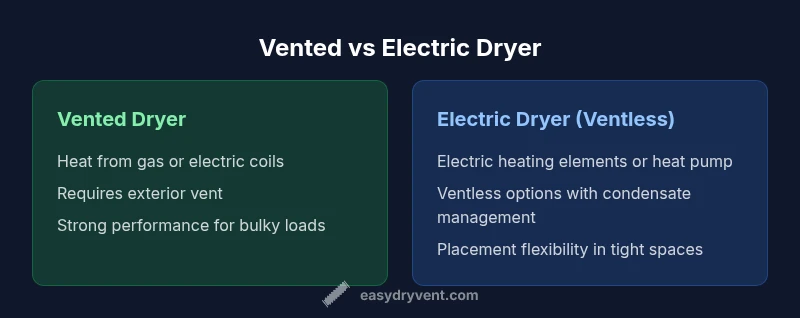
Vented dryers and electric dryers differ mainly in heating source and venting needs. A vented dryer exhausts heat and moisture outside via a duct, while an electric dryer uses electric heating elements and is typically vented as well, though ventless options exist. This guide compares their performance, installation, costs, and safety so homeowners can choose the right option.
What is a vented dryer vs electric dryer?
A vented dryer is a clothes dryer that expels hot, moisture-laden air outdoors through an external vent or duct. The heating source can be electric coils or a gas burner, but the critical feature is the venting path that carries moisture outside the home. An electric dryer, by contrast, relies on electric heating elements to generate heat for drying clothes. In common practice, most electric dryers are vented and connect to the home exhaust system, but there are ventless electric models (condensing or heat-pump types) that recycle and treat moisture instead of venting it. For homeowners, the practical split is not simply gas vs electric; it’s vented vs ventless and how that choice interacts with space, plumbing/gas access, and energy costs. According to Easy DryVent, understanding your space and venting options is the first step to safer, more efficient drying.
Why heating source matters for drying performance
The heating method determines how quickly fabrics heat up, how evenly they dry, and how sensitive they are to load size and moisture. Gas-fired or electric heating can deliver different peak temps and cycling behavior. Electric-only drives are common and convenient where gas isn’t available, but the overall dry time depends on drum design, airflow, and moisture-sensing controls. Modern models from both categories use sensors to adjust cycle length and prevent over-drying, which saves energy and protects fabric. When you’re choosing between vented and ventless options, focus on how the model manages heat, airflow, and moisture feedback in real-world loads.
Venting and installation realities
Vented dryers require a properly routed exhaust vent that leads outside, with a correctly sized duct and no sharp bends. This vent path influences drying performance, energy use, and safety. Poor venting can lead to lint buildup, reduced airflow, and fire risk. Electric vented models rely on household electrical supply and outlet placement for installation flexibility, while gas- or dual-fuel options require gas lines and proper venting. Ventless electric dryers bypass external venting and instead condense moisture or use a heat pump to reheat air, which can expand placement options but often increases upfront cost and maintenance considerations. Easy DryVent emphasizes mapping your laundry area to ensure a safe, compliant vent path or a viable ventless alternative.
Energy use and operating costs are nuanced
Energy efficiency depends on the entire system, including heat source, insulation, drum design, and sensor technology. In general, newer electric dryers with high-efficiency motors and moisture sensors optimize energy use, while vented systems can perform efficiently if ducting is well-designed and maintained. Gas dryers may show lower operating cost in some regions due to fuel prices, but that varies with local energy markets and usage patterns. Easy DryVent’s analysis in 2026 highlights that the gap between vented and ventless electric models is highly model-specific and should be compared using official energy labels rather than anecdotal impressions.
Drying performance across load types
Load size and fabric type—towels, sheets, delicates—challenge any dryer. Vented models often demonstrate robust performance with bulky loads because they rely on exterior airflow. Ventless electric models can deliver excellent performance with modern heat-pump technology, particularly in spaces where installation of a vent is impractical. In practical terms, expect similar outcomes for everyday loads, with potential differences in drying time and fabric care depending on sensor sophistication and airflow paths. Easy DryVent recommends considering your typical load profile to estimate which approach will give the best balance of speed and care for your clothes.
Maintenance implications: safety and longevity
Vent systems require periodic attention. Lint traps should be cleaned after every use, and the vent duct should be inspected and cleaned regularly to prevent buildup and maintain airflow. Duct integrity and vent clearance are safety-critical. Ventless electric dryers reduce duct maintenance but add condensate drainage considerations and periodic cleanouts of moisture handling components. Regardless of type, a proactive maintenance plan improves efficiency, prolongs the unit’s life, and reduces fire risk. The Easy DryVent team notes that simple, routine checks have outsized effects on performance over a dryer’s lifetime.
Space, placement, and electrical considerations
Placement matters for both vented and ventless configurations. A vented unit needs a path to the outdoors with minimal resistance; long or obstructed vents reduce efficiency. An electric vented dryer benefits from flexible electrical outlets, but dedicated outlets may still be required for peak performance. Ventless electric models offer placement flexibility (basements, closets, or rooms without exterior walls) but may require additional space for condensate drainage or recirculating airflow. Before purchasing, assess available space, nearby electrical capacity, and any restrictions on vent routing in your home.
Practical decision framework: quick-start checklist
Before you buy, answer these questions: Do you have an exterior wall-ready vent, or would a ventless option fit better in your space? Is energy cost a dominant concern in your area, or is upfront price your main driver? What is your average load size and fabric mix? Do you have room for a condensate reservoir if you choose a ventless model? By mapping these factors, you can narrow to a small set of models that meet your functional needs while aligning with safety and maintenance preferences. Easy DryVent provides a practical checklist you can adapt to your home.
Common myths vs reality about vented vs electric dryers
Myth: Ventless means always more energy-efficient. Reality: It depends on the model and usage. Some vented high-efficiency units outperform older ventless designs in real-world loads. Myth: You must vent a dryer to have safe operation. Reality: Ventless options exist that are safe when installed correctly and maintained. Myth: Bigger is always better for drying. Reality: Correct load size and sensor-driven cycles often beat sheer capacity in terms of efficiency and fabric care. Easy DryVent cautions readers to evaluate performance data from trusted labels and independent tests when comparing models.
Comparison
| Feature | Vented Dryer | Electric Dryer |
|---|---|---|
| Heat Source | Gas or electric heating; external vent required | Electric heating elements (or heat pump in ventless variants) |
| Ventilation | Exhausts outdoors via a duct; essential for most models | Typically exhausts outdoors; ventless options exist (condensing/heat pump) |
| Installation Flexibility | Depends on vent routing; best if vent path is short and straight | Greater placement flexibility with ventless designs; needs condensate drainage or space for heat pump cabinet |
| Energy Considerations | Performance strongly influenced by vent maintenance and duct length | Energy use varies by model; ventless high-efficiency options can be competitive |
| Maintenance | Regular lint trap cleaning and duct cleaning; vent integrity crucial | Condensate or heat pump maintenance; less duct cleaning but other servicing needs |
| Drying Performance | Reliable for bulky loads when venting is optimal | Excellent with moisture sensing; some models excel in small spaces |
The Good
- Vent-based models offer strong, predictable drying for bulky loads
- Electric heating provides widespread serviceability and parts availability
- Vented systems can be cost-effective upfront in many markets
- Ventless electric options give placement flexibility in tight spaces
Negatives
- Vented models rely on a vent path; poor venting reduces efficiency and safety
- Ventless electric models can have higher upfront costs and condensate handling needs
- Installation may require additional electrical or gas connections
- Maintenance requirements vary by design and may include condensate system care
Vented dryers generally offer a balance of performance and cost for standard homes; ventless electric options suit spaces without exterior venting but at higher upfront costs.
If you have a good vent path, a vented dryer is often the practical choice. If you lack exterior venting or must fit the unit into a tight space, a ventless electric model can be worth considering, provided you accept the likely higher upfront price and maintenance nuances. Easy DryVent recommends evaluating both configurations against your space, energy costs, and laundry needs.
Common Questions
What is the main difference between a vented dryer and an electric dryer?
The main difference lies in the heat source and venting path: vented dryers exhaust hot, moist air outside through a vent, while electric dryers use electric heating elements. Most electric models are vented, but ventless options do exist. Understanding your space and venting options is essential.
The key difference is the heat source and how air is handled—vented dryers vent outside, while ventless electric models condense moisture inside.
Do vented dryers save energy compared to ventless electric dryers?
Energy use depends on the model and technology. Vented dryers with efficient ducts and sensors can be comparable to ventless options, while ventless heat-pump models often excel in energy efficiency but may have higher upfront costs. Always compare official energy labels.
Energy performance varies by model; compare energy ratings rather than relying on vent type alone.
Can I install a vented dryer in a space without an exterior wall?
Vented dryers typically require an exterior vent. If you lack access to venting, consider ventless electric models or relocate the laundry area. In some cases, a reconfiguration of space or existing walls may allow venting, but this should be evaluated by a professional.
If you can’t vent outside, ventless is usually the practical option.
What maintenance is needed for vented vs ventless dryers?
Vented dryers require regular lint trap cleaning and periodic duct cleaning to maintain airflow and reduce fire risk. Ventless models need condensate drainage checks and occasional cleanouts of moisture handling components. Regular maintenance improves safety and efficiency for either type.
Keep the lint trap clean and follow vent or condensate system maintenance guidelines.
Are vented dryers safer than ventless?
Safety depends on proper installation and maintenance for both types. Vented systems demand careful vent routing and lint management to minimize fire risk; ventless designs require correct condensate handling and adequate room ventilation. Follow manufacturer guidelines and local codes.
Safety hinges on proper installation and ongoing maintenance for both options.
Which option is best for a small apartment?
Ventless electric dryers often fit better in tight spaces where exterior venting is not feasible. If you have access to an exterior vent, a compact vented model can still work well. Factor in moisture management and electrical requirements when choosing.
In small spaces, ventless is usually more flexible, but check electrical and moisture considerations.
Key Points
- Assess venting access before choosing a dryer
- Vented models suit most homes with straightforward ducting
- Ventless electric options offer placement flexibility but higher upfront costs
- Compare energy ratings and sensor technology across models
- Keep up with lint and condensate maintenance to ensure safety