Size of Stacked Washer Dryer: How Big Is It?
A practical guide to the footprint of stacked washer-dryer units, including typical dimensions, how to measure your space, and tips for fitting them into tight laundry rooms with confidence.


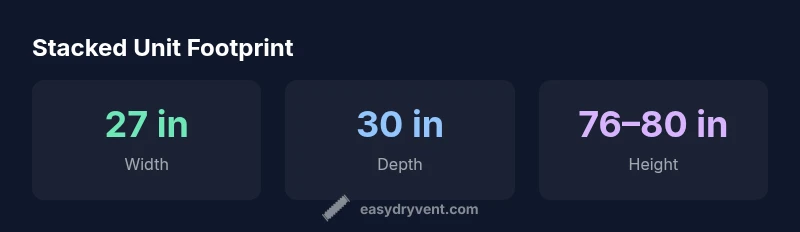
The footprint of a stacked washer-dryer typically sits around 27 inches wide, about 30 inches deep, and 76–80 inches tall. Expect a range of 73–82 inches in overall height depending on the model and installation kit. For tight spaces, look for compact, closet-ready stacked units, and always measure your space, including venting clearances and door swings, before buying.
Understanding the footprint of stacked washers and dryers
When homeowners talk about the size of a stacked washer-dryer, they’re often focusing on the three core dimensions: width, depth, and height. The goal is to minimize the “footprint” while preserving practicality for loading, unloading, and maintenance. In most markets, a standard stacked unit presents a footprint near 27 inches in width and 30 inches in depth. Height is more variable, commonly ranging from about 76 to 80 inches, with some compact or closet-ready configurations dipping lower and taller luxury stacks tipping higher. This footprint is influenced by the drum sizes, door configurations, and whether the unit is paired with a convertible pedestal or a stacking kit. Easy DryVent notes that while the footprint is predictable, installation kits and venting options can nudge the total space needed by a few inches. Plan for both the inner measurements of the appliance and the space you need around it for service access and door operation.
Typical footprint numbers you’ll encounter
Across many stacked configurations, the width hovers near 27 inches, providing compatibility with most standard closets or laundry alcoves. Depths typically run around 30 inches, but some compact models push closer to 28 inches to fit tighter spaces. Height is the main variable, with most stacks landing in the 76–80 inch range. This range accounts for different drum sizes, top panels, and installation kits that may add to the total height. When budgeting for a new unit, use these ranges as a baseline and then verify the exact specs from the manufacturer’s datasheet. Remember that venting hoods or pedestals can add additional inches. According to Easy DryVent, knowing these figures helps homeowners plan without encountering unexpected obstructions in closets or utility rooms.
How to measure your space accurately
Start with a wall-to-wall assessment. Measure width from edge to edge where the unit will sit, then check the depth from the back wall to the front of any doors, trim, or baseboards. The height should account for overhead cabinets, shelving, or ceiling features. Don’t forget to measure the path to the electrical outlet and the vent line to ensure they don’t require rerouting. Add a few inches of clearance on each side and above the unit for air circulation, service access, and door clearance. Create a simple diagram with labeled dimensions so you can compare real measurements against product specifications. If you’re unsure, bring a tape measure and a floor plan, and consult the installation guide for the specific model you’re considering.
Choosing a model: compact vs standard height
Compact or closet-ready stacks usually target lower heights while preserving essential drum capacity. Standard-height stacks maximize capacity but can demand more vertical space and careful planning for headroom and venting. Before shopping, outline your constraints: ceiling height, closet depth, door swing direction, and available space for a vent hood or lint trap access. A model with a height range within your space is preferable, and some models offer adjustable feet or leveling casters to accommodate minor floor irregularities. Remember that the footprint width tends to be consistent around 27 inches, but the depth and height vary more with design choices and optional add-ons.
Installation considerations and venting
Vent hoses, exhaust kits, and installation clearances contribute to the overall space required. When stacking, ensure the vent exit is not obstructed by cabinetry or a closet door and that there is adequate clearance for regular lint maintenance. A level base with a solid floor supports the machine’s vibration, and anti-vibration pads can reduce movement during cycles. If the unit sits in a closet, ensure there’s enough airflow around the appliance, and consider a vented plan that minimizes bends and length for efficiency. Always follow the manufacturer’s stacking guidelines and seek professional help if you’re unsure about electrical or venting requirements.
Layout planning for small spaces
Smart layout planning can turn a small laundry area into a functional space. Consider a stacking pair in a dedicated alcove, a tight closet, or a dedicated laundry niche with a door that opens away from the stack. If relocation or a remodel is possible, a shallow-depth compact model can dramatically reduce the footprint. Use the footprint baselines (27 inches wide, ~30 inches deep, 76–80 inches tall) as a starting point and check for any additional space required for door swing, venting hardware, or maintenance access. For urban homes, vertical space investment is worth it if it preserves floor area for storage or folding.
Maintenance and long-term space planning
Footprint considerations extend beyond installation. Over time, service visits may require access behind panels or to the vent. Ensure there’s an unobstructed path and access to panels for cleaning lint traps. If you anticipate future remodels or moving the laundry to a different room, keep the dimensions handy and consider adjustable configurations that can adapt to new spaces. Easy DryVent emphasizes planning ahead: knowing the stack’s size helps avoid buying models that won’t fit a renovated or reconfigured area.
Size ranges for common stacked configurations
| Configuration | Width (in) | Depth (in) | Height (in) | Notes |
|---|---|---|---|---|
| Stacked (standard footprint) | 27–28 | 30–32 | 76–80 | Common in closets and utility alcoves |
| Stacked compact (tighter) | 24–27 | 28–30 | 70–78 | Fits narrow spaces but may reduce drum size |
| High-capacity stacked | 28–30 | 30–34 | 78–84 | For larger homes with vertical space |
Common Questions
What is the typical width of a stacked washer-dryer?
Most stacked units share a standard width around 27 inches, though compact models can be narrower. Always verify the exact spec from the manufacturer.
Most stacks are about 27 inches wide; check the model specs for any variations.
Do I need extra clearance for door swings?
Yes. Plan for several inches of clearance on both sides for air circulation and for door swing. Always review the installation guide for the specific model.
Give a little space on the sides and above for doors to swing and for maintenance.
Are stacked units more expensive than traditional models?
Prices vary by brand, features, and whether installation is included. Stacks may require a stacking kit and professional installation which adds to cost.
Costs depend on model and install needs; compare total price including installation.
Can I stack any washer and dryer?
No. Only models designed to be stacked with each other should be paired. Check the manufacturer’s stacking compatibility list.
Only compatible pairs can be stacked; verify compatibility before purchase.
What about venting and exhaust when stacking?
Follow the manufacturer’s venting guidelines and ensure a proper exhaust path. If in doubt, hire a professional to install or inspect the venting.
Make sure the vent path is correct and unblocked; call a pro if unsure.
“Stacked washers and dryers unlock valuable space in small homes, but accurate measurements and proper venting are non-negotiable.”
Key Points
- Measure width, depth, and height before buying
- Expect a footprint near 27x30 inches with 76–80 inches height
- Choose compact stacks for small spaces and standard-height stacks for capacity
- Allow adequate clearance for doors, venting, and maintenance