How big is a standard washer and dryer: Dimensions and Space Guide
Learn the typical exterior dimensions of standard washers and dryers, how to measure space, stacking options, and practical tips for fitting and selecting models that suit your home.


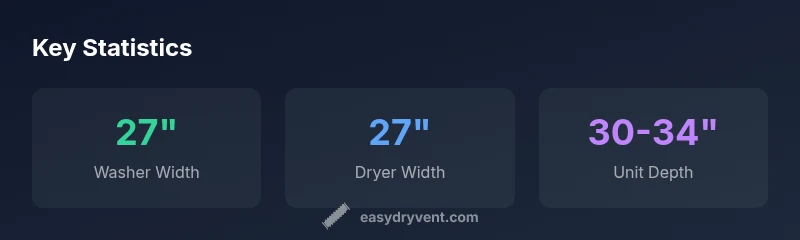
How big is a standard washer and dryer? Typically, a standard full-size washer and dryer measure about 27 inches wide, 38-42 inches tall, and 30-34 inches deep, with both appliances matching these dimensions in most front-loading models. For tight spaces, compact or stackable units can reduce width and depth by 2–6 inches. Always verify exact specs on the model label.
What counts as a standard washer and dryer size
When homeowners ask how big a standard washer and dryer should be, they are usually referring to full-size, freestanding units rather than compact or apartment-sized models. In practice, the standard width for most full-size washers and dryers is about 27 inches. Heights typically range from 38 to 42 inches, while depths run around 30 to 34 inches. These measurements enable a balanced setup in typical laundry rooms and many closets, while still allowing for hoses, vents, and door swing. Brand-to-brand variation exists, especially with European imports or compact American lines, so always verify exact numbers on the product label before purchasing. According to Easy DryVent, you should start by confirming the width and height first, then check depth to ensure you have adequate clearance. The Easy DryVent team found that most households can fit standard pairs in a 60–65 inch wide alcove or room with adequate side clearance. When planning space, remember to account for a small gap for airflow and service access, typically 1–2 inches on all sides.
Typical dimensions by category
Not all laundry machines use the same footprint. The most common categories are standard full-size washers and dryers, compact or apartment models, and stacked configurations. For standard, expect about 27 inches in width for each machine. Heights commonly range from 38 to 42 inches; depths from 30 to 34 inches. Compact models can be as narrow as 24 inches and may be shallower, while stacked configurations leverage a single 78–80 inch tall footprint when mounting the washer atop the dryer (with a stacking kit). If you are sizing a closet, a recessed alcove, or a vanity wall, consult the cabinet manufacturer’s installation allowance and the appliance’s installation manual. Remember that electric vs gas dryers sometimes influence venting needs and door swing; this can affect the required width by a few tenths of an inch. Easy DryVent’s analysis indicates most homes can accommodate standard units by planning for a small 6–8 inch clearance behind them.
How to read the spec sheets
Spec sheets are where the numbers live. Start with the dimensions: width x height x depth. Most standard washers and dryers list 27 inches width; height in the 38–42 inch range; depth around 30–34 inches. Capacity is reported in cubic feet for washers (spin efficiency), and in terms of drum size for washers, while dryers show drum capacity in cubic feet as well. Look for installation clearances such as venting, exhaust, and service space. If you plan to stack, verify the stacking kit compatibility and the total height of the stack. Energy ratings and warranty terms are useful but not a substitute for physical fit. Always check the model’s installation instructions and the local code requirements for venting and electrical outlets. Easy DryVent emphasizes cross-checking the label on the appliance with the space measurement to avoid surprises at delivery.
Planning your space: width, depth, height
To ensure a precise fit, measure your space in three dimensions: width, depth, and height. Start by measuring the opening: the available width should exceed the appliance width by at least 1–2 inches on each side for clearance. Then measure depth from wall to door hinge and ensure there is space for hoses and venting behind the unit; add 1–2 inches behind the washer/dryer and consider a few extra inches for wiring and gas lines if relevant. Height is critical if you plan to place shelves above or a cabinet. If you’re stacking, confirm the combined height with the stacking kit; typical stacks reach around 68–72 inches tall. Always account for door swing; some models require extra clearance for doors to open fully in tight spaces. Easy DryVent’s guidance: use painter’s tape on the floor to visualize the footprint, then test with cardboard cutouts to confirm movement and access before purchasing.
How to verify fit in tight spaces
Once you have measured, translate those numbers to actual models by creating a short list set: width, depth, height, and door swing. In tight laundry closets, side-by-side installations may offer less flexibility than stacked configurations; stacking can save space but requires a height clearance and a compatible stand/kit. When evaluating depth, remember the depth includes hoses and vent behind the unit; add 2–3 inches to account for hoses and an air gap to ease maintenance. In narrow closets, consider installing a side panel with a perforated vent to improve airflow behind the units. Finally, confirm service accessibility: you should be able to pull the machines out for maintenance without removing cabinetry. Easy DryVent notes that it’s wise to measure twice and buy once, and to check the installation manual for any nonstandard dimensions before finalizing the order.
Common regional variations and lineup differences
In North America, standard widths typically hover around 27 inches, but European or compact lines may be 23–24 inches wide. Regional building codes can influence venting lengths and cabinet clearances. Stackable configurations are more common in apartments and smaller homes, while traditional side-by-side pairs remain popular in larger utility rooms. Some brands offer “compact” or “apartment” models with shallower depths, which can be a good fit for shallow closet spaces, while still offering similar capacities. Always compare the manufacturer’s stated exterior dimensions (not just drum capacity) and consider the door swing, hinge reach, and heat vent routing. Easy DryVent’s practical tip: map out a mock floor plan with scaled paper cutouts to visualize how the appliances will fit from every angle in your space.
Impact of configurations: front-load vs top-load
Front-load and top-load designs have different footprint and accessibility characteristics. Front-load washers and dryers tend to have a consistent 27-inch width and similar depth, but top-load washers can slightly differ in lid height, which can affect allowable headroom in cabinets. Stacking offers space savings but increases installation complexity; the tallest stacked configuration might require taller laundry closets and a sturdy mounting system. Consider accessibility: if you have knee or back constraints, front-load models offer easier door access, while top-load models may be a better match for higher cabinetry. Energy efficiency and moisture management also influence ventilation requirements. Easy DryVent’s data indicates most households benefit from a balanced, well-vented setup with adequate service clearance regardless of the configuration.
Practical tips to adapt spaces: stacking kits, venting
If space is tight, stacking can dramatically reduce the footprint. Verify stacking kit compatibility and ensure you have 68–72 inches of stacking height. Use a universal vent kit with proper ducting to minimize heat loss and condensation. In closets, consider adding a vented back panel or a small ceiling vent to improve airflow behind the units. For side-by-side layouts, place a slim gap between units to allow access to controls and doors, and use adjustable legs to level the machines on uneven floors. Finally, plan for future replacements by selecting models with similar widths and heights to ease cabinet modifications later on. The Easy DryVent team highlights that mindful planning saves time and reduces the chance of mismatch between the space and the appliance.
Maintenance and future-proofing your dimensions
Ongoing maintenance is a factor in how long appliances keep their original footprint. Regularly check seals, hoses, vents, and lint filters to prevent unnecessary space encroachment from leaks or blockages. If you anticipate renovations or changes in the home layout, measure for potential modifications now and choose modular, adjustable configurations that can adapt to a changing space. When planning for resale or replacements years down the road, keep the footprint consistent by selecting standard-width models when possible and document all measurements in your home project notes. The Easy DryVent team’s verdict is that a thoughtful, scalable plan now will pay off with easier upgrades and fewer surprises for future homeowners.
Typical exterior footprint of standard washers and dryers
| Item | Typical size (inches) | Notes |
|---|---|---|
| Washer width | 27 inches | Standard full-size front-load |
| Washer height | 38-42 inches | Varies by model |
| Washer depth | 30-34 inches | Depth depends on drum orientation |
| Dryer width | 27 inches | Standard full-size |
| Dryer height | 38-43 inches | Varies by model |
| Dryer depth | 30-34 inches | Depth similar to washer |
Common Questions
What are the typical exterior dimensions of a standard washer and dryer?
Most standard washers and dryers are about 27 inches wide. Height usually falls between 38 and 42 inches, with depths around 30–34 inches. Pairing the two results in a combined width of roughly 54 inches in side-by-side setups. Always confirm exact numbers on the product label.
Most standard pairs are 27 inches wide and about 38 to 42 inches tall; plan for about 54 inches of width if you put them side by side.
Can I fit a standard washer and dryer in a 60-inch wide space?
Yes, a typical 60-inch width space can accommodate standard side-by-side units, since the pair requires roughly 54 inches of width plus clearance. If you stack, you save width but need the height clearance for the stacked configuration.
A 60-inch space works for standard side-by-side units; stacking can help if height allows.
Are compact washers/dryers better for small spaces?
Compact models are narrower, often around 23–24 inches wide, and may be shallower. They fit tighter closets but usually have limited capacity. Always compare exterior dimensions, not drum size, to ensure the unit fits the space.
Yes, compact models fit tighter spaces but check their overall footprint and capacity.
What should I check beyond width and height?
Check depth, door swing, venting requirements, electrical or gas hookup, and clearance for hoses and vent behind the unit. If stacking, verify stacking kit compatibility and the total stack height. These details prevent installation surprises.
Look at depth, door swing, and venting in addition to width and height.
How do I verify fit before buying?
Measure your space and compare with the model’s exterior dimensions listed on the label. Use the installation manual to confirm required clearances and vent routes. If possible, test with cardboard cutouts or floor plans to visualize door swing and access.
Measure first, then compare to the model’s footprint and clearances.
“Accurate sizing starts with reading installation specs and verifying every measurement before ordering; don’t rely on photos alone.”
Key Points
- Measure width first, then height and depth
- Standard width is about 27 inches
- Allow 1–2 inches clearance on each side
- Stacking can save space in small rooms
- Always verify exact specs on the model label