How Much Dryer Machine Costs in 2026: A Practical Guide
Learn how much dryer machine costs in 2026, compare electric and gas models, and estimate total ownership—from upfront price to energy and maintenance.


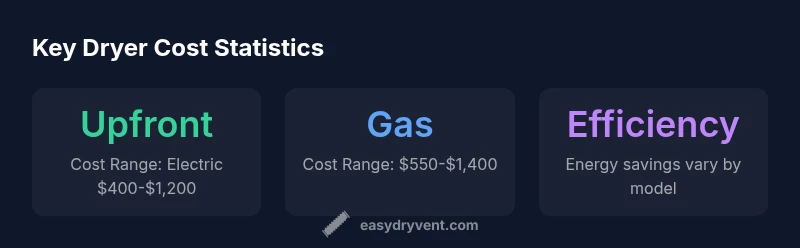
According to Easy DryVent Analysis, 2026, typical new electric dryers cost about $400 to $1,200, with gas models ranging from $550 to $1,400. Higher-end, energy-efficient or smart models can exceed $1,800. Installation, venting, and potential rebates add to upfront costs. When budgeting, also account for energy use and maintenance over the dryer's lifetime.
Price Landscape: Upfront Costs by Type
If you're wondering how much dryer machine costs, start with the basics: upfront price ranges reflect electric vs gas, drum size, and feature sets. According to Easy DryVent Analysis, 2026, typical new electric dryers cost about $400 to $1,200, with gas models ranging from $550 to $1,400. Higher-end, energy-efficient or smart models can exceed $1,800. Installation, venting, and potential rebates add to upfront costs. When budgeting, also account for energy use and maintenance over the dryer's lifetime. The main price drivers are capacity (larger drums cost more), sensor drying, steam cycles, and connectivity. In apartments or small homes, compact or ventless models may reduce upfront costs but limit capacity.
In many households, the first question is not just how much dryer machine costs, but what you get for that price. Entry-level electric models tend to land in the mid-range of the spectrum, while larger capacities or advanced features push prices higher. If your laundry load is light or you live in a smaller space, a compact unit may offer the best balance between upfront cost and practical use. Conversely, families with frequent, large loads usually need a bigger drum, faster cycles, and reliable dry progress monitoring—all of which add to the initial price but can cut time and energy usage in the long run.
How Capacity Impacts Price and Performance
Capacity is a core driver of both price and daily usability. A larger drum handles larger loads, reducing the number of cycles needed per week, but adds cost up front. In general, electric dryers with standard family-sized capacities (7–9 cubic feet) sit in the mid to upper price range, while compact models under 5 cubic feet are cheaper but may require more frequent runs. When evaluating value, compare dollar per cubic foot and consider your laundry volume. If you wash for multiple people or bulky items (bedding, towels), investing in a higher-capacity unit often pays back in reduced drying time and energy use over several years.
Across households, the ability to handle bulky items like comforters or blankets should weigh against the sometimes higher cost of high-capacity units. If space is a concern, measure the installation area carefully and compare models that fit both the width and the ventilation clearance. In tight spaces, stackable electric options can save floor area without sacrificing performance, though installation may involve additional hardware and venting considerations.
For renters or temporary spaces, a portable or apartment-sized dryer might be sufficient. These units typically cost less upfront but may offer modest capacity and higher per-load energy use. The trade-off comes down to how often you wash large items and how comfortable you are with potentially running more cycles to meet your laundry needs.
Energy Use and Operating Costs: What to Expect
Energy consumption is a major part of a dryer's life cycle cost. Electric models typically use more electricity per load than compact machines, while gas dryers rely on natural gas energy for heat. Even within electric models, energy efficiency ratings and sensor-driven drying can cut energy use by a meaningful margin. Easy DryVent Analysis, 2026 shows that choosing an energy-efficient model can reduce annual energy costs by a notable percentage over the life of the appliance. However, usage patterns—such as load size and frequency—often have a larger impact on total energy costs than the brand you choose.
To estimate annual costs, evaluate the energy guide label and multiply the rated energy use by your typical monthly loads. If you run several large loads weekly, a model with moisture sensors and auto-dry features will usually minimize wasted drying time and heat. Remember that vent cleanliness and duct path directly influence energy efficiency. A clogged vent can raise running time and energy use significantly, erasing some efficiency gains from a newer model.
Features That Drive Price (and Value)
Not all features cost the same, but many deliver measurable value. Basic features like standard cycles, wrinkle reduction, and reversible doors are common; premium features include steam cycles, moisture sensors, anti-crease options, and smart connectivity. Larger capacities tend to push price upward, but they also shorten drying times and improve efficiency for busy households. If you regularly dry large or bulky items, you may justify the extra upfront cost for sensors and timed cycles that optimize every load. When budgeting, separate must-have features from nice-to-have features to avoid overspending on capabilities you won’t use.
Other pricing levers include drum material, exhaust design, and warranty length. A drum with a durable interior and quiet motor is worth considering if you run multiple loads daily. Smart features—remote monitoring, cycle customization, and energy usage tracking—add convenience and can help you monitor efficiency, though they usually carry a premium.
Tip: prioritize energy-related features (auto-dry, moisture sensors) over purely cosmetic upgrades. Energy savings compound year after year, especially in households with heavy laundry activity.
Installation, Venting, and Space Considerations
Proper installation and venting influence both cost and performance. A dryer with a long or poorly designed vent path can suffer from longer drying times and higher energy use, negating some efficiency gains. If your laundry area lacks a vent, you may need a ventless or condenser model, which can affect upfront cost and installation complexity. Ensure the space can accommodate the necessary clearance around the unit and a vent route to the exterior. A professional setup may cost more upfront but saves on potential HVAC or venting issues down the line.
When planning, map out the vent length, elbow count, and outdoor vent cap height to avoid bulky aesthetic changes after purchase. If you’re replacing an older unit, verify that existing ducts are clean and compatible with the new model. Some apartments require building management approval for vent changes, so check policies early to prevent delays in installation.
Budgeting Scenarios: From Apartments to Large Families
For a one-bedroom apartment, you can often find compact electric dryers in the lower end of the price range, with ongoing savings from energy-efficient operation. For small to mid-size families, expect mid-range electric models with good sensor drying and decent capacity. Large households with heavy laundry load typically benefit from high-capacity electric or gas models with advanced features, trading higher upfront costs for faster cycles and lower per-load energy usage. Use a simple calculator to estimate total cost of ownership over 5–10 years by combining upfront price, energy costs, maintenance, and potential rebates.
Consider leasing or financing options if upfront cash is a constraint, and look for models with longer warranties on motors and drum assemblies. If a unit fails earlier than expected, a robust warranty can significantly affect total cost of ownership by reducing unexpected repair expenses.
Practical Buying Timeline and Checklists
Plan your purchase around sales cycles and utility rebates. Start by confirming space and venting compatibility, then compare at least three models in your price range. Check energy ratings, warranty terms, and availability of spare parts. Create a short list of must-have features, a nice-to-have list, and a timeframe for replacement. Finally, don’t forget to budget for installation and any venting improvements if needed."
Comparison of common dryer types by upfront cost and energy use
| Model Type | Avg Upfront Cost | Avg Annual Energy Use | Notes |
|---|---|---|---|
| Electric Front-Load | $400-$1,200 | 200-800 kWh/year | Most common for families |
| Gas Dryer | $550-$1,400 | 120-600 therms/year | Quicker dry times in cold climates |
| Compact Dryer | $350-$900 | 60-260 kWh/year | Best for apartments |
Common Questions
What is the typical price range for a new electric dryer?
Electric dryers typically cost between $400 and $1,200 upfront, depending on capacity and features. Higher-end models with enhanced energy efficiency cost more, but may save energy over time.
Electric dryers usually cost between four hundred and twelve hundred dollars, with bigger or smarter models at the higher end.
Are gas dryers more expensive to buy and operate than electric models?
Gas dryers generally cost more upfront ($550-$1,400) but may offer faster dry times. Operating costs depend on local gas and electricity prices; in some regions gas can be cheaper per cycle, but efficiency matters.
Gas dryers can cost more upfront, and energy costs depend on local prices.
What features drive up the cost of a dryer?
Features like larger capacity, steam cycles, smart controls, sensor drying, and moisture sensors raise upfront price but can improve efficiency and convenience.
Large capacity and smart features push price up but save time and energy.
How does energy efficiency affect long-term costs?
Energy Star rated models use less energy; the payback period depends on usage but can be favorable over several years.
Energy-efficient models save money over time, with payback varying by use.
Are there rebates or incentives for buying energy-efficient dryers?
Some regions offer rebates for energy-efficient appliances; check local utilities and government programs. Always compare net price after rebates.
Look for local rebates to reduce upfront cost.
What maintenance steps help extend a dryer's life?
Clean lint trap, check venting, and schedule regular drum inspections; proper maintenance reduces fire risk and improves efficiency.
Keep the lint trap clean and vent clear to extend life.
“Energy efficiency and proper venting are the true multipliers of dryer cost savings. A smart purchase today reduces bills for years to come.”
Key Points
- Budget for upfront cost and installation.
- Consider total ownership costs, not just upfront price.
- Match capacity to household size to optimize efficiency.
- Factor venting, installation, and rebates into total cost.
- Prioritize energy efficiency to save over time.