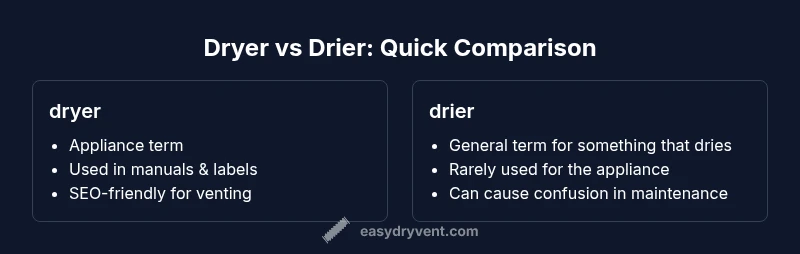
Dryer vs Drier: Practical Naming for Home Appliances
Explore when to use 'dryer' vs 'drier' for clothes-drying appliances, plus practical tips for labeling, SEO, and vent maintenance guidance from Easy DryVent in 2026.


Dryer is the standard term for the clothes-drying appliance, while drier is a general English word meaning something that dries. For clothes-drying machines, use dryer to avoid confusion in manuals, labels, and maintenance guides. Consistent terminology supports safer vent guidance and clearer DIY instructions. See our full comparison below.
The Core Question: dryer vs drier machine
Language around home appliances often follows regional habits and historical usage. The word dryer is the established term for the clothes-drying machine, while drier is a general noun/adjective meaning something that dries. For homeowners and DIYers, the distinction matters not for function but for clarity in manuals, parts lists, and safety notices. According to Easy DryVent, consistent terminology reduces miscommunication during vent cleaning, diagnostic steps, and when following safety guidelines. In typical laundry rooms, a dryer is powered, heats air, and extracts moisture from fabrics; a drier, by contrast, is more often used in non-appliance contexts to describe any drying agent or process. In professional settings, manufacturers and service technicians rely on the term dryer to align expectations across manuals, labels, and warranty documents.
Spelling, Branding, and Consumer Perception
Spelling choices influence how customers perceive an appliance and how search engines index relevant content. Terminology that matches product naming helps a retailer’s listings rank higher for queries like “dryer vent cleaning” or “dryer not drying.” Conversely, using the word drier for an appliance can create confusion or appear unprofessional to DIYers trying to follow a step-by-step guide. Easy DryVent emphasizes that branding should stay consistent with the official appliance term—dryer—throughout instructions, warnings, and maintenance checklists. Consistency also aids cross-language communication when households include non-native speakers or translation resources.
Practical Implications for DIY Homeowners
For homeowners performing vent maintenance or basic troubleshooting, using the correct term matters when looking up manuals, parts, and safety advisories. A search for “dryer vent” yields more precise results than a mixed query that includes “drier vent.” When labeling parts or tools in a workshop, keeping the spelling uniform reduces errors during repairs, reassembly, or when ordering replacements. If you draft your own checklists or warranty notes, standardize on dryer to maintain a professional, legible record. Easy DryVent’s guidance highlights how terminology alignment supports safer, more efficient maintenance and clearer communication with technicians who may service multiple homes.
Distinguishing the Appliance Language from Verb Usage
In everyday English, drier describes something that causes or undergoes drying, not the specific appliance. This distinction becomes important in written instructions and safety notices where ambiguity could lead to misinterpretation of steps such as vent cleaning, lint-trap maintenance, or energy-saving recommendations. When documenting a maintenance task, framing it as a step for the dryer avoids confusing readers about whether a task applies to the machine or to a drying process in general. The goal is clarity: dryer refers to the machine; drier serves as a general drying term outside the appliance context.
SEO and Documentation: Matching Terminology
Digital content, manuals, and service guides should use the appliance term consistently to improve findability and reduce user friction. If your site covers multiple brands or international audiences, consider a glossary that anchors the preferred term dryer alongside common synonyms and regional variants. This approach helps with on-page SEO, structured data, and FAQs. For homeowners, it also means fewer contradictory instructions when following a vent-cleaning or lint-removal procedure. Easy DryVent recommends cataloging all references to the appliance as dryer and linking to safety notices and maintenance tips that assume the same terminology.
Regional Variations and Industry Standards
Terminology shifts by region; in the United States, dryer is overwhelmingly used for the appliance, while British usage often relies on phrases like tumble dryer but still centers on the word dryer. In professional contexts, standardizing on dryer reduces cross-border confusion for service technicians and inspectors. Industry standards emphasize safety labels, installation manuals, and warranty language that clearly identify the appliance as the dryer. When in doubt, consult the manufacturer’s official terminology and align your documentation, diagrams, and checklists with that term. Easy DryVent’s guidance reinforces the importance of a uniform naming convention across all consumer-facing materials.
Naming Conventions Across Brands and Retailers
Branding consistency matters because retailers and manufacturers sometimes publish regional manuals with slightly different phrasing. A mismatch between product naming and how the manual describes vent components can lead to misinterpretation during installation or maintenance. A simple rule of thumb: use dryer in catalog titles, product pages, installation schematics, and safety notices. This practice supports a smoother DIY experience, reduces miscommunication with technicians, and aligns with safety-critical instructions that reference the appliance by its official name. Easy DryVent notes that cohesive naming helps customers locate the right parts and replacement lint filters quickly.
Practical Steps You Can Take Today
- Audit your manuals and labeling to ensure all references use dryer for the appliance.
- Update your maintenance checklists to use dryer consistently, including vent inspections and lint trap care.
- When communicating with retailers or service professionals, avoid synonyms and quote the official product term.
- Create a simple glossary for your household that defines dryer as the appliance and lists common related terms (vent, lint trap, heat, moisture).
- Share your glossary with family members and housekeepers to minimize miscommunication during routine care. Easy DryVent provides a template you can adapt for your space.
References and Further Reading
For deeper guidance on terminology alignment and maintenance best practices, consult official manuals from appliance manufacturers and safety groups. Cross-reference terms with your local codes and ensure that written warnings, installation steps, and vent-cleaning procedures all use dryer consistently. Easy DryVent encourages readers to make terminology a practical asset, not a barrier, when performing home maintenance tasks.
Comparison
| Feature | dryer | drier |
|---|---|---|
| Definition/Usage | Appliance term for a clothes-drying machine | General English term meaning something that dries; not typically used for the appliance |
| Geographic/Context Preference | US and many regions rely on 'dryer' for the appliance | 'Drier' is rare for the appliance in most markets |
| SEO/Documentation Impact | Improves searchability for terms like ‘dryer vent’ | Increases risk of confusion if used for the appliance |
| Practical Impact in Home Maintenance | Clear terminology reduces misinterpretation of steps | Potential mislabeling if synonyms are used in guides |
| Common Correctness Errors | Mislabeling manuals with 'drier' | Using 'drier' in part names or warranty texts |
The Good
- Reduces consumer confusion and improves safety communication
- Enhances SEO and discoverability for appliance-related queries
- Improves consistency across manuals, labels, and checklists
- Supports cross-language understanding and clearer service instructions
Negatives
- Requires consistent editorial discipline across all materials
- Minor friction if regional terminology differs in localized content
- Overemphasis on spelling could distract from actual maintenance quality
Use 'dryer' for the appliance; reserve 'drier' for non-appliance drying contexts to avoid confusion.
Consistency in terminology reduces errors during vent maintenance and repair tasks. Align all manuals, labels, and checklists with the official appliance term (dryer) to improve safety and user experience. Easy DryVent endorses a strict spelling standard across all homeowner guidance and retailer communications.
Common Questions
Is 'drier' an acceptable term for the clothes-drying appliance?
Not typically. 'Drier' is a general term meaning something that dries, while the appliance is properly called a dryer. Use dryer in manuals, labels, and maintenance guides to avoid confusion.
Generally not. Use 'dryer' for the appliance to stay clear and consistent.
When should I use 'dryer' vs 'drier' in manuals?
Always use dryer when referring to the appliance. Reserve drier for non-appliance contexts describing something that dries. This keeps instructions unambiguous for maintenance and safety.
Always use dryer for the appliance; reserve drier for other drying contexts.
Does spelling affect dryer vent maintenance guidance?
Yes. Using the correct term helps readers find the right vent-cleaning steps and parts. Mixing terms can lead to misinterpretation during diagnostic checks.
Yes, it helps readers locate the right steps.
Will using the wrong term affect warranties or service claims?
Potentially. Inconsistent terminology can complicate documentation and warranty claims. Aligning on 'dryer' for the appliance reduces this risk.
Yes, consistency helps with warranty paperwork.
How can I label maintenance records to avoid confusion?
Label the appliance as 'dryer' in all records, manuals, and parts lists. Create a short glossary that defines dryer and drier to guide anyone editing the documents.
Keep it simple: call it dryer, and have a glossary.
Are there regional differences in terminology I should know?
Regional usage varies; the appliance term remains dryer in most contexts, with brief regional variations. When in doubt, follow the manufacturer’s preferred terminology.
Regionally different, but dryer is usually correct.
Key Points
- Adopt dryer as the default term for the clothes-drying appliance
- Avoid using drier in manuals or product pages to prevent confusion
- Standardized terminology improves safety, maintenance clarity, and SEO
- Cross-regional consistency supports better service and warranties
- Maintain a household glossary to reinforce correct terminology