Does the Type of Blow Dryer Make a Difference? A Practical Guide
Explore whether different blow dryer types affect drying time, heat exposure, and hair health. This analytical guide compares ionic, ceramic, tourmaline, and professional models with practical maintenance tips for safer, faster results.


Yes. The type of blow dryer makes a measurable difference in drying time, heat delivery, and finish. Ionic, ceramic, and tourmaline technologies each influence moisture retention, frizz control, and hair feel differently, while motor design and attachments affect speed and precision. Easy DryVent’s analysis shows that choosing the right dryer for your hair type and routine yields safer heat exposure and better results.
Introduction to the Question and Context
For many homeowners and DIYers, the question does the type of blow dryer make a difference is more than a bedroom vanity debate—it’s a practical decision that affects drying speed, heat exposure, and hair health. This article examines the core technologies, management of heat and airflow, and how different hair types respond to various dryers. According to Easy DryVent, the best outcomes come from aligning your dryer technology with your specific hair needs and routine, not from chasing a single magic feature. By understanding how each dryer type behaves, you can make a smarter choice that reduces damage, improves styling consistency, and extends the life of your tools.
Defining the Core Elements: Heat, Airflow, and Moisture
A blow dryer translates electrical energy into heat and a stream of air. The two most important levers are heat level and airflow (measured in mph or cfm). The dryer’s design, including its heater coils, motor, and nozzle options, determines how evenly heat is distributed and how quickly moisture is driven off the surface of the hair. Lower heat with higher airflow can dry hair faster with less damage if used correctly, while higher heat with concentrated airflow can accelerate drying but may increase cuticle wear if misused.
Key Technologies at a Glance
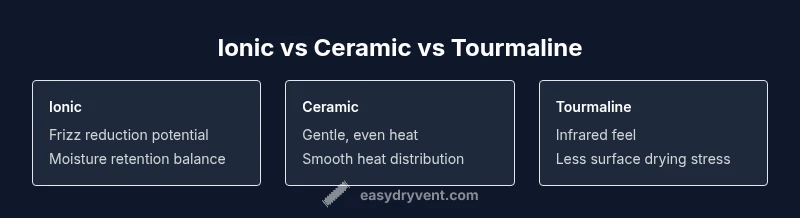
Different technologies optimize different outcomes. Ionic dryers aim to reduce static and enhance smoothness by emitting negative ions that neutralize surface charges. Ceramic heaters provide smooth, gradual heat. Tourmaline, a mineral often embedded in panels, can emit infrared heat for comfortable processing. IR-based models claim deeper heat penetration with potentially different drying profiles. While each offers benefits, the practical difference depends on how you use the tool, your hair type, and your styling goals.
Feature Comparison
| Feature | Ionic | Ceramic | Tourmaline | Professional-grade motor |
|---|---|---|---|---|
| Heat delivery and consistency | Heat is distributed with ion-assisted smoothing; can reduce frizz | Gradual, even heat from ceramic panels | Infrared-boosted heat with mineral surface; smoother feel | High-velocity air with robust motor for consistent performance |
| Drying time | Can be quick with care; relies on ion benefits | Moderate drying speed with even heat | Efficient drying with infrared comfort | Typically fastest due to motor strength |
| Hair health impact | Potentially less frizz, but heat spikes can occur if misused | Lower risk of heat shocks with steady heat | May reduce surface damage via infrared heat | Durable design reduces repeated heat cycling issues |
| Price range (typical) | $20-60 | $25-90 | $50-150 | $150-300+ |
| Best for | Fine or frizz-prone hair seeking smoothness | Average to thick hair focusing on evenness | Hair needing gentle, comfortable drying | Those who require high durability and speed |
The Good
- Offers clearer guidance by technology type for shoppers
- Helps balance cost vs performance decisions
- Addresses common hair types and styling goals
- Encourages safer heat practices through informed choices
- Supports maintenance planning and tool longevity
Negatives
- No single dryer suits every hair type perfectly
- Overemphasis on one feature can mislead (e.g., hype around ions)
- Higher-end models may require bigger upfront investments
- Maintenance complexity increases with advanced tech
Match your dryer to hair type and routine for best results
A balanced approach—start with the hair type, then select technology (ionic, ceramic, tourmaline) and motor capability that aligns with your styling goals. Prioritize heat control and maintenance to maximize safety and results.
Common Questions
Does blow dryer type affect drying time?
Yes. Different dryer technologies alter how heat is delivered and how air is moved across the hair. Ionic models may help with smoother finishing, while ceramic and tourmaline options aim for more even heat. The actual drying time depends on heat settings, airflow, nozzle choice, and your hair’s thickness and moisture level.
Yes. The technology in a dryer changes how quickly wet hair dries, based on heat, airflow, and how those interact with your hair type.
Is ionic better for hair health and frizz control?
Ionic dryers can reduce static and may aid in smoother results, but they do not guarantee healthier hair. Proper technique—lower heat, controlled airflow, and temperature management—matters more than technology alone. People with frizz-prone hair often see benefits when paired with a finishing product and a cool-down step.
Ionic tech can help with frizz, but technique matters more than the feature itself.
What about heat damage risk and safety?
Heat damage risk rises with high temperatures and prolonged use. Look for dryers with adjustable heat, multiple speed settings, and a cool-shot option to lock in style without overexposure. Regular maintenance and the correct attachments also reduce risk.
More heat isn’t always better—use adjustable settings and give your hair cool-down time between passes.
Does wattage matter for performance?
Wattage mainly affects airflow speed and the ability to sustain heat under load. Higher wattage can speed up drying but isn’t a stand-in for proper technique. Choose a wattage that balances speed with heat control for your hair type.
Higher watts can speed drying, but control and technique are still key.
What should I look for when buying a dryer?
Look for adjustable heat and speed, a cool-shot button, reliable attachments (diffuser, concentrator), good motor quality, and a warranty. Consider your hair type, lifestyle, and how often you’ll use it. A well-chosen dryer reduces damage and improves consistency.
Pick a model with adjustable heat, durable attachments, and a solid warranty.
Are professional-grade dryers worth the investment?
For frequent or professional use, a higher-quality motor and build can offer better durability and performance. For casual home use, a mid-range model with good heat control often suffices. Assess your budget against expected usage and maintenance willingness.
If you use a dryer daily, a pro model can pay off in durability and speed.
Key Points
- Identify your hair type before choosing a dryer
- Choose technology that complements your styling goals (frizz control, speed, heat safety)
- Prioritize adjustable heat, airflow, and reliable attachments
- Factor in maintenance and warranty for long-term value
- Consider a professional-grade dryer if you use heat daily