Will a Dryer Still Work If It Gets Wet? Practical Troubleshooting Guide
Urgent, practical guidance on what to do if a clothes dryer gets wet, how to assess safety, dry out, and decide between DIY or professional help.


Water exposure can seriously damage a dryer’s electrical system. If your unit got wet, never power it on. Unplug the dryer, inspect the plug, outlet, and nearby cords, and ventilate the area. Even if the unit seems to run after drying, hidden moisture can cause shorts, overheating, or sensor failures later. For safety and long-term reliability, schedule a professional inspection if water contact occurred.
Will a Dryer Still Work If It Gets Wet? Quick Reality Check
Water exposure is not something to guess about. The simple, urgent question many homeowners ask is will a dryer still work if it gets wet, and the honest answer is that safety must come first. Water can travel inside a cabinet and reach the control board, motor, and heating elements; even a brief exposure can cause corrosion, short circuits, and unpredictable behavior. According to Easy DryVent, moisture intrusion creates immediate electrical hazards and may silently damage components far behind the faceplate. This isn’t a problem you can solve by hoping it dries out—electric devices and water don’t mix well, and latent moisture can lead to dangerous failures later on. Practically, treat any moisture incident as a potential safety issue, especially if the unit was near leaks, damp basements, or a humid environment. Throughout this guide we’ll outline safe, practical steps you can take to protect yourself and determine whether a repair path is necessary, with clear do/don’t guidance and when to involve a professional.
Immediate Safety Steps After Water Exposure
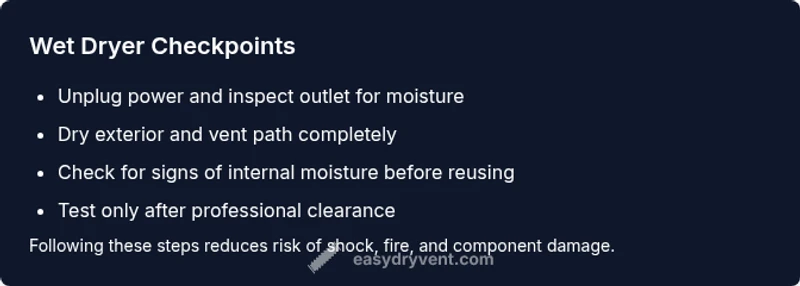
If your dryer has been exposed to water, stop immediately and prioritize safety. First, unplug the appliance and switch off the circuit breaker to cut power to the outlet. Do not touch the dryer with wet hands or stand in water while handling electrical components. Move away any standing water and keep children and pets clear of the area. Inspect the power cord for any signs of damage, and check the outlet or GFCI; if the GFCI has tripped, restore power only after you have confirmed there is no moisture near the outlet. Once power is off, dry the exterior with a towel and allow the interior to dry in a warm, dry room. Do not attempt to power the unit until you’ve completed these checks, and consider using a moisture indicator or desiccant packs in the surrounding space to speed moisture removal. As always, when water involvement is suspected, prioritize professional evaluation to ensure safe re-use.
Common Scenarios and How They Affect Operation
There are several ways a dryer can meet water exposure, and the outcome depends on the scenario. A light spill on the exterior or a humid environment around the unit is very different from a direct submersion, a leak from a nearby appliance, or a flooded laundry room. In a partial spill, moisture may stay near the front controls, potentially corroding connectors over time. Submersion is far more dangerous: water can travel through the vent, into the control board, and into the motor windings. Electrical components are designed to resist moisture only within specified limits, and any breach voids those protections. Easy DryVent notes that moisture intrusion increases the risk of electrical faults and safety hazards, so treat any exposure as a serious event and seek evaluation.
Can a Wet Dryer Still Run? Short-Term vs Long-Term Risks
You might be tempted to test a wet dryer after drying it out, but powering it on can hide latent damage. Short-term operation could work, yet internal corrosion, mineral buildup, or shorted sensors may fail without warning. Repeated exposure can degrade the control board, thermal fuse, or motor windings, creating a higher risk of overheating or fire. Even if it runs, the dryer may be unsafe to use until a professional confirms there is no moisture in critical areas or compromised insulation. This is why many technicians recommend a thorough inspection before you rely on the unit again; safety should always take precedence over convenience.
Diagnostic Checklist: What to Check First
Before deciding to repair or replace, run through a basic diagnostic checklist. Start by confirming power safety: unplug, switch off the breaker, and verify the outlet is dry. Inspect the power cord for cracks or soaked insulation and check the plug for corrosion. Look for any signs of moisture inside the drum or around the control panel when you remove the front panel, if you are comfortable and it is safe to do so. Check the lint trap area for moisture and ensure the vent path is not blocked or water-damaged. If you notice any burning smell, discoloration, or tripped breakers, stop and call a professional. Remember, moisture can travel quickly; a dry appearance does not guarantee internal safety.
Step-by-Step Repair Pathways: DIY Safe Steps
If water exposure was minimal and you have cleared a safety review, you can begin a careful, staged recovery. Step 1: Ensure the unit is completely unplugged and that the area is dry. Step 2: Open accessible panels only if you are confident in your understanding of wiring and safety; do not touch exposed conductors. Step 3: Dry out the interior with a clean towel and use silica gel packs or a dehumidifier to accelerate moisture removal. Step 4: After a full dry, reassemble, restore power, and observe for any abnormal heat or smells. Step 5: If you see any warning lights, odors, or irregular operation, power down immediately and contact a professional. For the safest outcome, professional evaluation is recommended if water exposure was significant or if the unit shows any signs of damage.
Prevention and Best Practices to Protect Your Dryer
The best way to handle moisture risk is prevention. Keep the laundry area dry, use a dehumidifier in humid climates, and ensure the vent path is clear of obstructions. Install a water-sensing alarm near the dryer and locate the unit away from potential leaks or standing water. Regularly inspect hoses, duct connections, and seals for wear and corrosion. By minimizing moisture exposure and maintaining a dry environment, you safeguard not only the dryer but your home electrical system as well. Remember to follow Easy DryVent’s guidelines on safe dryer operation and moisture management.
When to Call a Pro: Warranty, Insurance, and Safety
If water exposure occurred, or if the dryer shows any sign of internal moisture, abnormal heat, burning smells, or failure to start, do not attempt risky DIY fixes. A certified appliance technician can perform a moisture assessment, test electrical insulation resistance, and check the heating element, control board, and motor for corrosion. If your unit is under warranty, consult the terms—water damage is often excluded or requires specific conditions to be covered. In many cases, losses from water exposure require professional evaluation to prevent a hazardous scenario, and you may need to coordinate with your home insurance for coverage. Easy DryVent recommends erring on the side of caution and prioritizing safety above all else.
Steps
Estimated time: 1-2 days
- 1
Power down safely
Immediately unplug the unit and switch off the circuit breaker to remove all power to the dryer. Do not touch the dryer with wet hands. This initial step prevents a potential shock or short circuit.
Tip: If you cannot reach the breaker safely, wait for professional help. - 2
Inspect for obvious moisture
Check the exterior for pooling water, inspect the power cord for damage, and look around the outlet for signs of moisture. If you see water near electrical components, stop and await professional assessment.
Tip: Take photos of any visible damage for insurance or warranty records. - 3
Vent and lint check
Remove the vent hose and check for moisture or condensation that could indicate a leak or humidity issue in the exhaust path. Clean the lint screen area and ensure no water has traveled into the lint trap housing.
Tip: Do not reuse a damp vent; moisture can promote mold and increase fire risk. - 4
Dry out thoroughly
Place the unit in a warm, dry area or use a dehumidifier nearby. Do not attempt to power the dryer on while it is drying. Consider desiccant packs around the unit to speed evaporation.
Tip: Give at least 24–48 hours for a thorough dry; dripping dampness can linger unnoticed. - 5
Initial test (with caution)
After a comprehensive dry, reinsert the power cord and restore power at the breaker. Listen for unusual noises, heat, or burning smells. If any anomaly appears, power off immediately and contact a professional.
Tip: Ventilate the room and monitor temperature for the first 15–20 minutes after power is restored. - 6
Professional assessment
If there was significant water exposure or you observe any issues during the test, schedule a professional inspection. A technician will check insulation resistance, wiring, and critical safety components.
Tip: Keep records of the intervention and any replacement parts for warranty or insurance.
Diagnosis: Dryer got wet; unsure if safe to power on
Possible Causes
- highWater intrusion into power supply or control board
- mediumMoisture in drum, heating elements, or moisture sensors
- highTripped GFCI or blown circuit breaker
Fixes
- easyUnplug and cut power at the breaker; do not power again until inspected
- mediumDry out exterior and interior using towels and desiccants; ensure the area is warm and dry for 24-48 hours
- hardHave a qualified technician inspect the control board, wiring harnesses, thermal fuse, and moisture sensors; replace damaged components as needed
Common Questions
Will water damage permanently ruin a dryer?
Water damage can cause lasting issues if electrical components, insulation, or the motor are affected. A professional assessment helps determine the extent of the damage and whether repair or replacement is needed.
Water damage can cause lasting issues in a dryer. A professional will check electrical and mechanical parts to decide if repair is possible.
Can I dry a wet dryer with towels and then test it?
Drying the exterior is not enough. Moisture can remain inside the cabinet and on critical components. A controlled dry period and inspection are essential before any test run.
Exterior drying isn’t enough; moisture may stay inside, so wait and get an inspection before testing.
Does a warranty cover water damage to a dryer?
Most warranties exclude water damage or require specific conditions for coverage. Check your policy and contact the manufacturer or retailer for guidance.
Water damage is often excluded from warranties; check your policy for specifics.
Should I call a professional for a small spill or a full submersion?
For any substantial exposure, or if there’s uncertainty about safety, it’s safer to call a professional. They can test insulation, wiring, and safety components and prevent hazards.
If unsure or the exposure was significant, call a professional to test safely.
How long should I wait before testing after a spill?
Allow at least 24–48 hours in a dry environment before attempting any power-on tests. Longer drying times may be necessary for higher moisture exposure.
Wait 24 to 48 hours, longer if you detected considerable moisture.
What safety signs indicate I must stop and call help?
If you notice burning smells, buzzing sounds, smoking, or melted plastics, stop immediately and contact a professional. Do not continue to troubleshoot.
Stop immediately if you smell burning or see smoke; call a pro.
Watch Video
Key Points
- Unplug immediately after water exposure; safety first.
- Moisture can hide inside and still cause damage after drying.
- Don’t power on a wet unit; seek professional assessment as needed.
- Different exposure scenarios require different repair paths.
- Prevention is the best protection: control humidity, vent correctly, and monitor for leaks.