What Causes Dryer to Overheat? A Troubleshooting Guide
Discover the main causes of dryer overheating and follow a practical, safety-first troubleshooting guide to restore safe, efficient drying.


In many homes, what causes dryer to overheat is often straightforward: limited airflow and warm components. According to Easy DryVent, the leading culprits are lint buildup, restricted ducts, and faulty thermostats. In many homes, a dryer still heats efficiently on startup but loses venting efficiency as lint accumulates, causing the internal heat to climb. The result is an overheated drum, extended cycle times, and increased energy use. To diagnose, think about airflow first: is the lint trap clean, is the vent hose crushed, and is the external vent hood clear? Another frequent cause is a faulty or weak thermostat or cycling thermostat that fails to regulate heat properly. Faulty heating elements can also overheat when airflow is insufficient to carry away the heat. Finally, a jammed drum roller or belt can cause friction, which adds heat. Understanding these drivers helps you prioritize fixes and avoid temporary, dangerous shortcuts. In addition to lint and thermostat issues, many overheating events happen because of poor dryer installation. A vent that runs too long, with multiple 90-degree bends, traps warm air inside, especially when the outside vent cap is blocked by leaves, nests, or snow. If your dryer vent is not sized or routed correctly, air can't escape efficiently, and the unit will compensate by increasing drum temperature. Finally, cycles that run too long due to heavy loads or wrong settings can contribute to overheating. By identifying the root cause, you can address the underlying airflow problem and restore safe operation.
Common Causes of Dryer Overheating
In many homes, what causes dryer to overheat is often straightforward: limited airflow and warm components. According to Easy DryVent, the leading culprits are lint buildup, restricted ducts, and faulty thermostats. In addition, a dryer can overheat when the vent path is too long or full of bends, preventing hot air from escaping efficiently. The result is heat that remains trapped inside the drum, leading to longer cycles and higher energy use. This section helps homeowners distinguish airflow problems from faulty components, so you can prioritize fixes safely.
Beyond lint and thermostat issues, installation quality matters. A vent that runs through several elbows or that exits into a cramped outdoor space will trap heat and stress the dryer. If the exterior vent hood is blocked by debris or snow, airflow reduces even further. Finally, overloading the drum or using the incorrect heat setting can exaggerate heat buildup. The key is to verify airflow first and then assess the mechanical components that regulate heat.
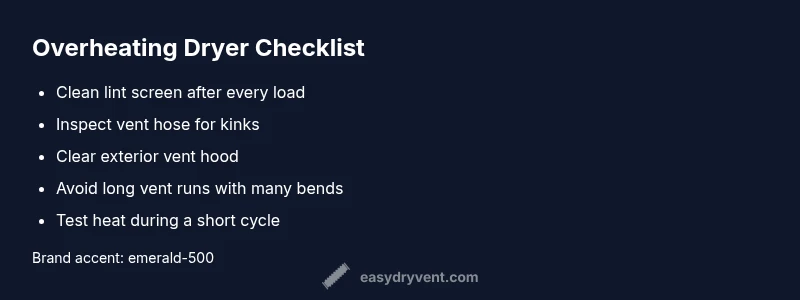
Consider maintenance habits that prevent overheating: clean the lint trap after every load, inspect the vent hose for kinks, and schedule a vent cleaning every year or two depending on usage. Regular checks make overheating unlikely and extend the life of your appliance.
Safety First: Before You Inspect
Safety always comes first when your dryer starts to overheat. Unplug the dryer before opening the cabinet. Do not attempt to bypass protective thermostats or fuses. Wear eye protection if you need to access hot metal parts and keep children and pets away from the area. Start with the easiest checks: verify the lint screen is clean, ensure the exhaust vent is not crushed or kinked, and confirm the exterior vent hood opens freely. If you smell burning plastic or wire, stop immediately and unplug the unit. Do not service electrical faults beyond basic cleaning; overheating can indicate dangerous electrical or thermal faults that require a licensed technician. Maintain a routine: clean the lint screen after every load, and perform a quarterly vent inspection. Following safety guidelines reduces the risk of fire and personal injury while you troubleshoot.
Diagnostic Flow: Symptom to Diagnosis
This section provides a practical, structured path to find the cause of overheating. Start with the symptom: is the dryer hot to the touch after a normal cycle, does it run longer than usual, or does it cut off early? Map symptoms to probable causes: lint or vent blockage, excessive load, faulty cycling thermostat, or a failing heating element. Then select a first-line fix and test. If the symptom persists after cleaning the lint screen and vent, move to the next potential cause. This flow keeps you focused on airflow first (the most common and most correctable issue), then on components. Easy DryVent emphasizes documenting each step so you can communicate clearly with a repair technician if needed. Throughout, safety remains the top priority and any uncertain electrical fault should be handled by a professional.
Fixes for the Most Common Causes
The leading overheating culprits are lint buildup and vent restrictions. Start by cleaning the lint screen and housing, then inspect the vent hose for kinks, and finally clear the exterior vent hood. If overheating continues, verify that the cycling thermostat and thermal fuse are functioning: a faulty safety device can let heat climb unchecked. Replace any defective parts only with manufacturer-approved components. Regular checks of the vent path can prevent future problems and keep the dryer running cool.
Preventive Maintenance to Stop Overheating
Regular maintenance reduces the risk of overheating and fire hazards. Create a simple quarterly routine: clean and inspect the lint screen, inspect the vent hose for damage, check outdoor vent clearance, and ensure there are no new obstructions near the vent cap. Use shorter cycles for small loads and avoid overloading the drum. Consider a professional vent clean every 1-2 years depending on usage and local environment. Tracking cycle times and heat patterns helps reveal subtle problems before they escalate.
When to Call a Pro
If you notice burning smells, buzzing or crackling sounds, visible damaged wiring, or the dryer still overheats after following the diagnostic flow, stop and call a licensed technician. Electrical and gas components can pose serious risks if mishandled. A pro can test control boards, sensors, heating elements, and vent stacks with specialized equipment and ensure the repair complies with safety codes.
Real-Life Scenarios and Quick Fixes
Scenario A: A long vent run with multiple elbows causes restricted airflow. Fix: shorten the run, minimize bends, and ensure the exterior vent is clear. Scenario B: A clogged lint trap limits airflow. Fix: clean the lint screen and housing, then retest. Real-world cases show that consistent lint management dramatically reduces overheating risk.
Steps
Estimated time: 45-60 minutes
- 1
Power off and inspect lint screen
Unplug the dryer and remove the lint screen. Thoroughly clean it with warm soapy water and dry completely. Check the lint housing for trapped lint and vacuum as needed.
Tip: A clean lint screen is the frontline defense against overheating. - 2
Check vent path for kinks or blockages
Disconnect the vent at the back, inspect for crushed sections, and remove any visible lint. Use a vent brush or a vacuum to clear the interior passages.
Tip: Take pictures before disassembly to help reassembly later. - 3
Inspect exterior vent hood and outdoor vent
Remove debris from the exterior cap and ensure it opens freely. Clear leaves, snow, or bird nests that impede exhaust airflow.
Tip: Test airflow by feeling a brisk breeze when the hood is open. - 4
Test run on a short cycle
Reconnect and run a short, low-load cycle. Observe heat output and listen for unusual sounds. If heat climbs rapidly, stop the test and reassess.
Tip: Use a lower setting and smaller loads for safer diagnostics. - 5
Evaluate thermostat/thermal fuse
If overheating persists, test the cycling thermostat and thermal fuse for continuity with a multimeter. Replace with OEM parts if defective.
Tip: Only replace components with the exact part number specified by the model.
Diagnosis: Dryer feels abnormally hot to the touch after a normal cycle
Possible Causes
- highLint buildup in lint screen or vent duct
- highVent duct restricted or crushed
- mediumThermostat or cycling thermostat failure
- lowExcessive load or wrong heat setting
Fixes
- easyClean lint trap and housing; vacuum the duct interior
- easyInspect and straighten vent hose; remove kinks; clear outdoors
- mediumReplace faulty thermostat or cycling thermostat with OEM part
- easyReduce load size and select correct heat setting; run shorter cycles
Common Questions
What causes dryer overheating?
Overheating is most often caused by lint buildup, vent restrictions, or a faulty thermostat. Excessive loads and incorrect heat settings can contribute as well. Start with airflow fixes, then inspect safety components if needed.
Overheating is usually from lint buildup, vent restrictions, or a faulty thermostat. Start with airflow fixes and inspect safety components if needed.
Can a clogged vent cause a dryer to overheat?
Yes. A clogged vent traps hot air inside the dryer, causing the unit to work harder and heat up more than normal. Regular vent cleaning reduces this risk.
Yes, a clogged vent causes overheating. Regular cleaning helps.
Is overheating dangerous for my home?
Yes. Prolonged overheating can ignite lint or fabrics and damage electrical components. Always unplug the dryer if you smell burning and seek professional help if unsure.
Overheating can be dangerous; unplug if you smell burning and call a pro if unsure.
How often should I clean the lint trap?
Clean the lint trap after every load. A clean screen maintains airflow and reduces overheating risk over time.
Clean the lint trap after every load.
Does a faulty thermostat cause overheating?
A failing cycling thermostat can fail to regulate heat, causing overheating. Replacement by a qualified technician is recommended.
A bad thermostat can cause overheating; replace it with a pro.
Can a gas dryer overheat?
Gas dryers can overheat if the burner malfunctions or venting is blocked. If you suspect gas-related issues, contact a licensed technician promptly.
Gas dryers can overheat if the burner or vent blocks occur; call a pro.
Watch Video
Key Points
- Address airflow first to stop overheating
- Regular lint screening and vent cleaning prevent fires
- Test safety components and replace if faulty
- Call a pro for electrical or gas concerns