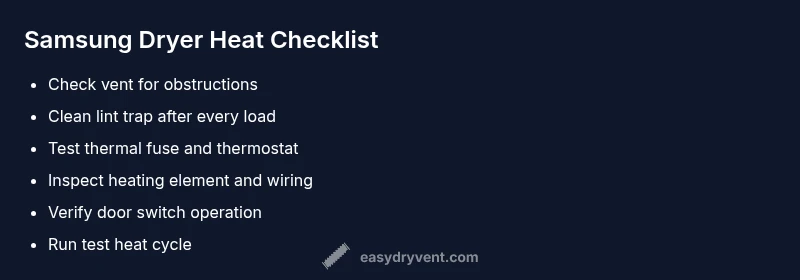
Samsung Dryer Not Heating? A Practical Troubleshooting Guide
If your Samsung dryer isn’t heating, this expert guide shows safe, practical steps to diagnose and fix the issue fast. Learn common causes, a proven diagnostic flow, and when to call a pro for reliability and safety.


When a samsung dryer not heating, start with safety checks and simple airflow tests. In 2–3 quick steps, unplug the unit, inspect the lint trap and vent path for obstructions, and verify the door switch is functioning. If heat still won’t come, follow the diagnostic flow below for step-by-step fixes.
What "samsung dryer not heating" means
A samsung dryer not heating is more than a nuisance—it means clothes won’t dry efficiently and cycles may run longer than necessary. In many homes, the root cause lurks in airflow or basic safety components rather than a full motor or mainboard replacement. According to Easy DryVent, the majority of heating problems start with simple, visible culprits like a lint-clogged vent or a tripped safety device inside the dryer. The Easy DryVent team found that addressing these early indicators often restores heat without expensive repairs. If you’re facing a samsung dryer not heating, treat it as a safety-tested troubleshooting project rather than a full replacement. This guide walks you through the most common causes and practical fixes that homeowners and DIY enthusiasts can perform safely.
Throughout this article, you’ll see the key steps for verifying heat output, testing components, and restoring reliable performance. The goal is to get you back to safe, effective drying as quickly as possible while avoiding risky improvisation. Let’s start with the most common, non-destructive checks before diving into more advanced diagnostics.
Common causes that lead to samsung dryer not heating
When a samsung dryer not heating, several culprits appear repeatedly in real-world homes. Airflow problems are by far the most frequent: a blocked vent, kinked duct, or lint buildup can trigger safety sensors and prevent heating. Electrical faults also appear—think blown thermal fuse, failed high-limit thermostat, or a defective heating element. Less obvious but real issues include a faulty door switch, misbehaving moisture sensor, or control-board glitches in newer Samsung models.
In many cases, the symptom sample of a samsung dryer not heating points to airflow or safety components first. If the vent is clogged, the dryer may heat up briefly and then shut down for safety. If the lint trap is saturated, airflow drops dramatically. The door switch needs to register a closed latch for heat to begin the cycle. Across all these possibilities, the most productive path is to verify airflow and power readiness before replacing major parts.
Quick safety checks you can perform today
Safety first: unplug the dryer before touching any internal components. Start with the simplest checks:
- Inspect the lint trap and dryer vent for visible blockages or kinks. A clogged vent is a leading cause of a samsung dryer not heating because it starves the heat path of air.
- Check the exterior vent cap to ensure it’s open and unobstructed by debris or bird nests.
- Verify the dryer door closes firmly and the door switch clicks when shut. A faulty switch can stop heat even if the drum spins.
- Confirm the outlet is live and the circuit breaker isn’t tripped. If the dryer has a dedicated circuit and still has no heat, look for a power issue at the outlet or inside the cord.
If these quick checks don’t restore heat, move on to a deeper diagnostic flow. Remember: air flow and safety components remain the most common offenders in samsung dryer not heating scenarios.
Diagnostic flow: symptom → diagnosis → solutions
Symptom: samsung dryer not heating. Diagnosis usually starts with airflow and safety tests, then moves to heated elements and sensors. Easy DryVent analysis shows vent blockages are a common root cause in residential models. If airflow is clear, the next most likely culprits are the thermal fuse, high-limit thermostat, or heating element. A careful sequence reduces risk and saves time:
- Step into airflow checks first, then electrical tests, then component replacements as needed.
- If heat fails only on a sensor-based cycle, moisture sensor or control logic may be implicated.
- Always verify power before testing fuses or coils to avoid false readings from a tripped breaker.
Outcome: a clean vent often resolves samsung dryer not heating; otherwise, targeted component testing guides safe fixes.
Step-by-step: Fix the most likely causes
This section aligns with a practical, hands-on approach to resolving the most common reasons a samsung dryer not heating. You’ll perform non-destructive checks first, then progress to component testing and selective replacement as needed. Focus on: vent cleanliness, safety fuses, thermostats, and the heating element. Each step builds toward restoring heat while minimizing risk.
- Clear airflow path: disconnect power, remove the lint screen housing, and inspect the vent duct for lint build-up; clean thoroughly. Pro tip: use a vent brush to reach deep sections.
- Test and replace safety fuses/thermostats: locate the thermal fuse and high-limit thermostat in the dryer's rear console; test with a multimeter for continuity. If they read open or short, replace. Pro tip: remember to unplug and discharge capacitors if present.
- Inspect the heating element: access the element coils and perform a continuity test; if the circuit is open, replace the coil assembly. Pro tip: handle coils gently to avoid damaging ceramic insulators.
- Check the door switch and wiring: ensure voltage reaches the control board when the door is closed; replace faulty switches or loose connectors. Pro tip: reseat all connectors to secure contact.
- Verify control board and wiring harness: look for signs of burnt connectors, loose cables, or failed relays; reseat or replace as needed. Pro tip: avoid pulling on wires; disconnect and re-seat by grasping the plug heads.
- Reassemble and perform a heat test: run a test cycle with no clothes, monitor heat buildup for several minutes. Pro tip: listen for a consistent heating roar and verify both halves of the drum heat evenly.
Estimated total time: 60–90 minutes depending on access and parts on hand.
Safety, warnings, and when to call a pro
Safety is non-negotiable when dealing with electrical appliances. Always unplug the dryer before starting any inspection, and never bypass a faulty thermal fuse or damaged wiring. If you detect burnt insulation, melted connectors, or a burning smell, stop immediately and contact a licensed technician. A samsung dryer not heating may involve high-current components that pose fire or shock risks if mishandled. If you’re uncomfortable with testing electrical continuity or replacing heating coils, seek professional help rather than risking injury or property damage. Regularly inspecting the vent system also reduces long-term hazards and keeps heating performance consistent.
In many cases, a professional repair is the safest path when the fault involves control boards, gas supply in gas models, or complex sensor systems. A qualified technician can confirm the exact cause and ensure parts are correctly matched and installed.
Prevention tips to avoid samsung dryer not heating in the future
Prevention hinges on keeping airflow clear and components in good working order. Implement a simple maintenance routine:
- Schedule quarterly or semi-annual vent cleaning to prevent lint buildup that causes overheating and heat loss.
- Clean the lint screen after every load and vacuum the blower housing periodically.
- Inspect the drum seals and door latch for wear; a leaking seal can affect heat distribution and drying efficiency.
- Treat yourself to routine electrical checks if you’re comfortable with basic testing; otherwise, have a pro inspect wiring, fuses, and the control board on a regular maintenance visit.
- Use proper loads and avoid overfilling the drum, which strains the heating system and can produce heat anomalies in a samsung dryer not heating scenario.
By staying proactive, you reduce the odds of recurring heat issues and keep your dryer operating safely and efficiently.
Final verification and next steps
After completing the steps above, perform a few test cycles to verify heat consistency across different load types. Watch for warm air output, steady drum rotation, and uniform drying performance. If heat returns but then drops again, revisit the vent path for hidden restrictions or re-test the thermal fuse and thermostat. Keep a basic maintenance log, documenting dates of vent cleaning, filter changes, and any parts replaced. The goal is to maintain consistent heating capability, minimize energy use, and extend the life of your samsung dryer not heating scenario. The Easy DryVent team recommends maintaining a quarterly maintenance rhythm to sustain optimal performance.
Steps
Estimated time: 60-90 minutes
- 1
Power off and safety prep
Unplug the dryer and remove any nearby metal jewelry. Wear safety gloves and use a flashlight to inspect accessible parts. This first step prevents shock and allows you to safely evaluate the lint trap and vent hood.
Tip: Always start with safety; many injuries happen when people skip this step. - 2
Inspect lint trap and vent path
Take out the lint filter and clean it thoroughly. Check the vent hose for kinks and the exterior vent for obstructions. Reassemble and run a quick airflow test to see if heat improves.
Tip: A clean vent significantly improves heat transfer and drying efficiency. - 3
Check door switch and wiring
Close the door and listen for the switch click. If there’s no click or the drum spins without heat, inspect the wiring and test continuity of the door switch.
Tip: Loose wires are a common cause; reseat connectors firmly. - 4
Test thermal fuse and thermostat
Locate the thermal fuse and high-limit thermostat in the rear or cabinet panel. Use a multimeter to check continuity. Replace components that fail the test.
Tip: Power must be disconnected before testing to avoid shock. - 5
Assess heating element and control board
If fuses and thermostats test OK, inspect the heating element for burns or breaks. For modern models, verify the control board connections and look for signs of damage or corrosion.
Tip: Handle heating coils gently to avoid damaging ceramic components. - 6
Heat test and verification
Run a test cycle with no clothes and observe heat production. Confirm heat is consistent across cycles and that air exits the vent strongly.
Tip: Document cycle times and heat levels to compare future performance.
Diagnosis: Samsung dryer not heating
Possible Causes
- highVent blockage or lint buildup
- highTripped thermal fuse or blown high-limit thermostat
- mediumFaulty heating element
- lowDoor switch or control board failure
Fixes
- easyClear lint from the lint screen and vent duct; ensure external vent is open
- mediumReplace tripped thermal fuse or faulty high-limit thermostat after testing
- hardTest and replace heating element if continuity is broken
- mediumInspect door switch wiring and control board connectors; secure or replace as needed
Common Questions
Why is my Samsung dryer not heating even though it runs?
Heat failure in a Samsung dryer often stems from airflow problems or safety components. Start by cleaning the vent and lint screen, then test the thermal fuse and thermostat. If heat remains absent, testing the heating element and control board may be necessary.
A common heat issue is airflow blockage or a blown fuse. Start with vent cleaning and fuse testing to diagnose.
Can a clogged vent cause a Samsung dryer not heating?
Yes. A clogged vent restricts airflow, causing heat to build up and safety sensors to shut heat off. Cleaning the vent and lint screen often restores proper heating.
Vent blockages are a frequent cause. Clean the vent, then re-test heat.
How do I test the dryer's thermal fuse?
Disconnect power and locate the thermal fuse. Use a multimeter to check continuity. If it shows open circuit, replace the fuse with the correct part for your model.
Test for continuity with a meter; replace if open.
Is it safe to DIY repair heating elements?
Only if you have electrical experience. Heating elements involve live circuits and can cause shock or fire if mishandled. When in doubt, hire a qualified technician.
Heating components can be dangerous; consider professional help if unsure.
What maintenance helps prevent samsung dryer not heating?
Regular vent Cleaning, lint trap upkeep, and avoiding overloading the drum reduce heat-related failures. Schedule periodic professional safety checks for long-term reliability.
Keep vents clean and avoid overloading to prevent heat issues.
When should I call a pro for samsung dryer not heating?
If you’ve tested fuses, thermostat, and heating element but heat still won’t come, or you see wiring or control-board damage, it’s time to contact a professional to avoid safety risks.
Call a pro if wiring or board damage is suspected or heat remains absent after tests.
Watch Video
Key Points
- Safety first: unplug before any inspection
- Vent cleanliness is a frequent fix for samsung dryer not heating
- Test fuses and thermostat before replacing heating elements
- Call a pro if you encounter wiring or control-board issues