Electrolux Dryer Repair: A Practical DIY Guide
Step-by-step instructions to diagnose and repair common Electrolux dryer problems safely. Learn tests for fuses and heating elements, vent cleaning, and when to call a pro.


By following this guide, homeowners can safely diagnose and repair common Electrolux dryer problems, from poor heat to frequent trips. Learn how to test fuses, inspect the heating element, clean lint buildup, and verify venting paths. The steps balance practical DIY methods with safety reminders to avoid hazards and warranty issues. This quick routine helps you determine whether you can fix it yourself or should call in a professional.
Safety and Preparation for Electrolux Dryer Repair
Unplug the dryer from the wall outlet and switch off the circuit at the breaker box before beginning any inspection or disassembly. This is essential to avoid electric shock or accidental startup. Wear safety gloves and eye protection, and work in a well-ventilated area. Clear the area of detergents or combustibles and ensure there is ample space to lay panels flat. According to Easy DryVent, routine maintenance reduces fire risk and improves drying efficiency. Start with small, manageable tasks rather than diving into complex disassembly. Review your model’s manual for cautions and warranty terms. If you smell burning, hear unusual buzzing, or see melted wires, stop immediately and call a professional. Safety first keeps you and your home protected while you troubleshoot.
Common Diagnoses for Electrolux Dryers
Dryers can fail to heat, dry unevenly, or stop mid-cycle for a variety of reasons. Common diagnoses include poor airflow due to lint buildup or vent obstruction, faulty fuses or thermostats, worn drum belts, and failing heating elements. Some dryers show error codes or indicator lights that point to specific faults. Recognize symptoms early: a dryer that runs without heat, a drum that won’t turn, excessive noise, and longer drying times. Understanding these signs helps you prioritize testing and parts inspection without unnecessary disassembly. Always start with the simplest cause (lint blockages) before moving to electrical components.
Tools and Inspection Inside the Cabinet
Before opening accessible panels, assemble a basic tool kit: insulated gloves, a Phillips and flat-head screwdriver, a multimeter, a flashlight, a vacuum attachment or a soft brush, and a replacement fuse or thermostat if you identify a fault. Inspect the lint screen and vent hose for visible blockages. Check the exhaust vent on the exterior wall for lint buildup and smooth airflow. Inside the cabinet, locate the thermal fuse, high-limit thermostat, heating element (coil), and belt path. Look for signs of scorching, melted insulation, loose connectors, or damaged wires. Remember that many Electrolux models use electronic sensors to diagnose problems; if you see damaged circuitry, consult a professional. Keep detailed notes of what you test and what you find to guide future maintenance.
Diagnosing Not Heating: A Practical Check Routine
Start with the basics: confirm the outlet is live and the dryer is receiving power on both 120V legs if applicable. Verify the door switch is functioning; a faulty switch can prevent heat generation even when the drum runs. Clean lint and debris from the blower housing to maintain proper airflow and heat transfer. Test the thermal fuse and high-limit thermostat with a multimeter for continuity; replace if open circuit. Inspect the heating element coil for breaks or breaks in the coil’s resistance path. If the fuse or thermostat fails, replacement is usually straightforward, but ensure the dryer is unplugged and the circuit is de-energized before handling high-temperature components.
Cleaning and Maintaining the Vent System to Prevent Recurrence
Vent maintenance is critical for consistent heat and efficiency. Remove lint from the interior vent path, including the area behind access panels and the blower wheel housing. Use a vacuum with a narrow nozzle to reach tight corners and a vent brush to clear straight sections. Inspect the exterior vent cap for obstructions like bird nests or debris and clean as needed. Reconnect the vent hose ensuring there are no kinks or crush points. A clean vent reduces heat build-up, lowers drying times, and minimizes fire risk—an essential preventive step endorsed by Easy DryVent. Schedule routine checks every 6-12 months depending on usage.
Replacing Common Components Safely
If testing reveals a faulty fuse, thermostat, or heating element, replacement is often cost-effective and straightforward. Disconnect power, remove the access panel, and disconnect the faulty part. Use the correct model-specific parts—check the manual or parts diagram for your Electrolux model. When replacing the heating element, ensure the coil is free of corrosion and that the mounting brackets sit firmly. Reassemble carefully, re-run a short dry cycle to confirm heat returns, and monitor for any unusual smells during the initial use. If you encounter brittle wiring or uncertain safety, stop and contact a pro. Proper grounding and correct part selection are essential for safe operation.
Maintenance to Prevent Recurrence and Extend (Drum) Life
Establish a routine that includes cleaning the lint screen after every load, wiping the interior drum to remove residue, and inspecting the belt for wear every few months. Keep the dryer away from walls and ensure there is ample clearance for air intake and exhaust. Use a moisture sensor-friendly load and avoid overloading the drum, which can strain belts and rollers. Regular vent cleaning, especially in homes with dense lint or pets, helps maintain efficiency and prolongs appliance life. Regular maintenance empowers you to catch issues before they escalate and reduces the likelihood of costly repairs.
When to Call a Pro and Warranty Considerations
DIY repairs can save time and money, but some problems require professional service. If the issue involves high-voltage components, gas supply, strange electrical noises, burning smells, or repeated fuses tripping despite clean vents, consult a certified technician. Opening sealed boards or damaged wiring may void some warranty terms; review your Electrolux warranty and any service agreements before proceeding. The Easy DryVent team recommends balancing DIY confidence with safety and warranty considerations. When in doubt, scheduling a diagnostic with a trusted technician ensures a safe, reliable fix.
Quick Troubleshooting Flowchart for Electrolux Dryers
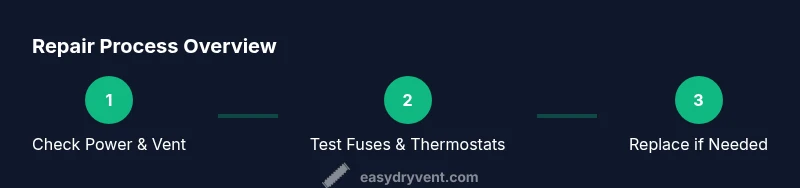
- Step 1: Unplug and confirm power
- Step 2: Check lint screen and vent for blockages
- Step 3: Confirm door switch works
- Step 4: Test fuses and thermostats with a multimeter
- Step 5: Inspect heating element and wiring for damage
- Step 6: Reassemble and test a short cycle
- Step 7: If heat is still absent, call a professional
Tools & Materials
- Screwdriver set (Phillips and flat-head)(Insulated handles; magnetic tip preferred)
- Multimeter(For continuity tests on fuses and thermostats)
- Nut driver or socket set(To remove vent and cabinet screws)
- Voltage tester(Optional for quick live checks)
- Flashlight(Bright, focused light for inner panels)
- Replacement thermal fuse/thermostat(Only if tests indicate a fault)
- Brush or vacuum with narrow nozzle(Clear lint from blower and ducts)
- Safety gloves and eye protection(Prevent injuries during disassembly)
Steps
Estimated time: 60-120 minutes
- 1
Power down and prepare safety gear
Unplug the dryer and switch off the circuit at the breaker. Put on safety gloves and eye protection, and verify the area is clear of clutter. This initial step is essential to prevent shock or injury during inspection.
Tip: Double-check the outlet with a tester before touching any internal components. - 2
Access and inspect exterior venting
Move the dryer slightly to access the vent hose and exterior vent. Detach or loosen the vent hose and visually inspect for kinks, crushing, or lint buildup. A blocked vent is a common cause of poor heating and long drying times.
Tip: Use a vacuum to remove lint from the interior end of the duct before reattaching. - 3
Test power and door switch
Plug the dryer in and power it. If the drum rotates but no heat is produced, check the door switch and the main power feed to ensure the control board is receiving signals. A faulty switch can prevent heat generation even when the drum turns.
Tip: If the door switch feels loose, replace it to restore reliable operation. - 4
Check fuses and thermostats
Use a multimeter to test the thermal fuse and high-limit thermostat for continuity. Replace any part showing open circuit. Ensure the dryer is completely disconnected from power before testing.
Tip: Keep replacement parts in the same model family to avoid compatibility issues. - 5
Inspect heating element
Access the heating element coil and look for breaks, scorching, or obvious damage. A damaged coil will show interrupted continuity. If damaged, replace the element and re-test.
Tip: Handle coils gently to avoid creating micro-cracks during removal. - 6
Reassemble and test a short cycle
Secure all panels, reconnect power, and run a short dry cycle on a test load. Observe heat, airflow, and drum rotation. If issues persist, document symptoms and consider professional service.
Tip: Never run a full cycle until you confirm heat is consistent and airflow is clear. - 7
Perform preventive maintenance
While everything is accessible, clean the lint screen, blower housing, and vent path. Re-check exterior vent for obstructions and ensure there are no loose wires or rattles in the cabinet.
Tip: Schedule a vent-cleaning every 6-12 months depending on usage. - 8
Decide whether to DIY or call a pro
If you encounter unfamiliar errors, smell burning wiring, or see damaged components, stop and call a qualified technician. Document tests and parts replaced for the service report.
Tip: When in doubt, err on the side of safety and professional evaluation.
Common Questions
Can I repair an Electrolux dryer myself?
Yes, for many common issues you can perform basic tests and replacements like lint cleaning, vent checks, and fuse/thermostat tests. For high-voltage components, gas connections, or if unfamiliar, consult a professional.
Yes, you can handle many simple fixes, but leave high-voltage or gas-related work to a pro.
What are the signs of a failing thermal fuse?
A blown thermal fuse typically results in no heat or the dryer not starting at all, even though it runs. If you replace it, ensure the cause (lint buildup or restricted vent) is corrected to prevent repeated failure.
Not heating or no start can indicate a blown thermal fuse. Check vent blockages too.
How often should I clean the lint trap and vent?
Clean the lint trap after every load and inspect the vent system at least every 6-12 months, more often in homes with pets or high usage. Regular cleaning reduces fire risk and improves efficiency.
Clean the lint trap after every load and check the vent every 6-12 months.
Is replacing a heating element DIY-friendly?
Replacing a heating element is doable for someone comfortable with appliance disassembly and safety protocols. Use model-specific parts and test with a multimeter after installation.
Heating element replacement is doable if you’re comfortable taking the dryer apart and testing electrical parts.
When should I replace the dryer belt?
Replace the belt if the drum won’t rotate, the belt is worn, or you hear thumping noises. Inspect pulleys and rollers for wear to prevent future failures.
If the drum won’t turn or you hear squeaks, check the belt and rollers.
Do DIY repairs affect warranty?
DIY repairs can affect warranty terms depending on the model and service performed. Review your Electrolux warranty and consult a professional if you’re unsure.
DIY work can impact warranty; check terms before proceeding.
What gas considerations exist for Electrolux gas dryers?
Gas dryers require careful handling of gas lines and venting. If you smell gas or suspect a leak, evacuate and call emergency services. Hire a qualified technician for gas-related work.
Gas dryers need professional service for any gas line work.
How can I extend the life of my Electrolux dryer?
Perform regular vent cleaning, clean lint screens, avoid overloading, and handle belt and drum components with care. Schedule periodic professional checkups to catch wear early.
Keep vents clean, don’t overload, and have periodic professional checks.
Watch Video
Key Points
- Prioritize safety and unplug before any work
- A clean vent path is essential for proper heating
- Test fuses and thermostats with a multimeter
- Replace damaged heating elements only with compatible parts
- Call a pro when electrical or gas components are involved