Dryer Vent Repair: A Practical DIY Guide
Learn practical, step-by-step dryer vent repair techniques to improve safety, efficiency, and dryer performance. From diagnosis to repair and maintenance, Easy DryVent guides homeowners through a clear, code-conscious process.


Repairing a clogged or damaged dryer vent improves safety, efficiency, and indoor air quality. This guide outlines how to diagnose obstructions, select materials, and perform a safe repair. You’ll learn airflow testing, cleaning or replacing duct sections, and reassembling a vent system that meets common code guidelines.
Why dryer vent repair matters
Dryer vent repair is more than a quick cleaning—it’s a safety essential. A clogged or damaged vent can create dangerous heat buildup, increasing the risk of dryer fires and toxic fumes entering living spaces. Beyond safety, a clear vent reduces drying times and energy use, which saves on utility bills and extends the life of your appliance. Regular maintenance also helps your home meet local building codes, which often require properly installed metal ducts and correct vent termination. The Easy DryVent approach emphasizes practical steps you can take to keep your system venting efficiently while minimizing disruption to daily routines. By understanding the path air follows from the drum to the outdoors, you’ll see why maintenance matters as much as installation.
Common vent problems and their causes
Vent problems usually fall into a few categories: lint buildup, crushed or kinked ductwork, improper duct materials, and improper vent termination. Lint is highly flammable, and even small accumulations can drastically reduce airflow. Flexible foil ducting is a frequent culprit because its corrugations trap lint and sag under gravity, creating blockages. Crushed or pinched sections limit airflow and increase heat buildup. Poor slope (less than 1/4 inch per foot) traps moisture and lint, inviting mold and mildew. Inadequate exterior vent hood installation can invite birds, rodents, or pests, further clogging the path. Understanding these issues helps you prioritize which sections to inspect first during a repair.
Safety considerations and PPE you should never skip
Vent repairs involve heat, lint, and electrical components. Always unplug the dryer and disconnect the power source before starting. If your dryer is gas-fired, shut off the gas supply in addition to the electrical power. Wear safety gloves and eye protection to guard against sharp metal edges and loose lint. Work in a well-ventilated area and, if possible, have a portable vacuum ready to capture lint as you disassemble. Local codes often require metal ducts with specific connections, so be prepared to replace rubber or foil sections with rigid or semi-rigid metal ducts. If you encounter signs of damage like corrosion, rodent nests, or extensive lint buildup, consider stopping and consulting a licensed professional. Safety first is the best investment when performing dryer vent repair in any home.
Diagnosing vent problems: airflow, visual checks, and basic tests
Begin with a simple airflow test: after disconnecting the vent, run the dryer empty on a low heat or air-dry cycle and feel for air at the exterior vent hood. If air flow is weak, inspect the interior duct for lint buildup, bends, or crushed sections. Use a bright flashlight to inspect inside the duct length and joints. A basic lint brush or a vacuum with a hose attachment can remove most accumulations; for deeper cleaning, a vent brush system designed for dryer ducts helps reach into long runs. If you notice moisture at joints or a musty odor, that’s a sign of moisture resistance issues and possible mold growth, which requires more thorough cleaning or replacement of affected sections.
Cleaning versus replacing: when DIY is feasible and when to call a pro
DIY cleaning is feasible for a mostly intact metal duct with minor lint buildup. In cases of severe clogging, collapsed ducts, rust, or disconnected joints, replacement is the safer option. Use only metal ducts; foil or vinyl flex ducts are not recommended for long runs due to higher fire risk and lower airflow efficiency. Attach duct segments with UL-listed metal clamps and seal joints with foil tape designed for HVAC use to prevent air leaks. If the duct run is excessively long or has multiple long bends, you may want to re-route with a shorter, straighter path. For complex layouts, a professional can ensure proper slope, secure anchoring, and compliant termination.
Exterior vent considerations: location, clearance, and weatherproofing
The outside vent should terminate away from windows, doors, and intake vents to prevent recirculation of hot air and lint. Ensure the hood flap opens freely and is not obstructed by debris or snow. Weatherproofing is important; use silicone sealant around the exterior wall penetration if needed, and verify that the vent exterior opening remains free from obstructions. Regularly clearing leaves, bird nests, and snow near the vent helps maintain optimal airflow year-round.
Maintenance plan to prevent future clogs and hazards
Create a simple quarterly maintenance routine: inspect the exterior vent hood, check for visible kinks or disconnections, and vacuum the accessible interior duct sections. Clean lint trap after every cycle and perform a quick airflow test monthly. If you notice longer drying times or an increase in heating cycles, revisit the duct system to identify new blockages or leaks. Keeping a log of inspections and any replacements helps you stay proactive and ensures your vent system stays safe and efficient.
Tools & Materials
- Metal dryer vent duct sections (rigid or semi-rigid)(Use UL-listed metal duct; avoid foil or vinyl options for safety and performance.)
- Vent clamps (metal)(Secure joints with metal clamps rated for HVAC use.)
- Foil tape or HVAC-rated seam tape(For sealing joints; avoid standard household tape.)
- Screwdriver set (Phillips and flathead)(For removing and reattaching duct clamps.)
- Pliers and/or crimping tool(Used to secure clamps and straighten ducts as needed.)
- Vacuum with hose attachment(Captures lint during cleaning; a HEPA vacuum is ideal.)
- Lint cleaning brush kit (dryer vent brush)(Long, stiff bristles designed for lint removal inside ducts.)
- Flashlight or headlamp(Bright light helps inspect interior duct sections.)
- Safety gloves and eye protection(Protect hands from sharp edges and dust.)
- Ladder or stable step stool(Access hard-to-reach interior duct sections.)
- Smoke pen or incense for airflow testing(Optional to visualize airflow paths during testing.)
- Exterior vent hood cover brush (optional)(Removes exterior debris from the vent hood.)
Steps
Estimated time: 1-2 hours
- 1
Power down and prep
Unplug the dryer and, if applicable, shut off the gas supply. Move the dryer away from the wall to access the vent and clear a safe workspace. This keeps you safe from electrical shock and allows you to inspect the vent path without interference.
Tip: Take a before photo of the vent path to compare after repairs. - 2
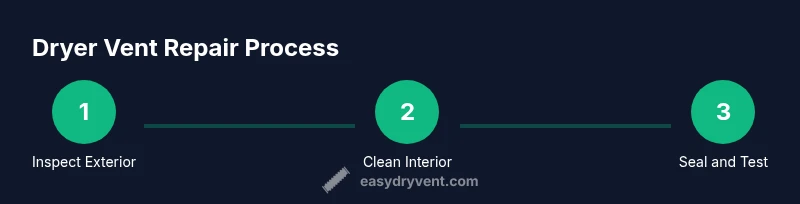
Inspect the exterior vent
Go outside and inspect the vent hood for obstructions, moisture, or damage. Remove any visible nests, leaves, or debris and ensure the flap opens freely.
Tip: Clear any moisture or ice in winter to prevent airflow restriction. - 3
Disconnect the vent duct from the dryer
Using the screwdriver or pliers, loosen clamps and carefully detach the duct from the dryer. Do not pull on the duct itself; support it to prevent damage to the dryer exhaust outlet.
Tip: Label sections if you’re removing multiple pieces to simplify reassembly. - 4
Clean interior duct segments
Vacuum the accessible interior of the duct. Use a dryer vent brush to reach deep into the run and dislodge lint. Wipe down metal surfaces where accessible and vacuum again to remove loosened lint.
Tip: Work slowly and in sections to avoid missing blocks. - 5
Inspect duct integrity and plan replacement
Examine duct lengths for kinks, crushing, rust, or gaps. Plan to replace damaged sections with straight metal runs and ensure a smooth interior surface for optimal airflow.
Tip: If duct sections are more than 8-10 feet, consider re-routing to reduce length. - 6
Reassemble and seal joints
Reconnect duct sections, tighten clamps, and seal joints with HVAC-grade foil tape. Avoid duct tape or sealants not rated for HVAC use. Ensure all connections are snug and free of gaps.
Tip: Tap joints with a screwdriver to confirm they’re fully seated before taping. - 7
Test airflow and seal leaks
Reattach the vent to the exterior hood and plug the dryer back in. Run a short cycle and feel for airflow at the exterior vent. Listen for air leaks and check for any unusual heat near joints.
Tip: Use the smoke pen or incense to visualize airflow through the run if available. - 8
Finalize and document maintenance
If airflow is strong and the exterior vent is clear, tidy the work area and store tools. Record the repair date and any parts replaced for future maintenance.
Tip: Schedule a quarterly check to prevent future clogs.
Common Questions
What are the signs that my dryer vent needs repair?
Common signs include longer drying times, excessive heat near the dryer, a hot dryer exterior, musty smells around the laundry area, and visible lint buildup in the vent or at the outdoor hood. If you notice any of these, inspect the vent path and perform a cleaning or replacement as needed.
Look for longer drying times, heat near the dryer, or a clogged outdoor vent. These are red flags that your vent may need repair or cleaning.
Can I use flexible foil ducting for my dryer vent?
Foil or vinyl flexible ducts are not recommended for long runs because they trap lint and are more prone to damage and fire risk. Replace with rigid or semi-rigid metal ducting whenever possible.
Avoid foil ducts; use metal ducting for safety and performance.
How often should I have my dryer vent inspected?
Aim for at least an annual inspection, with a cleaning every 1-2 years depending on usage. Homes with pets or high lint production may need more frequent checks.
Inspect annually and clean every one to two years, or more often if you notice slower drying.
Is it safe to repair a gas dryer vent myself?
Yes, with caution. Turn off the gas supply and electricity, and ensure proper clearance and venting. If you encounter corrosion or gaps in the exhaust system, consult a professional.
If you’re not comfortable, hire a pro—gas vent work carries additional safety considerations.
When should I replace vent sections rather than clean?
Replace sections if you find rust, holes, crushing, or repeated blockages that recur after cleaning. A damaged duct compromises airflow and safety, making replacement the safer option.
Replace damaged sections rather than repeatedly cleaning to maintain safety and efficiency.
What is the best way to test airflow after repair?
Run a short cycle and feel the airflow at the exterior vent; if possible, use a smoke test (incense) to visualize leaks and airflow paths. Ensure the vent flap opens freely and air exits smoothly.
Test airflow by running a cycle and confirming strong air exit at the outdoors.
Watch Video
Key Points
- Identify common vent issues and prioritize safe fixes.
- Always use metal ducting and proper clamps for vent runs.
- Clean and inspect regularly to reduce fire risk and improve efficiency.
- Seal joints securely and test airflow after repairs.
- Know when to DIY and when to hire a pro for complex layouts.