Can a Dryer Cause Stains? A Practical Troubleshooting Guide
Learn how a clothes dryer can cause stains, identify common culprits, and follow a step-by-step troubleshooting plan to prevent future marks. Easy DryVent provides urgent, practical guidance for homeowners and DIYers.


Yes—your dryer can cause stains if residue, dye transfer, or heat damage transfer onto fabrics. The most common culprits are fabric softener buildup on the drum, lint and detergent residue, or new garments whose dyes bleed. Easy DryVent's quick-check helps you spot the issue and start the fix right away.
Can a Dryer Cause Stains? Reality Check
According to Easy DryVent, it’s not just what you wash that matters—the dryer can contribute to staining when residues are left behind or when heat affects fabric dyes. A common homeowner question is can dryer cause stains, and the answer often points to residue, dye transfer, or heat damage. The quick-check approach below helps you confirm the culprit and start the fix without guesswork. You’ll learn to distinguish dye transfer, detergent or fabric softener residue, and heat-related issues so you can take targeted action.
Common Scenarios: When Dryers Add Stains
Dye transfer from new garments is a frequent cause of after-dry stains, especially with dark or vibrant colors. If fabrics are not colorfast, their dyes can bleed in the warm air or on the drum surface. Another common scenario is residue from fabric softeners, detergents, or dryer sheets building up on the drum and transferring when heat is applied. Lint and dryer vent debris can also trap residues that migrate onto clothes during a cycle. Easy DryVent’s experience shows these scenarios happen even with systems that seem clean.
How Fabric, Detergent, and Dryer Surfaces Interact
The interaction of fabrics with residues inside the drum, plus detergents and softeners, creates a perfect setup for staining. Fabric softeners can leave a slick film that clings to light fabrics. Detergent residue can settle in the drum or door gasket and transfer during drying. Some newer fabrics bleed color more readily, particularly when dried at higher temperatures or after repeated wash cycles. Understanding these interactions helps you choose safer loads and reduce stain risk.
Cleaning the Drum, Gasket, Lint Filter, and Vent
Begin with a thorough cleaning of the drum and door gasket to remove residues. Wipe those surfaces with a damp microfiber cloth and a mild cleaner recommended by the manufacturer. Clean the lint filter and the vent path to ensure proper airflow; a clogged vent can cause overheating that makes stains worse or sets dyes in place. After cleaning, run a test cycle with towels or white cloths to verify no pigment transfers occur.
Step-by-Step Diagnostics: Identifying the Culprit
Follow a logical flow to identify the root cause. Start by observing whether stains appear with specific fabrics or colors, then inspect for softener residue or dye bleed. If stains appear only after drying new clothes, the issue is likely dye transfer; if they appear across many loads, consider drum residue or vent-related overheating. Use the diagnostic flow below to guide fixes.
Proven Fixes and Prevention Methods
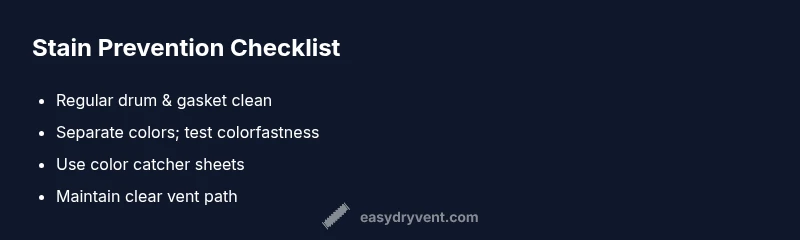
Implement fixes in a progressive order: clean drum surfaces, separate colors, and test loads with color-safe items. Use color catcher sheets for mixed colors, avoid overloading, and ensure the dryer is vented properly. Easy DryVent suggests replacing the vent cap if it’s damaged and cleaning the entire vent path periodically. If stains persist after these steps, professional service may be needed for drum resurfacing or vent inspection.
Quick Maintenance Schedule to Prevent Stains
Create a simple maintenance routine: weekly wipe-down of drum and gasket, monthly lint trap and vent inspection, and quarterly colorfastness checks for new garments. Keep a small bottle of mild cleaner near the laundry area and a stack of color catcher sheets for mixed loads. Following this routine reduces the odds of staining and protects fabrics over time.
Steps
Estimated time: 60-75 minutes
- 1
Inspect drum surface for residue
Unplug the dryer and remove all items. Wipe the drum, door seal, and gasket with a damp microfiber cloth to remove any soap, oil, or softener film. This first check often reveals slick residues that transfer onto fabrics.
Tip: Use a mild cleaner recommended by the manufacturer and avoid harsh solvents. - 2
Test colorfastness of new garments
Set aside new or unknown-color items and test a small, inconspicuous area for colorfastness before drying with the rest of the load. If colors bleed, separate darks from lights and consider color catcher sheets for future loads.
Tip: If unsure, air-dry a small swatch first before a full load. - 3
Clean lint filter and vent path
Remove and clean the lint filter; check the vent hose for kinks or obstructions. A blocked vent can cause overheating, which can worsen dye transfer and set stains.
Tip: Use a vent brush to reach deep into the duct; unplug the appliance before cleaning. - 4
Run a controlled test load
Dry a load of plain white towels or white cloths with no detergents or softeners. Observe any tint transfer or residue after the cycle to confirm the issue is under control.
Tip: Do not use fabric softener on the test load. - 5
Address any dye transfer
If you notice dye on the towels, rewash the stained garments separately and consider a stain remover appropriate for the fabric. Avoid drying the stained items with others until the stain is removed.
Tip: Pre-treat after washing with a color-safe stain remover for best results. - 6
Establish prevention habits
Adopt a routine: separate colors, avoid overloading, and routinely clean the drum, gasket, lint trap, and vent. This reduces future staining risk significantly.
Tip: Keep a small bottle of cleaner handy near the laundry area. - 7
Evaluate the need for professional help
If stains persist across multiple cycles and loads, professional drum resurfacing or vent inspection may be required. Do not ignore ongoing signs of heat or airflow problems.
Tip: Professional service can prevent costly fabric damage and improve dryer safety.
Diagnosis: Clothes come out with stains after drying; staining not present before washing?
Possible Causes
- highResidue on drum from fabric softener or detergent
- mediumDye transfer from new clothes or color bleeding
- lowLint or vent debris trapping residues and causing transfer during drying
- lowHeat damage or scorching from improper dryer settings
Fixes
- easyClean drum and door gasket to remove slippery residues; wipe with microfiber and mild cleaner
- easySeparate colors and test colorfastness of new garments; use color catcher sheets for mixed loads
- easyInspect and clean the lint filter and vent path; ensure proper airflow to avoid overheating
- mediumIf stains persist, consider professional drum cleaning or vent inspection
Common Questions
Can stains appear after a dryer cycle even if clothes were fine after washing?
Yes. Some dyes bleed or residues can transfer during drying even if washing seemed to remove them. The heat from the dryer can fix dyes in place or spread residues. This is why a targeted check is important.
Yes. Dyes can bleed during drying even after washing, so you should check for dye transfer and residues before drying again.
Can fabric softener cause stains in the drum?
Fabric softeners can leave a film on the drum that may transfer to fabrics when heated. Wipe the drum, reduce softener usage, and consider alternative softening methods.
Yes, fabric softener can leave a residue that stained fabrics during drying. Wipe the drum and adjust usage.
How do I remove color transfer stains from clothes after drying?
Pre-treat the stained areas with a color-safe stain remover, rewash separately on a cold or warm setting, and air-dry until the stain is fully removed. Avoid drying the stained items together with other clothes.
Pre-treat stains, rewash separately, and avoid drying until the stain is gone.
Should I replace the dryer if stains persist after cleaning?
If stains persist after cleaning and testing, have a professional inspect the drum and vent. Persistent overheating or drum damage can require repair rather than replacement.
If stains persist after cleaning, a professional check may be needed for possible drum or vent issues.
Are colorfastness tests reliable for preventing dye transfer?
Colorfastness tests are a useful preventive step but should be paired with color separation and color catcher sheets for best results.
Colorfast tests help, but also separate colors and use color catchers for best protection.
Is it safe to use aggressive cleaners inside the drum?
Avoid harsh chemicals; use only cleaners recommended by the manufacturer. Aggressive cleaners can damage seals and fabrics.
Avoid harsh cleaners; stick to manufacturer-recommended products.
Watch Video
Key Points
- Identify root cause before reloading loads
- Clean drum, gasket, lint filter, and vent regularly
- Separate colors and test colorfastness before drying
- Use color catcher sheets for mixed loads
- Maintain a regular preventive routine to avoid stains