Which Dryer Setting Is Best for Wrinkles: A Practical Guide
Learn how to minimize wrinkles by choosing the right dryer setting, with fabric-aware tips, step-by-step routines, and maintenance advice from Easy DryVent.


Which dryer setting is best for wrinkles? Generally, choose Permanent Press (or Wrinkle Guard) with medium-low heat and a cool-down. Remove garments promptly at the end of the cycle to prevent setting wrinkles, then hang or fold. For delicate fabrics, use a gentle tumble or steam option if available. Practice with a test item first.
How Dryer Design Affects Wrinkles
Your clothes emerge wrinkled not only from heat but from how the dryer tumbles and cools fibers. Modern units use drum motion, air velocity, and a cooling cycle that locks fiber alignment. When the cycle ends, residual heat can set wrinkles if you leave items in the drum. According to Easy DryVent, the interplay between heat exposure and mechanical action determines how aggressively fabrics wrinkle during drying. Heavier fabrics benefit from longer cool-downs, while delicate textiles need gentler tumbling and lower temperatures. A key concept is moisture removal: stopping drying while fibers still have residual moisture can help fibers relax more evenly as they cool. In practice, understanding your machine's cycle names and sensor options matters because a "Permanent Press" cycle is designed to balance heat with a cool-down to reduce wrinkling. If your dryer lacks a dedicated wrinkle-reduction cycle, you can approximate it with a low-heat setting plus a timed cool-down.
Best Dryer Setting for Wrinkles: Permanent Press Explained
Permanent Press is a purpose-built cycle in most machines that alternates between a gentler tumble, moderate heat, and an extended cool-down. This approach reduces the likelihood of fibers settling into tight creases than a high-heat, fast-dry cycle. For cotton blends and synthetics, Permanent Press offers a practical compromise: enough heat to dry efficiently without over-drying and with a late-stage cool-down that helps fibers relax. If your model has a Wrinkle Guard or similar option, use it as the default for everyday loads. Remember that fabric type matters: some materials tolerate higher heat briefly, while others should stay at lower heat settings to avoid shine and pilling. In short, Permanent Press is often the most reliable default for wrinkle reduction, but always check garment labels for fabric-specific guidelines.
Heat Levels and Fabric Types: When to Use Low vs Medium vs High
Heat drives drying speed and fiber stress. Low heat is gentlest on delicate synthetics and blends but can leave items damp if you oversize the load. Medium heat works well for most cottons and blends, especially when paired with a cool-down. High heat dries quickly but increases fiber agitation, which can set wrinkles. The trick is to match heat to the fabric and not exceed the label's guidance. If in doubt, start with the lowest effective heat and an auto-dry cycle, then monitor the results and adjust next time. Easy DryVent's guidance emphasizes testing a test item and adjusting cycles based on results rather than assuming one setting fits all fabrics.
How Fabric Type Changes the Equation
Natural fibers such as cotton and linen respond differently from synthetics like polyester. Cotton is forgiving with appropriate cool-down but can wrinkle easily if allowed to cool in a crumpled state. Synthetics often tolerate lower heat but may hold onto moisture longer, creating a damp finish that can lead to wrinkles if over-dried. Delicate fabrics like rayon or silk blends require garment bags and shorter cycles on delicate or air-dry settings. The principle is: know the fiber, read the care label, and use the least aggressive setting that achieves dryness. This targeted approach reduces post-dry ironing time and protects the garment's finish.
Practical Workflow for Wrinkle Reduction (Sample Scenarios)
Scenario A: A mixed load of cotton shirts and synthetic blends. Start with Permanent Press, moisture-sensor auto-dry, and a cool-down. Remove items promptly and shake before folding. Scenario B: A load of delicate blouses. Use Delicate or Low Heat with a steam option if available, and consider air-dry for the last few minutes. Scenario C: Towels and denim. Avoid over-drying and select a standard cycle with a longer cool-down.
Common Myths About Wrinkles and Dryers Debunked
Myth: High heat dries faster and reduces wrinkles. Reality: High heat often worsens wrinkling by setting creases. Myth: Wrinkles disappear after ironing, so the dryer doesn't matter. Reality: The dryer can minimize or set wrinkles before ironing. Myth: You should never use steam in the dryer. Reality: Some models use steam to relax fibers, especially on delicates. These beliefs ignore the fabric and cycle specifics and can lead to wasted energy and more wrinkles.
Maintenance Habits to Prevent Wrinkles
Regular lint filter cleaning improves airflow and drying evenness, which reduces over-drying and wrinkling. Clean the lint screen after every load, and periodically inspect the dryer vent for blockages. Avoid overloading the drum, which crowds fibers and fosters creases. If you can, use a garment bag for ultra-wrinkly pieces and remove promptly to prevent setting deep creases. Finally, store garments promptly to avoid new wrinkles from long-term compression.
Quick Troubleshooting for Persistent Wrinkles
If wrinkles persist after drying, run a quick refresh cycle with steam or a short warm cycle with a cool-down. Test a single item first to confirm results before re-drying a whole load. Check that you did not under-load or over-load the drum, and ensure the moisture sensor is functioning. If you still see wrinkles on multiple fabrics, consider professional service to check the heating element or thermostat settings.
Drying and Ironing: When to Use Each Tool
Dryers reduce wrinkles but are not a substitute for ironing. Use the dryer for initial wrinkle minimization and finish with a quick iron or steamer for crispness on collars and cuffs. A handheld steamer is convenient for removing wrinkles from dresses or delicate fabrics that don't respond well to heat. When you finish, fold garments promptly or hang them to maintain the smooth finish.
What to Do If Wrinkles Return After Drying
Wrinkles can reappear if fabrics remain packed away while still warm or if storage is crammed. Once items are dry, give them a light shake, remove while warm or still slightly warm, then hang or fold immediately. If wrinkles reappear regularly, re-test the cycle settings, ensure proper load size, and check for dryer vent restrictions that hinder consistent drying.
Tools & Materials
- Dryer with wrinkle-reduction setting (Permanent Press)(Ensure your dryer has a Permanent Press or Wrinkle Guard option)
- Mesh garment bag (optional)(For delicate garments to reduce friction)
- Lint screen brush or vacuum (optional)(Keep lint screen clean for optimal airflow)
- Drying rack or hanger (optional)(Finish drying to prevent re-wrinkles)
- Garment steamer or iron (optional)(Smoothing remaining wrinkles after drying)
Steps
Estimated time: 30-45 minutes
- 1
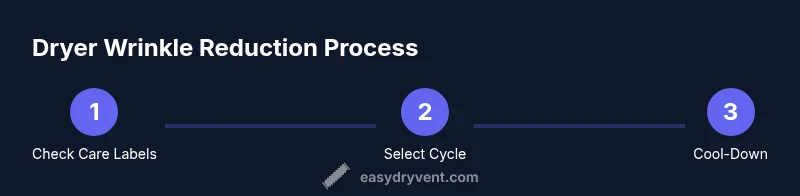
Check garment care labels
Read the care labels to confirm tumble-dry safety and any fabric-specific instructions. Separate items that say line dry or dry clean only. This step prevents damaging fabrics and ensures you pick the right cycle from the start.
Tip: Always test one item first to calibrate the cycle for similar fabrics. - 2
Select the appropriate cycle
Choose Permanent Press or Delicate/Low Heat as a baseline. If a Wrinkle Guard option exists, enable it. The goal is gentle heat with a controlled tumble to minimize creasing while drying efficiently.
Tip: If unsure, start with the lowest effective heat and assess results on a small item. - 3
Set moisture sensor and cool-down
Use auto-dry with a moisture-sensor if available, plus a generous cool-down. This helps fibers relax as they finish drying and reduces setting wrinkles.
Tip: If your model lacks a sensor, program a timer that leaves at least 15-20 minutes for cooling. - 4
Remove promptly after cycle ends
As soon as the cycle completes, take items out to prevent new wrinkles from forming while they sit in the drum. Shake lightly before folding or hanging to encourage fiber separation.
Tip: Separate heavier items from lighter ones to avoid crushing delicate fabrics. - 5
Address wrinkles that persist
If wrinkles remain, run a short steam cycle or use a handheld steamer on the garment. For stubborn areas, a quick, low-heat iron touch-up can finish the look.
Tip: Always test on an inconspicuous area first to avoid shine or damage. - 6
Evaluate and adjust for future loads
Review results and adjust for future loads based on fabric type and dryer performance. Document what worked to streamline future routines.
Tip: Keep a simple note of fabric type and cycle settings that produced the best results.
Common Questions
Is Permanent Press always the best choice for wrinkles?
Permanent Press works well for many fabrics by balancing heat and a cool-down, but some delicate or heat-sensitive fabrics may respond better to lower heat or air-drying. Always check the care label and test on a sample item.
Permanent Press is a strong default for wrinkles, but always verify with fabric care labels and a test item.
Should I always use a cool-down phase?
Yes. A cool-down helps fibers relax and reduces the chance of creases setting in as fabrics finish drying. If your dryer lacks a dedicated cool-down, extend the last minutes of the cycle or add a separate 5-10 minute cool period.
Cool-down helps reduce wrinkles by letting fibers relax after drying.
Can steam help reduce wrinkles inside the dryer?
Some models include a steam option that can relax fibers during drying, particularly for delicate fabrics. If your dryer supports it, use steam on appropriate fabrics and follow garment labels.
Steam options can relax fibers; only use them on fabrics that tolerate steam.
What should I do for heavily wrinkled clothes?
Try a quick steam refresh cycle or a short warm cycle with a cool-down, then promptly remove and finish with light ironing or steaming as needed.
For heavy wrinkles, a steam refresh plus quick air-dry can help before ironing.
Does fabric type change which setting I should use?
Yes. Natural fibers like cotton tolerate more heat with careful cool-down, while synthetics benefit from lower heat to avoid shine and formation of creases. Always follow care labels.
Fabric type matters; adjust heat and cool-down accordingly.
Should I remove clothes immediately or can I wait for a bit?
Remove promptly after the cycle ends to prevent wrinkles from forming while items sit in the drum. This habit dramatically reduces crease formation.
Remove promptly after drying to prevent new wrinkles.
Watch Video
Key Points
- Choose Permanent Press for most wrinkle-prone fabrics.
- Remove promptly to prevent set wrinkles.
- Use low-to-medium heat with a proper cool-down whenever possible.
- Steaming or light ironing can finish only if wrinkles persist.