Gas Dryer Reviews: Performance, Safety, and Practical Buying Guide
In this in-depth dryer reviews gas guide, Easy DryVent analyzes gas-powered dryers, venting, safety, and cost implications to help homeowners choose wisely.


Gas dryers typically deliver faster drying and robust heat, making them appealing for heavy loads. In dryer reviews gas models, performance hinges on venting effectiveness and installation quality. This quick verdict weighs efficiency, safety, and upkeep against installation complexity and fuel costs to help homeowners decide whether a gas unit fits their laundry routine.
In-Depth Review Methodology
This review uses a multi-step approach to evaluate gas-powered dryers. Our process blends lab-style tests with real-world usage to reflect typical family laundry patterns. We start with a representative mixed-load cycle: towels, cottons, blends, and a bulky item, to measure dry time, residual moisture, and fabric care outcomes. Tests are repeated across several models to gauge consistency and identify edge cases such as high-temperature cycles or sensor-driven auto-dry modes.
We pay special attention to venting and installation: a gas dryer relies on proper exhaust to maintain performance and indoor air safety. We evaluate vent path resistance, the ease of cleaning the exhaust duct, and the impact of vent length on drying speed. We verify gas line accessibility, shut-off valve location, and compliance with local codes. Safety is baked into every step—CO detector placement, gas-leak checks, and automatic shut-off features are part of the assessment.
Finally, we compare gas models against comparable electric units to provide context on energy use, running costs, and convenience. This approach aims to deliver practical, transparent recommendations that reflect day-to-day use. For readers, this is the kind of analysis that answers: dryer reviews gas, in real homes, not just lab tests.
Gas vs Electric: How It Impacts Performance
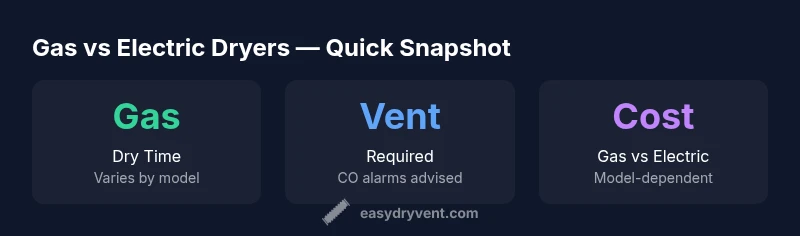
Gas dryers heat via a burner and exhaust system, while electric models rely on heating elements. In many scenarios gas units deliver faster dry times for bulky items and heavy fabrics, especially when the load is dense or damp. Electric dryers can be gentler on delicate fabrics in some cycles but may take longer on large loads. Venting differences matter: gas models require robust exhaust paths and adequate ducting to avoid heat buildup and moisture in living spaces. Installation considerations include a gas line connection, vent hood, and, in some areas, permits. Indoor air quality depends on vent integrity and a working CO detector nearby. In contrast, electric models typically require only electrical wiring and a standard outlet. In choosing between the two, homeowners should weigh upfront installation complexity, fuel costs, and long-term convenience, with gas units offering speed advantages when venting is correctly managed.
Key Performance Metrics for Gas Dryers
- Dry time and moisture removal: Gas dryers are known for quick heat bursts that tackle bulky items efficiently, though performance depends on venting and drum design.
- Temperature control and fabric care: Precise sensor systems and thermistor control help protect fabrics from excessive heat, preserving color and texture.
- Sensor accuracy and wrinkle management: Modern gas models rely on moisture sensors to reduce overdrying and wrinkles.
- Noise and vibration: Look for anti-vibration features that reduce resonance in busy laundry rooms.
- Durability and maintenance demands: Gas components require periodic inspection of the burner assembly and gas valve, plus regular vent cleaning to maintain efficiency.
To compare models effectively, track these metrics across cycles such as normal, bulky, and delicate; demand consistent performance under different loads. Gas-dryer users should also consider installation-related costs and potential service requirements. When evaluating options, prioritize models with clear performance metrics published by manufacturers, plus independent testing where available.
Safety, Venting, and Maintenance for Gas Dryers
Gas dryers demand attention to venting, combustion safety, and routine maintenance. Ensure a properly sized vent to minimize backpressure, which can reduce efficiency and heat output. Install a CO detector in the laundry area and verify its battery life regularly. Schedule professional gas line inspection and dryer vent cleaning at least once a year, or more often in homes with long duct runs or multiple bends. Replace damaged vent sections promptly and avoid using plastic or foil ducts. Regular lint screening remains essential, but gas models may produce more lint due to their higher heat; clean the lint screen before every cycle and inspect the vent hood for obstruction. Finally, ensure compliance with local codes and manufacturer safety guidelines before installation or operation; incorrect installation can create fire or CO hazards.
Energy Use, Costs, and Long-Term Considerations
Gas dryers can offer energy-use advantages in homes with existing gas prices or where drying speed reduces cycle counts. However, fuel price volatility and potential installation costs mean savings are not guaranteed. Compare total cost of ownership by factoring gas consumption, venting needs, permit fees, and potential professional installation. In regions with reliable gas supply, the unit's efficiency can translate into lower per-load energy costs, but installation complexity may offset these gains. Consider whether your home already has a gas line and a suitable vent path, as retrofitting could add to the initial investment. For many households, gas vs electric comes down to a balance between convenience, upfront costs, and long-term energy pricing expectations.
Practical Buying Guidance for Gas Models
Start with the basics: check for a model with a proven track record for reliability and a good warranty. Examine energy ratings, cycle options (normal, bulky, delicate, timed dry), and moisture-sensing features that minimize overdrying. Verify that your home has an accessible gas shutoff, proper venting, and a CO detector within the laundry area. Request professional installation to ensure safe gas connections and proper venting, and ask about vent-cleaning intervals in the user manual. Compare models by their ease of maintenance, availability of repair parts, and service networks. Finally, account for long-term costs—gas costs, maintenance, and potential replacement schedules—to determine whether a gas model is worth the investment in your household.
Common Pitfalls and How to Avoid Them
One common mistake is underestimating venting requirements, leading to longer cycles and reduced efficiency. Another pitfall is skipping professional installation, which can create safety risks and void warranties. Inadequate CO detectors or improper placement can compromise indoor air safety. Failing to clean vents or lint traps regularly can cause fires or performance declines. Finally, shoppers sometimes assume gas dryers are universally cheaper to run; fluctuations in local gas prices and differences in venting complexity mean outcomes vary by home, model, and usage patterns. By verifying vent integrity, following maintenance schedules, and using professional installation, homeowners can avoid these common issues.
The Good
- Faster dry times on large loads
- Strong heat output improves fabric care
- Potential long-term savings if gas prices stay favorable
- Compatibility with existing gas infrastructure in many homes
Negatives
- Requires venting and dedicated gas line installation
- Higher upfront installation costs and permitting
- CO safety concerns if venting or detectors are inadequate
- Maintenance depends on gas components and vent cleanliness
Gas dryers are best for homes with existing gas hookups and a need for fast drying times, provided venting and safety measures are in place.
This review finds gas models offer speed and heat advantages for bulky loads, but installation and venting safety are critical. If you have gas access and can ensure proper venting and CO monitoring, a gas dryer can be cost-effective in the long run; otherwise, electric models may be simpler and safer.
Common Questions
What are the primary differences between gas and electric dryers?
Gas dryers heat using a burner and vent exhaust, enabling fast drying for bulky loads. Electric dryers rely on heating elements and generally install more easily. The choice affects installation, ongoing fuel costs, and indoor air safety considerations.
Gas dryers heat faster but need venting and gas connections, while electric ones are simpler to install but may take longer on big loads.
Do gas dryers cost more upfront than electric?
Upfront costs can be higher for gas models due to the gas connection and venting requirements. Installation by a licensed professional is often necessary and adds to the initial expense.
Gas units may cost more to install, but long-term savings depend on local gas prices and usage.
Is venting required for gas dryers?
Yes. Gas dryers require a properly installed vent to expel combustion byproducts. A CO detector in the laundry area is strongly recommended.
Gas dryers need vents and CO detectors to keep indoor air safe.
Can I install a gas dryer myself?
Professional installation is strongly recommended to ensure safe gas connections and compliant venting. Improper installation can lead to leaks or CO hazards.
Avoid DIY gas dryer installs; professionals ensure safety and code compliance.
What maintenance does a gas dryer need?
Regular lint screening, vent cleaning, and periodic checks of the gas line and burner assembly help maintain performance and safety. Schedule annual inspections for safety-critical components.
Keep vents clean and have gas connections checked regularly.
Are gas dryers safer with CO detectors?
CO detectors are a critical safety feature for gas dryers. Place detectors in or near the laundry area and test them routinely.
Yes—CO detectors are important for gas dryers to prevent carbon monoxide buildup.
Key Points
- Verify venting quality before buy
- Expect installation costs for gas hookups
- Install CO detectors and follow safety guidelines
- Compare long-term costs with electric models