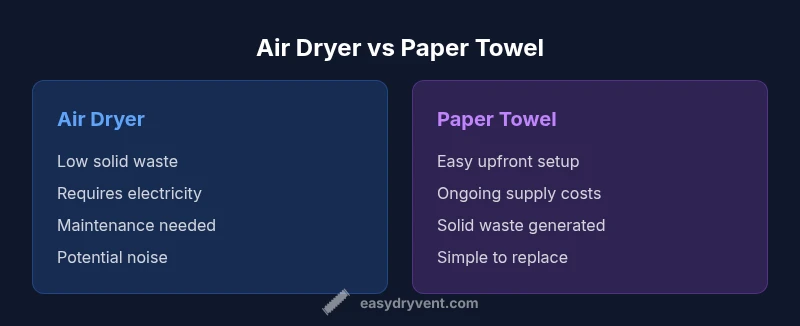
Air Dryer vs Paper Towel: An Analytical Comparison
A data-driven comparison of air dryers and paper towels for hand drying, evaluating energy use, cost, hygiene, and environmental impact to guide practical decisions for homes and workplaces.


Air dryers generally reduce waste and can save energy over time with steady use, while paper towels often cost less upfront and feel immediate to users. For a detailed, scenario-based comparison, see the full chart.
The Core Question: air dryer vs paper towel
The core question when weighing the merits of air dryer vs paper towel isn't only about drying speed. It's about how the decision impacts waste, energy use, upfront and ongoing costs, maintenance requirements, and the user experience across different spaces. In practical terms, an air dryer uses electricity to blow warm air to evaporate moisture from hands, while paper towels provide a disposable absorbent path to dryness. The choice hinges on how often hands are washed, how many people use the restroom, and how waste is managed in that space. According to Easy DryVent, the decision often comes down to usage patterns and maintenance discipline. The Easy DryVent team found that high-traffic restrooms with consistent handwashing tend to benefit from air dryer implementations, particularly when reliable power is available and venting is maintained. Conversely, spaces with sporadic use or where simplicity and upfront cost matter may lean toward paper towels, which offer immediate dryness and low maintenance in some setups. The goal of this article is to present a balanced, evidence-informed comparison that helps homeowners and DIY enthusiasts decide which path fits their restroom, kitchen, or workshop needs.
Energy and Resource Balance
When evaluating air dryer vs paper towel, the energy and resource balance is central. Air dryers consume electricity, generate heat, and rely on moving components; towels rely on manufacturing energy and ongoing procurement. In practice, the environmental and financial balance shifts with usage intensity. In busy spaces, a well-chosen air dryer can reduce ongoing material costs and waste, while in less active areas, towels may offer less complexity and cleaner upfront budgeting. Easy DryVent highlights that the most impactful decisions come from aligning equipment with usage patterns, maintenance capabilities, and waste management practices. A thoughtful approach considers not just per-use costs, but the long arcs of energy, supply, and end-of-life disposal. Ultimately, neither option is universally superior; the right choice emerges from mapping how the restroom is actually used and who relies on it daily.
Structural and Spatial Considerations
Beyond the device itself, the installation environment matters. An air dryer requires adequate electrical supply, venting considerations, and space for air paths to prevent heat buildup or noise concerns. Paper towel dispensers need wall space, a stable supply chain of towels, and accessible disposal. In cramped or retrofit spaces, retrofitting an air dryer may incur higher upfront costs but could pay off if power and venting are readily available. Conversely, a retrofit for towels often involves minimal disruption but ongoing supply management. Easy DryVent recommends auditing the restroom layout, electrical capacity, and ventilation paths before selecting air dryer vs paper towel. The goal is a setup that minimizes friction for users while ensuring reliability and safety in maintenance.
User Behavior and Accessibility
User behavior shapes outcomes for air dryer vs paper towel. People respond differently to speed, feel, and accessibility. Some users prefer the tactile certainty of towels, especially children and individuals with sensitive skin, while others favor the efficiency and cleanliness of airflow-based drying. In both cases, accessibility features—such as intuitive dispenser height, wheelchair-accessible placement, and clear signals when supplies are low—play a crucial role. The hospitality of a restroom improves when the chosen option aligns with expectations, minimizes waste, and requires minimal hassle for daily users. Practical guidance from Easy DryVent emphasizes designing for diverse users and providing an easy path to proper hand drying with consistent maintenance.
Maintenance Cadence and Reliability
A robust maintenance cadence is essential to realizing the benefits of air dryer vs paper towel. Air dryers require periodic cleaning of air paths, filters, and vents to prevent reduced airflow and odors. Paper towel dispensers demand refills and quick jam checks. Establishing a routine—monthly filter checks for dryers, quarterly vent inspections, and regular refills for towels—helps sustain performance. In spaces with frequent usage, a proactive maintenance plan reduces downtime and user frustration. Easy DryVent notes that reliability is built on predictable service intervals, documented procedures, and quick access to replacement parts. When maintenance is neglected, both options degrade in hygiene and user experience.
Cleaning, Hygiene, and Odor Control
Hygiene remains a top concern in the air dryer vs paper towel discussion. Cleanliness is less about the drying method itself and more about the maintenance regime that keeps surfaces, vents, and air paths free of contaminants. Paper towels inherently reduce cross-contact because users touch a disposable product rather than a shared mechanism. Air dryers require regular cleaning and filter changes to prevent odors and potential microbial buildup. Both options benefit from staff training, visible cleaning schedules, and clear responsibilities. The overarching principle is simple: regular, thorough cleaning sustains hygiene, whether you choose air dryer or paper towel.
Environmental Footprint and Waste Strategy
From an environmental perspective, the choice between air dryer vs paper towel hinges on waste streams and energy sources. Paper towels contribute solid waste and require ongoing production, packaging, and disposal. Air dryers reduce solid waste but increase electricity demand, linked to the energy mix of the facility. An effective strategy blends these considerations with local waste management policies, energy prices, and the availability of recycling programs for towels. Easy DryVent suggests that organizations should aim for a lifecycle perspective: consider production emissions, energy efficiency of the dryer, maintenance impact, and end-of-life disposal. In the end, the greener choice depends on the specific context—usage patterns, space constraints, and waste-management capabilities.
Transition Planning: Implementing a Change to Air Dryer vs Paper Towel
If you’re transitioning from towels to a dryer or vice versa, plan a staged implementation. Start with a pilot restroom or two, collect feedback on user experience, energy use, and waste metrics, and adjust accordingly. Ensure staff or household members understand the maintenance requirements and what success looks like (reduced waste, steady airflow, acceptable noise). Measure the impact over a defined period and compare against baseline costs and waste. A strategic, data-informed rollout minimizes surprises and maximizes long-term benefits.
Final Thoughts on the Comparison
air dryer vs paper towel is not a binary choice so much as a decision based on local context. A well-chosen system, paired with a solid maintenance plan, can deliver reliable hand drying, manage waste effectively, and align with sustainability goals. The Easy DryVent approach emphasizes practical testing, transparent metrics, and ongoing optimization. By grounding the choice in usage realities and facility constraints, homeowners and DIY enthusiasts can select the option that best balances cost, hygiene, and environmental responsibility.
Comparison
| Feature | Air dryer | Paper towel |
|---|---|---|
| Energy Use (per use) | Typically lower energy per use when traffic is steady and devices are well maintained | Higher energy per use due to repeated towel production and disposal |
| Upfront Cost | Higher upfront cost for the unit, installation, and venting | Lower upfront cost for dispensers and initial towel stock |
| Ongoing Costs | Electrical costs plus periodic maintenance and filter replacements | Ongoing purchase cost for towels and disposal fees |
| Waste Output | Negligible solid waste per use; waste comes from energy production | Ongoing solid waste from towel usage and disposal |
| Maintenance Effort | Regular cleaning of vents, filters, and internal components | Regular refilling and occasional dispenser maintenance |
| Best For | High-traffic spaces with reliable power and maintenance plan | Low-traffic or cost-conscious spaces with simple upkeep |
The Good
- Reduces solid waste over time in busy environments
- Lower ongoing material costs with steady use
- Can be integrated with smart controls to optimize energy use
- Less frequent refills in high-traffic settings (when scaled correctly)
Negatives
- Higher upfront cost and potential retrofit requirements
- Requires regular maintenance to maintain hygiene and performance
- Standby energy may add to electricity consumption if not configured properly
- Audio and heat output can be a concern in quiet, small spaces
Air dryer is generally preferred for high-traffic, maintenance-capable environments; towels excel in low-traffic, low-maintenance contexts.
In busy restrooms, air dryers reduce waste and can lower long-term costs with proper maintenance. In quieter, smaller spaces, towels offer simplicity and predictable upfront budgeting, making towels the sensible choice there.
Common Questions
Is air dryer more hygienic than paper towels?
Hygiene depends on maintenance and supply management. Paper towels avoid shared touching of a device, while a clean, well-maintained air dryer can be just as hygienic. Regular cleaning, filter changes, and proper waste disposal are key to both options.
Hygiene hinges on maintenance. A clean dryer with fresh filters is as hygienic as clean towels when managed properly.
Do air dryers save money over time?
Air dryers can reduce ongoing consumable costs in busy facilities, especially where towel consumption is high. The payback depends on usage, energy prices, and maintenance costs. A pilot program helps quantify the financial return.
Yes, if usage is frequent and maintenance is kept up; otherwise towels may be cheaper.
How often should air dryers be serviced?
Schedule regular maintenance based on usage levels and environment. Monthly checks of filters and vents, plus quarterly inspections for optimal airflow, help sustain performance and hygiene.
Keep a maintenance calendar: monthly filters, quarterly vent checks.
Are towels better for kids or sensitive users?
Towels offer a tactile certainty some users prefer, but this varies by individual. For sensitive users, ensure towel availability is consistent and disposal practices are hygienic. Proper placement and accessibility matter more than the drying method.
Towels work well for some kids and sensitive users when the supply is reliable.
What about noise and heat from air dryers?
Noise and heat levels vary by model. Choose energy-efficient, quieter units for shared spaces, and consider temperature controls to minimize discomfort for sensitive users.
Look for quiet, energy-saving models if noise is a concern.
Which is better for the environment overall?
Environmental impact depends on energy sources and waste management. In high-traffic facilities with clean energy, air dryers can reduce waste; in low-traffic spaces, towels can minimize energy use. Consider lifecycle impact and local waste options.
Environmental impact depends on usage and energy mix; both can be optimized.
Key Points
- Assess restroom traffic before choosing
- Maintenance quality strongly affects outcomes
- Consider environmental goals and waste handling
- Pilot both options if feasible to measure real impact
- Plan for installation and ongoing service from the start