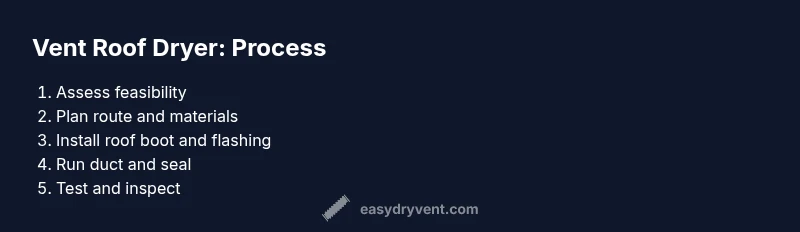
Can a Dryer Be Vented Through Roof? A Practical Guide for 2026
Explore whether roof venting for a clothes dryer is feasible, safety considerations, codes, and practical alternatives. Easy DryVent provides step-by-step guidance for homeowners in 2026.


According to Easy DryVent, roof venting a clothes dryer is technically possible but not common. It requires a code-compliant roof vent, properly sized ducting, and reliable waterproofing to prevent leaks and moisture buildup. In many jurisdictions, through-roof venting triggers stricter permits and inspections. Always consult local codes and a licensed pro before proceeding. Easy DryVent emphasizes safety, drying efficiency, and roof integrity.
Why roof venting is uncommon and when it might be allowed
Venting a clothes dryer through the roof is not the typical path; it introduces several challenges that most homeowners want to avoid. The attic space, flashing, and roof degrade the reliability of the exhaust system if not designed and installed correctly. The phrase can dryer be vented through roof is a common question for homes without convenient exterior walls or when the dryer sits in an interior closet. According to Easy DryVent, roof venting is feasible only when the attic and roof structure can support a clean, straight run to a rugged, weatherproof cap with proper clearance from insulation and moisture barriers. You must confirm that your roof has adequate slope to prevent backdrafts and ensure that the exhaust does not create condensation in unconditioned spaces. If ice damming or heavy snowfall is common in your region, roof venting can worsen leaks and cause mold growth due to trapped humidity. In summary, roof venting is possible in rare cases, but it requires careful planning, code compliance, and professional execution.
Key codes and safety considerations
Before opening a roof, check local building codes and permit requirements. Many jurisdictions treat roof venting as a specialized installation that triggers inspections and fire safety checks. A standard clothes dryer exhaust should remain 4 inches in diameter and be ducted with metal conduit to minimize lint buildup and heat losses. Roof penetrations must be weatherproofed with flashing and a boot, and the vent cap should include a damper to prevent rain and pests from entering. In addition, ensure the vent path is short and straight, with minimal bends to reduce backpressure and lint accumulation. Moisture from the dryer exhaust can condense in attic spaces if the run is not properly insulated and vented, creating potential mold growth. Easy DryVent analysis shows that projecting a roof vent without adequate clearance or flashing is a frequent cause of leaks and indoor humidity issues. Always plan for maintenance access and an annual inspection schedule to keep the system safe and efficient.
Roof vent components and how they differ from wall vents
A roof vent system combines several parts that must work together: a duct from the dryer to the roof, a vent cap on the exterior, and flashing to seal the penetration. Roof terms include boot, flashing, and cap with a rain guard. Compared with wall vents, roof installations face more exposure to weather, temperature extremes, and ice damming. Use a smooth interior duct to minimize lint buildup and ensure a stable airflow. The cap should allow the exhaust to exit while preventing pests, birds, and wind-driven rain from entering. Unlike a wall vent, a properly sealed roof penetration also requires careful waterproofing around the flashing and a solid sealant on the underside to avoid attic leaks. A long, convoluted path can dramatically reduce dryer performance and increase lint buildup, so plan for a direct route where possible.
Pros and cons of roof venting
Pros
- Enables venting when side walls are blocked or space is tight
- Can be integrated with high roof lines or unusual layouts
- Provides a direct outdoor exit if properly sealed and sloped
Cons
- Higher risk of leaks during heavy rain or snow
- More complex installation and code compliance requirements
- Difficult maintenance and inspection compared with wall vents
- Potential for moisture buildup in attic spaces if not vented correctly
Alternative venting options you should consider
If roof venting introduces more risk than it eliminates, consider these alternatives. Through the wall venting kit near the dryer location can provide a short, straight run with fewer penetrations. A side vent or rear vent through an exterior wall is often easier to seal and inspect. In some layouts, relocating the dryer to a location with exterior access minimizes duct length and reduces backpressure. You may also explore ventless or condenser dryers in spaces without exterior access, though those options have their own energy and drying performance trade-offs. For high reliability, consult a professional to compare installation costs, code implications, and expected dryer performance with your home layout.
Planning considerations and professional assessment
If roof venting is identified as the only viable option, start with a formal assessment. Engage a licensed HVAC or roofing contractor to review your attic structure, roof type, and ventilation path. Confirm the required duct size and quality, and obtain any permits before cutting into the roof. Plan the route so that the dryer vent runs with minimal turns and uses a straight, continuous path to the roof vent. Schedule weather windows for installation to avoid leaks during rain or snow. Finally, discuss maintenance plans and inspection intervals to catch issues before they cause damage.
Maintenance and inspection to prevent risks
After installation, perform regular inspections and lint cleaning. Check the roof vent cap and flashing for signs of wear or leaks after heavy storms or seasonal changes. Clean the interior duct annually to prevent lint buildup and potential fire risk. Monitor attic moisture and insulation levels to ensure the vented air does not condense in unconditioned spaces. A proactive maintenance routine helps protect roof integrity and indoor air quality while extending the life of the exhaust system. Easy DryVent recommends keeping a log of maintenance tasks and test runs to ensure ongoing safety and performance.
Tools & Materials
- Measuring tape(to plan duct routes and clearances)
- 4-inch round metal dryer duct(smooth interior surface, rigid metal preferred)
- Roof vent cap with rain cap and damper(weatherproof and venting to exterior)
- Roof flashing kit and boot(compatible with roof type (shingle/metal) and vent size)
- Flashing sealant/duct mastic(to seal around flashing and duct penetrations)
- Ladder and fall protection gear(for safe roof work)
- Safety goggles and gloves(personal protection)
- Caulking gun and sealant(to seal around vent penetration)
- Smoke pencil or detector(test for leaks)
Steps
Estimated time: 3-6 hours
- 1
Assess feasibility and scope
Evaluate if roof venting is a viable option given your attic space, roof type, and local codes. Document the dryer location, desired roof vent location, and any access constraints. Determine potential impact on insulation, airflow, and moisture control.
Tip: Sketch a rough path from dryer to roof to identify potential bends and obstructions. - 2
Check local codes and permits
Consult your city or county building department to confirm permits, clearance requirements, and fire safety standards for roof penetrations. Keep a copy of any approvals handy during installation.
Tip: Ask for written confirmations and keep email threads for reference. - 3
Plan vent path and components
Select a direct route with minimal bends, choose a 4 inch metal duct, and decide on a roof vent cap with rain protection and a damper. Ensure there is line of sight to the exterior and proper distance from insulation.
Tip: Avoid long horizontal runs that can trap lint and moisture. - 4
Prepare attic and roof access
Clear the area, set up safety gear, and inspect the roofing surface for stability. Verify that there is a solid deck for installing the boot and flashing. Gather all required tools.
Tip: Use a fall protection harness and stable ladder setup. - 5
Install vent path and roof penetration
Cut a clean hole through the roof deck for the boot, install the flashing, and insert the duct sections with a continuous seam. Attach the roof vent cap and seal openings to prevent leaks.
Tip: Work slowly and confirm waterproofing with sealant around the boot. - 6
Seal, test, and inspect
Apply sealant around the flashing, recheck all seams, and perform a functional test by running the dryer while checking for leaks and condensation. Ensure proper backdraft damper operation.
Tip: Run a brief dry cycle to observe airflow and noise levels. - 7
Schedule professional inspection
Arrange a post installation inspection to verify code compliance, waterproofing, and vent performance. Address any issues before normal use.
Tip: Note down contact details of the installer for future maintenance.
Common Questions
Is roof venting allowed by code in most areas?
Code rules vary by jurisdiction. Roof venting is allowed in some areas with strict requirements, including proper duct materials, flashing, and permits. Always verify with your local building department and a licensed contractor.
Code rules vary by area. Roof venting is allowed in some places with strict requirements. Check with your local building department.
What are the main risks of roof venting?
Roof venting introduces weather exposure, potential leaks, and attic moisture. Poorly sealed penetrations can cause mold and structural damage over time.
Roof venting can lead to leaks and attic moisture if not done right.
What parts are required for roof vent installation?
You need a 4 inch metal duct, a roof vent cap with damper, flashing, boot, sealant, and appropriate clamps or tape. Proper connections and secure support are essential.
Essential parts are a 4 inch duct, roof cap with damper, and flashing.
Can roof venting be installed on all roof types?
Not all roofs are suitable. Steep pitches, tile or slate, and vent location near dormers or skylights require special considerations and professional assessment.
Some roofs require special treatment; a pro will assess.
Do I need a permit to vent through the roof?
Most jurisdictions require a permit for roof penetrations and vent installations. Check with the local building department and keep documentation.
Yes, most places require a permit.
Is roof venting more expensive than wall venting?
Roof venting tends to be more costly due to additional materials, flashing, and waterproofing. Wall venting is usually simpler but may not be possible in every layout.
It can be more costly and complex.
Watch Video
Key Points
- Check local codes before planning roof venting.
- Choose a proper 4 inch duct and weatherproof vent cap.
- Ensure a watertight roof penetration with flashing and sealant.
- Consider alternatives if roof venting adds risk or cost.