Why Do Dryers Catch Fire? A Practical Safety Guide
Learn why do dryers catch fire, common causes like lint buildup and overheating, and practical prevention steps for safe home drying. Easy DryVent explains signs, checks, and when to call a pro.


Why do dryers catch fire? The leading causes are lint buildup and overheating from restricted venting, damaged ductwork, or overloading. Regular maintenance, prompt lint removal, and proper venting dramatically reduce fire risk and keep drying performance safe and efficient.
Why do dryers catch fire: why it matters
If you’ve ever asked, why do dryers catch fire? The short answer is that heat, fabric lint, and restricted airflow create conditions that can ignite lint or heat-sensitive components. Most dryer fires start in the lint trap or vent system, and a small buildup can escalate quickly if left unchecked. This is why Easy DryVent emphasizes proactive maintenance, regular vent cleaning, and safe dryer habits as the foundation of home-dryer safety. Understanding the role of airflow and heat helps homeowners prioritize simple routines that significantly lower risk. The question itself is a prompt to action: by adopting a regular maintenance routine, you reduce the chance of a hazardous event and extend the life of your appliance.
What causes dryers to catch fire: the big three
There are three primary contributors to dryer fires: lint buildup, overheating, and compromised ventilation. Lint accumulates in the lint screen, ducts, and blower housing; when it overheats, it can ignite. A blocked or restricted vent makes the dryer work harder, producing more heat and increasing the chance of ignition. Damaged ducts, crushed hoses, or improper vent sizing further elevate risk. By recognizing these drivers, homeowners can implement targeted prevention strategies that reduce the chance of a dangerous incident. This is where the question why do dryers catch fire becomes a practical guide for action, not a theoretical concern.
Warning signs you should not ignore
Early indicators include unusually hot clothing after a cycle, a burning smell, or the dryer taking longer than usual to dry. If you notice these signals, stop the cycle, unplug the unit, and inspect the lint trap, vent, and exterior vent cap. Do not continue using the dryer until you have confirmed ventilation is clear and safe. Regular maintenance routines catch small problems before they become fires. Recognizing these signs is essential to answering the core question of why do dryers catch fire and to prevent a catastrophe.
Safe inspection practices you can perform
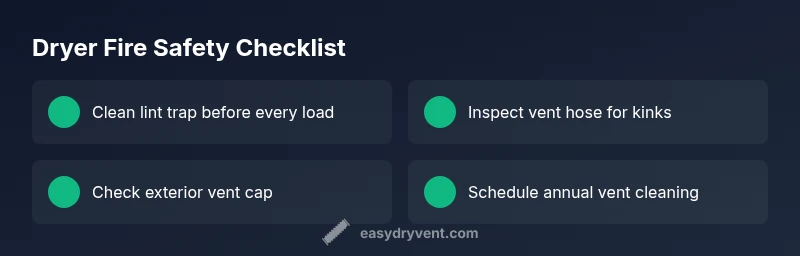
Before performing any checks, unplug the dryer and wear gloves. Start with the lint screen and nearby access panels to look for lint clumps. Inspect the vent hose for kinks or crush points and verify the exterior vent is open. Use a flashlight to inspect the blower housing for accumulated lint. Routine checks should become a quick, 10–15 minute habit to keep your dryer safe and efficient. This section translates the theory of risk into a practical routine you can perform today.
How to fix common issues (and what to avoid)
Easy fixes include cleaning the lint screen and ensuring the vent path is clear. If you find restricted airflow, disconnect the vent hose and clean it with a vacuum or brush. Do not use water or cleaners that could create moisture inside electrical components. If the exterior vent is blocked by debris or animal nests, remove them carefully and re-test airflow. Replacing worn hoses or damaged clamps is a proactive step that prevents future problems. The aim is to address the root causes behind the question why do dryers catch fire—airflow, heat, and proper venting.
Preventive maintenance routines to adopt
Create a monthly lint-cleaning schedule and a quarterly vent inspection. Schedule an annual professional vent cleaning if you can't access all ducts. Keep the dryer and its surroundings free from clutter, and use the correct vent hose size recommended by the manufacturer. A well-maintained system dries faster with less energy and far lower fire risk. The ongoing maintenance is your strongest defense against the risks discussed when considering why do dryers catch fire and ensuring long-term safety.
Steps
Estimated time: 60-90 minutes
- 1
Power down and unplug
Turn off the dryer and unplug it from the wall to ensure safe service. Wait for the drum to cool before touching internal components. This prevents electrical shocks and accidental starts during inspection.
Tip: Always unplug before any hands-on checks. - 2
Inspect lint screen and housing
Remove and clean the lint screen. Check the lint trap housing for visible lint buildup and remove it with a vacuum or brush. If you see excessive residue, consider a deeper cleaning of accessible ducts.
Tip: Do this before every load to maintain airflow. - 3
Check the vent hose for kinks
Detach the vent hose from the dryer and look for folds, crush points, or damage. Gently straighten the path and remove obstructions. Reconnect securely.
Tip: Ensure the hose is straight and not crushed for optimal airflow. - 4
Inspect exterior vent cap
Go outside and confirm the vent cap is open and free of debris. Clear any nests or leaves that block airflow. Ensure the exterior vent is intact and not damaged.
Tip: Animals sometimes nest in vents; check regularly. - 5
Test airflow and reassemble
Reconnect the vent hose, reattach panels, and run a short test cycle with the door open (observe airflow from exterior vent). If airflow is weak, stop and reassess or call a pro.
Tip: A strong airflow during test indicates good vent health. - 6
Schedule preventive maintenance
Set reminders for lint trap cleaning, vent inspection, and professional vent cleaning as needed. Keep records of cleanings for reference.
Tip: Annual professional vent cleaning is a strong safety net.
Diagnosis: Dryer emits a burning smell or becomes unusually hot during operation
Possible Causes
- highLint buildup in lint screen, ducts, or blower housing
- highBlocked or restricted vent path
- lowDamaged vent hose or incorrect duct sizing
Fixes
- easyPower off and unplug the dryer; thoroughly clean lint screen and accessible ducts
- easyClear the exterior vent and ensure the vent path is straight with no kinks
- mediumInspect and replace damaged vent hose; confirm duct sizing matches manufacturer specs
Common Questions
What are the primary causes of dryer fires?
The main causes are lint buildup, overheating due to restricted airflow, and damaged venting. Regular lint removal and vent inspections dramatically reduce risk.
Dryer fires are usually caused by lint buildup and restricted airflow. Regular maintenance helps prevent this.
How often should I clean the lint trap?
Clean the lint trap before every load. A quick wipe can prevent buildup that impedes airflow and increases heat.
Clean the lint trap before every load to keep airflow clear.
Is it safe to use DIY vent cleaning kits?
DIY kits can help but may not reach all ducts. For thorough cleaning, consider professional vent cleaning.
DIY kits help, but professional cleaning is best for complete ventilation.
When should I call a professional?
If you detect persistent burning smells, low airflow, or visible damage after cleaning, contact a licensed technician.
If burning smells persist or airflow remains weak, call a professional.
Are gas dryers riskier than electric ones?
Gas dryers pose similar fire risks due to lint and heat, but require gas line safety checks. Electric dryers still need vent maintenance.
Gas or electric, lint and vent care matter for safety.
Can a blocked vent cause a fire even if I clean the lint screen regularly?
Yes. Blocked vents reduce airflow and increase heat, making fires more likely even with clean lint screens. Inspect ducts and exterior vent routinely.
Blocked vents raise fire risk even with a clean lint trap.
Watch Video
Key Points
- Always clean lint from traps and ducts
- Maintain clear, straight vent paths
- Replace damaged vent components promptly
- Schedule regular professional inspections