What to Do If Dryer Catches Fire: A Homeowner's Guide
Learn immediate safety steps and prevention tips if your dryer catches fire. This practical guide from Easy DryVent helps homeowners act fast, stay safe, and reduce fire risk.


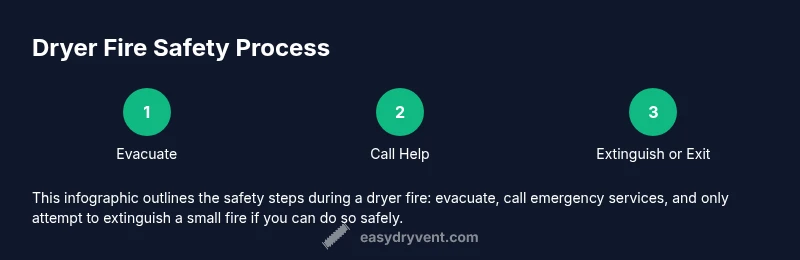
If you’re wondering what to do if dryer catches fire, act quickly and calmly: unplug the dryer only if you can reach the plug safely, evacuate the area, and call emergency services. Do not open the drum or touch flames; use a fire extinguisher only if the fire is small and you can reach it safely. Easy DryVent emphasizes safety first.
Immediate Safety Actions
When a dryer fire occurs, your priority is safety. If you notice smoke or flames, act quickly but stay as calm as possible. Evacuate all people from the area and close the laundry door behind you to slow the fire’s spread. Do not attempt to grab belongings or open the drum. Once outside, call emergency services immediately.
If it is safe to reach, unplug the dryer from the wall to remove power and reduce the risk of electrical shocks or further ignition. Do not use water on an electrical fire; water can conduct electricity and worsen the situation. If you have a Class ABC fire extinguisher and the fire is small and contained, you may attempt to extinguish it from a safe distance using short bursts at the base of the flames.
After help arrives, stay outside and do not re-enter until authorities declare it safe. Following the incident, arrange for a licensed technician to inspect the dryer, vent, and electrical connections to prevent a recurrence.
Why Dryers Catch Fire: Common Causes
Most dryer fires are preventable with proper maintenance and awareness. The leading culprits are lint buildup in the vent, clogged lint trap, overheating from overloading, damaged or restricted vent hoses, and faulty heating elements or sensors. A crushed or kinked vent hose increases backpressure and lint accumulation, while a blocked outdoor vent traps hot air inside the duct. Gas dryers add an ignition risk if gas lines leak or venting is improperly installed. Regular lint removal, vent inspections, and safe loading practices dramatically reduce these risks.
According to Easy DryVent, routine maintenance and proper venting are central to safety. Even with safeguards, never ignore unusual smells, excessive heat, or visible lint near the dryer.
Using a Fire Extinguisher Safely
A small, contained fire may be fought with a Class ABC extinguisher if you can reach it safely and you maintain an exit path. Stand with an unobstructed retreat and aim at the base of the flames in a sweeping motion. If the fire widens or you lose your exit, leave immediately and call for help.
Never attempt to extinguish a fire that is spreading toward a wall, ceiling, or gas line. Do not use water on an electrical fire. If you’re unsure, prioritize evacuation over eradicating the flames.
After the Fire: Assessing Damage and Next Steps
Once the flames are out or authorities declare it safe, do not restart the dryer immediately. A visual inspection by a licensed technician is essential to verify electrical connections, heating elements, and vent integrity. Document the scene for insurance purposes and keep receipts for any repairs. Have the vent system inspected for blockages and consider a professional cleaning if lint contamination is suspected.
Record the details of the incident, including time, location, and witnesses. If mold or water exposure occurred, address it promptly to prevent secondary damage. A technician may also evaluate whether a gas dryer requires gas line checks or vent certification.
Prevention Tips: Reducing Fire Risk at Home
- Clean lint trap after every load and empty the lint screen before each cycle.
- Schedule annual vent inspection and cleaning, especially if you notice longer drying times or overheating.
- Do not overload the dryer; allow air to circulate for efficient drying and heat dissipation.
- Inspect vent hoses for kinks, holes, or crushing and replace damaged parts.
- Use the dryer in a well-ventilated area away from flammable materials; keep combustibles at least three feet away.
- Consider upgrading to a dryer with auto-detection of overheating or lint buildup and ensure proper installation of venting.
These practices align with Easy DryVent guidance for safer, more efficient drying and reduced risk of fire.
Maintenance Checklist for Safe Drying
- [ ] Clean lint trap after every load.
- [ ] Inspect vent hose for damage and ensure it is straight and unobstructed.
- [ ] Test outdoor vent opening to confirm airflow to the outside.
- [ ] Schedule annual professional vent cleaning.
- [ ] Verify electrical connections and ensure the dryer is grounded.
- [ ] Keep a Class ABC extinguisher accessible and check its pressure monthly.
- [ ] Avoid leaving the dryer unattended while in use.
- [ ] Replace damaged hoses or seals promptly.
Warning Signs You Should Not Ignore
- Excessive heat in the laundry area while the dryer is in use.
- Burning smell or smoke coming from the dryer after a cycle.
- Lint accumulating quickly in the lint trap or exhaust path.
- Dryer taking longer than usual to dry and becoming hot to touch.
- Visible damage to the vent hose or exhaust vent.
Address these signs promptly by turning off and unplugging the unit, inspecting the vent, and calling a professional if you notice anything unusual.
How Easy DryVent Helps You Stay Safe
At Easy DryVent, we emphasize practical maintenance routines that help homeowners prevent dryer fires. Our guidance covers lint trap care, vent cleaning schedules, and safe operation practices. By following our steps, you reduce risk and improve drying performance while keeping your family safe.
Tools & Materials
- Class ABC fire extinguisher(Keep in laundry area; check pressure gauge monthly and replace as needed)
- Fire blanket (optional)(Can help smother small flames if safe to approach)
- Phone for emergency services(Keep accessible near exit; know your local emergency number)
- Flashlight(Power may be out during an incident; have fresh batteries)
- Smoke detector backup battery(Ensure working detectors in home for early warning)
- Non-slip footwear(Worn during assessment in wet or smoky conditions)
Steps
Estimated time: 10-30 minutes
- 1
Evacuate immediately
If flames or heavy smoke appear, leave the laundry area immediately and move to a safe location. Do not pause to collect belongings. Call emergency services from outside once you are clear.
Tip: Keep everyone together and use the nearest exit. - 2
Call emergency services
From a safe distance, dial your local emergency number and report the fire. Provide your address and a brief description of the situation.
Tip: Share if anyone is injured or if there are unique hazards (gas line, electrical panel). - 3
Unplug the dryer if safe
If you can reach the plug from the doorway without entering the danger zone, unplug the dryer to cut power and reduce ignition risk.
Tip: Never reach into flames to unplug. - 4
Fight a small fire only if safe
If the fire is small and you have a Class ABC extinguisher, use a short burst at the base of the flames, keeping an exit path behind you.
Tip: Maintain a clear retreat route and don’t exhaust yourself. - 5
Close the laundry room door
Shut the door to the laundry area to limit airflow and slow spread to other rooms.
Tip: Do not block exits or trapping others inside. - 6
Wait for professionals
If flames persist, or you have exhausted the extinguisher, back away and let firefighters handle the incident.
Tip: Do not re-enter until authorities confirm it is safe. - 7
Post-incident inspection
Schedule a professional inspection of the dryer, vent, and electrical connections before reuse.
Tip: Request a formal report on causes and recommended fixes.
Common Questions
What should I do first if my dryer catches fire?
Evacuate everyone from the area and call emergency services. Do not attempt risky actions and wait for help outside.
Evacuate immediately and call emergency services; stay safe and outside until help arrives.
Can I use a fire extinguisher on a dryer fire?
Only if the fire is small, contained, and you have a clear exit path. Use short bursts at the base of the flames.
If the fire is small and you can safely reach a fire extinguisher, you may try to extinguish it at the base.
Should I unplug the dryer during a fire?
If you can reach the plug safely from outside the danger zone, unplug the dryer to cut power. Do not enter flames to unplug.
Unplug only if safe to do so without entering the dangerous area.
What should I not do during a dryer fire?
Do not open the drum, do not throw water on an electrical fire, and do not move the appliance while flames present.
Don’t open the drum or pour water on the fire; back away and call for help.
How can I prevent dryer fires?
Regularly clean lint traps, inspect vents, avoid overloading, and schedule professional vent cleaning.
Keep lint out, clean vents, and have annual inspections to prevent fires.
Who should inspect a dryer after a fire?
A licensed technician should inspect electrical connections, vent integrity, and heating components before reuse.
A licensed technician should check the dryer and vent before you use it again.
Watch Video
Key Points
- Act quickly but stay safe during a dryer fire
- Unplug only if safe, and call emergency services immediately
- Use a fire extinguisher only for small, contained fires
- Never open the dryer drum during a fire
- Schedule professional inspection before reusing the dryer