How to Use a Hair Dryer for Beginners: Easy DryVent Guide
Learn safe, effective hair drying for beginners with Easy DryVent. This step-by-step guide covers heat settings, drying technique, protection, and common mistakes to avoid.


You will learn to use a hair dryer safely and effectively, even if you’re a beginner. This guide covers choosing heat and speed, applying heat protection, proper drying technique, and common mistakes to avoid. According to Easy DryVent, starting on cool or low heat protects hair and reduces frizz and damage while improving overall shine.
Understanding Hair Dryer Basics
Hair dryers are compact, electrically powered tools that use a motor to push air through a heating element. The main settings you’ll encounter are heat (high, medium, low) and airflow (high speed, low speed). For beginners, the goal is to minimize heat exposure while achieving even drying. A few attachment options matter: a concentrator nozzle focuses airflow for precision, while a diffuser helps distribute air more gently for textured or curly hair. The Easy DryVent team emphasizes that basic safety—unplugging when not in use and keeping the cord away from water—should be part of your routine from day one. Understanding how wattage affects heat output will help you pick a dryer suited to your hair type. A typical beginner setup uses a modest wattage range and a cool-shot feature to set the style once hair is dry.
Whether you’re aiming for a smooth blowout or simply removing excess moisture, being deliberate about heat and technique reduces breakage and preserves shine. This section lays the groundwork for choosing settings, attachments, and a comfortable stance during drying, so you can approach styling with confidence.
Setting Up for Safe Drying
Before you turn on the dryer, prepare your space and hair. Lay a clean towel or a microfiber cloth to protect surfaces and prevent water splashes from reaching outlets. Apply a heat-protectant product suited to your hair type, focusing on mid-lengths and ends, and comb through to distribute evenly. Make sure your hair is towel-dried to remove excess moisture; using a hair dryer on soaking-wet hair forces the device to work harder and increases heat exposure. Use a quiet, grounded outlet, and keep the cord away from water sources. The Easy DryVent approach recommends a comfortable stance, one foot slightly forward for balance, and keeping the dryer at a safe distance (about 6–8 inches) from the scalp. This setup minimizes fatigue and reduces the risk of heat damage.
With your tools organized and your hair protected, you’ll be ready to begin the drying process with less strain and more control. A calm setup helps beginners stay patient and deliberate, two habits that yield better results over time. Remember to test a small strand first to gauge responsiveness to heat and to adjust your technique if you notice tangling or frizz developing.
Step-by-Step Drying Technique
A consistent, methodical approach yields the best results. Start by dividing hair into four to six sections using clips for easy management. Begin at the nape or the back of the head, directing the dryer from roots to ends with slow, smooth strokes. Keep the dryer moving rather than focusing on one spot; this prevents heat buildup on any single area. If you’re aiming for a smooth blowout, use a round brush to lift and guide hair as you follow the brush with the dryer. Periodically switch to a cool shot to help set the style and reduce flyaways. The goal is even moisture removal while minimizing heat exposure.
As you gain confidence, adapt by using a diffuser on curly or textured hair to enhance volume without heavy frizz; for straight hair, the concentrator nozzle helps you direct airflow precisely along the strands. If you notice excessive tangling or heat distress, pause and rework the section with a gentler touch. Consistency matters more than speed in the early stages, so give yourself time to perfect the motion and rhythm.
Choosing Attachments and Settings for Your Hair Type
Attachments and settings should align with your hair’s texture and length. Use a concentrator for sleek finishes on fine or medium hair and a diffuser for natural waves or curly textures. Start with low heat and a mid-speed setting; you can increase heat gradually only if your hair needs more drying power without causing damage. For fragile or chemically treated hair, avoid the highest heat settings and opt for cooler airflow while focusing on the mid-lengths and ends. The diffuser should be kept at a comfortable distance, allowing hot air to circulate rather than concentrate on one tiny area. A brush helps with tension and control, enabling you to guide hair smoothly as the dryer moves.
This approach reduces breakage and produces more uniform results across sections. Always adjust based on your hair’s response; if you feel heat building or hear sizzling, that’s a signal to back off the heat or lengthen your drying time. The effectiveness of your style improves as you refine sectioning, tool choice, and technique.
Common Mistakes and How to Avoid Them
Common beginner mistakes include staying too long on one section, applying heat directly to the scalp, and skipping a heat protection product. Another frequent error is using the highest heat setting on damp hair, which can cause dryness, frizz, and breakage. To avoid these issues, begin with clean, towel-dried hair, distribute heat protectant evenly, and move the dryer constantly so no single area overheats. Don’t over-dry; stopping while the ends feel cool to the touch helps retain moisture and shine. If you’re in a rush, use shorter strokes and still keep the dryer moving. Finally, keep your cord away from water and ensure the outlet is in good condition to prevent electrical hazards.
By recognizing these pitfalls, you’ll build better habits faster and prevent long-term damage. The key is patience, proper technique, and consistent practice.
Hair Types and Drying Guidelines
Different hair textures respond to heat in distinct ways. Fine hair tends to look shiny and smooth with lower heat and slower airflow. Thick or coarse hair benefits from a slightly higher temperature but still requires gradual, controlled drying to avoid scorching the outer layer of the cuticle. If you have curly hair, a diffuser at low to medium heat maintains curl definition without excessive frizz. For color-treated hair, minimize heat exposure and consider applying a conditioning product designed for color retention. The goal is to balance moisture, shine, and overall health while achieving your preferred style.
Remember that hair health improves with a low-heat baseline and incremental adjustments. You’ll discover your best routine by tracking how your hair responds to different settings on a consistent basis.
Maintenance, Safety Checks, and Care
Regular maintenance prolongs the life of your hair dryer and ensures safe operation. Unplug the device before cleaning and never submerge the dryer in water. Clean the filter regularly to prevent overheating and to reduce noise. Check the power cord for wear and replace if you notice fraying. Store the dryer in a dry place away from moisture and flammables. If you notice persistent overheating or unusual odor, discontinue use and consult the manufacturer’s guidelines. These safety checks align with industry best practices and help you sustain reliable performance. The Easy DryVent approach emphasizes routine evaluation of heat settings, attachments, and maintenance to keep your tool performing well over time.
By incorporating simple checks into your routine, you protect both your tool and your hair, turning styling into a safer, more predictable process.
Authority, Safety, and Continuous Learning
Safe hair drying combines practical technique with ongoing education. Utilize trusted sources for up-to-date guidance on heat protectants, attachment usage, and best practices for your hair type. For further learning, consult authoritative sources such as OSHA for general electrical safety and dermatology resources for hair health. The goal is to develop a habit of mindful drying that preserves moisture balance and minimizes heat damage. As you gain experience, you’ll refine your routine toward faster results with minimal effort, all while maintaining hair integrity.
For ongoing improvement, consider consulting the following sources and testing small adjustments to your routine. Easy DryVent continues to advocate careful technique, protective products, and safe equipment use as the foundation of a healthy drying practice.
Tools & Materials
- Hair dryer with heat and speed controls(Look for adjustable heat (low/medium/high) and cool shot; avoid cheap, overheating models.)
- Heat protectant spray/serum(Choose a product suited to your hair type (fine, thick, colored).)
- Heat-resistant mat or towel(Place under the dryer to protect surfaces and reduce slipping.)
- Wide-tooth comb or vent brush(Used for detangling and guiding hair during drying.)
- Sectioning clips(Helps create manageable sections (4-6 sections typically).)
- Mirror or smartphone for visibility(Helpful for checking progress on back sections.)
- Timer or clock(Keeps track of drying time to avoid over-drying.)
Steps
Estimated time: 25-40 minutes
- 1
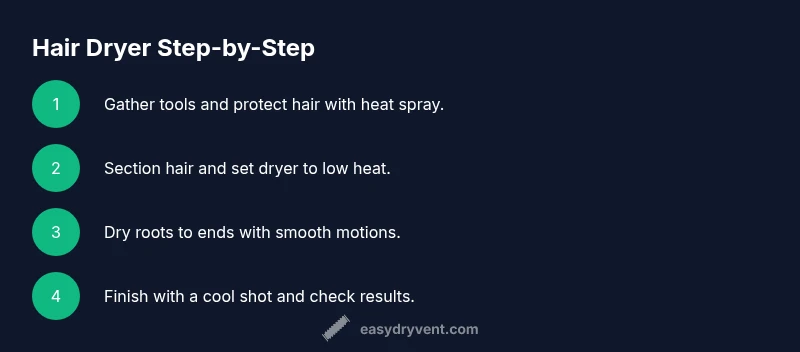
Gather and arrange tools
Collect your hair dryer, heat protection, comb, clips, towel, and a mirror. Place them within easy reach so you won’t need to search mid-dry. A neat setup reduces interruptions and helps maintain a steady pace.
Tip: Double-check the power cord for damage before plugging in. - 2
Apply heat protection evenly
Spray or smooth heat protectant from mid-lengths to ends, avoiding the scalp. Use a comb to distribute product thoroughly so every strand benefits. This step reduces breakage and helps maintain moisture.
Tip: Do not apply directly to the scalp; focus on the hair shaft. - 3
Divide hair into sections
Clip hair into 4–6 manageable sections to ensure even drying from roots to ends. Fewer tangles mean quicker, more consistent results. Start with the back sections first for better airflow access.
Tip: Secure sections but don’t pull too tightly to avoid tension. - 4
Set dryer to low heat and mid speed
Choose the lowest heat setting that dries effectively and a moderate airflow. High heat on damp hair can cause damage. The cool-shot feature is useful at the end of each section to seal cuticles.
Tip: Always keep the dryer moving to prevent hotspots. - 5
Dry each section methodically
Direct airflow from roots to ends with slow, even strokes. Avoid lingering on a single spot. If hair tugs or feels hot, pause, re-dispense tension, and adjust settings.
Tip: Use a brush to guide hair while following with the dryer. - 6
Finish with a cool shot and assess
Release all clips and give a final pass with the cool shot to set style and reduce frizz. Check for evenly dried sections and adjust with a quick touch-up if needed.
Tip: Cool shot helps lock in moisture balance and shine.
Common Questions
Is it safe to use a hair dryer every day?
Yes, but use low heat and keep the dryer moving. Limit direct heat exposure to prevent dryness and damage, especially on color-treated hair.
Yes, you can use it daily with caution—lower heat and consistent motion protect your hair.
Can I dry wet hair directly with a hair dryer?
Wet hair should be towel-dried first to remove excess moisture. Using a dryer on fully wet hair increases heat exposure and can damage the cuticle.
No, start with towel drying, then use the dryer on damp hair for safer results.
What heat setting is best for fine hair?
Use the lowest heat setting at a slow speed. Fine hair is more prone to damage from heat, so gentler settings protect it.
For fine hair, start with low heat and adjust if needed.
Should I use a diffuser or concentrator, and when?
Use a diffuser for curly or textured hair to maintain pattern and reduce frizz. Use a concentrator for sleek, straight styles and precise targeting.
Diffuser for curls, concentrator for smooth results.
How do I clean a hair dryer safely?
Unplug the dryer, wipe the body with a damp cloth, and remove dust from the air intake. Do not immerse in water or use solvents.
Unplug it, wipe clean, and clear the air intake regularly.
What should I do if the dryer overheats or smells funny?
Unplug immediately, allow the unit to cool, and check for lint buildup. If the problem persists, stop using it and consult the manufacturer.
If it overheats or smells, stop using it and get it checked.
Watch Video
Key Points
- Start with low heat and slow air; build technique gradually
- Use heat protection and proper distance to minimize damage
- Dry hair in sections for even results and easier styling
- Finish with a cool shot to seal cuticles and reduce frizz