How to Use a Hair Dryer: Safe & Easy Styling Guide
Learn how to use a hair dryer safely and effectively with practical steps, heat protection, and styling tips. Easy DryVent's expert guidance helps you dry hair without damage.


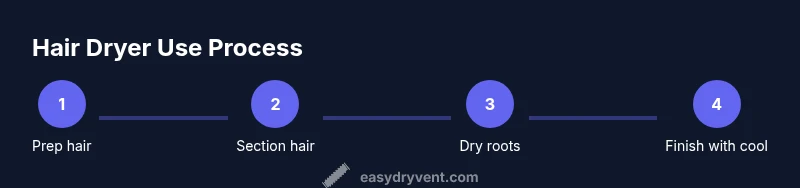
Using a hair dryer safely and effectively involves prep, settings, technique, and protection. Prepare damp or towel-dried hair with a heat protectant. Attach the right nozzle or diffuser, choose low to medium heat, and keep the dryer moving about 6 inches from hair. Section hair, dry root to tip, and finish with a cool shot to seal the style. Avoid lingering heat on one spot.
Why Proper Hair Dryer Use Matters
Using a hair dryer isn't just about speed; it is about maintaining hair health and achieving the look you want without damage. A heavy handed approach with high heat can cause cuticle damage, frizz and breakage, especially if hair is colored or fine. According to Easy DryVent, the right technique combines heat protection, controlled airflow, and proper attachment choices to reduce exposure to heat and minimize damage. The modern hair dryer offers settings that let you adjust temperature and speed to your hair type. For instance, thick, curly hair benefits from a diffuser that distributes heat more evenly, while fine hair responds better to a narrow concentrator that concentrates airflow without overheating. By understanding your hair's porosity and density, you can tailor drying to achieve smoothness and volume while preserving natural shine. The goal is to shorten exposure to heat while guiding hair from damp to dry, rather than blasting hair until dry. Practice, patience, and small adjustments can yield salon like results at home. Remember, the better you prep and protect, the better your results will be.
Safety First: Electrical and Heat Hazards
Safety should come first when using any electrical appliance. Keep the hair dryer away from water and wet surfaces, dry your hands before handling the device, and never use a damaged cord or plug. Unplug the dryer before changing attachments or cleaning the nozzle to avoid electric shock. Avoid overheating the scalp by keeping the dryer moving and never concentrating heat in one spot for long periods. If you have a damaged outlet or cord, stop using the tool and seek a replacement. Easy DryVent emphasizes that proper electrical safety reduces the risk of shocks, burns, and fire hazards. Always inspect attachments for cracks or loose fittings, and store the device in a cool, dry place away from flammables after use.
Choosing Settings, Attachments, and Tools
Select a heat setting appropriate for your hair type and your styling goal. Low heat is safer for fine or damaged hair, while medium heat can handle thicker strands or longer styles. Use a concentrator nozzle for precision when drying straight or slightly wavy hair, and attach a diffuser for curly or textured hair to minimize frizz and distribute heat more evenly. If your dryer has an cool shot or a cool air option, use it to set the finished look and reduce stacking or flattening. Ensure the air inlet is clean for efficient airflow. Easy DryVent's guidance notes that the combination of correct settings and proper attachments makes a noticeable difference in both results and hair health.
Prep Your Hair: Towel-Dry, Detangle, and Protect
Begin with towel drying to remove excess moisture, then comb through or use a brush to detangle. Apply a heat protectant or leave in conditioner to form a protective barrier between hair and heat. Focus application on mid lengths and ends, while keeping roots less loaded to avoid a heavy look. The right preparation helps your hair dry evenly and prevents breakage. If you have color treated or damaged hair, consider an additional nourishing product or serum for added protection during styling.
Drying Techniques by Hair Type
Hair type determines the drying approach. For fine hair, use low heat and a narrow concentrator to avoid flattening volume. For thick or coarse hair, start on a higher airflow setting with low heat and move slowly to target the root areas first. For curly hair, a diffuser helps preserve curl definition and reduces frizz, while a diffuser with a cool shot can lock in shape. Curly or textured hair benefits from scrunching or directional micro movements with the brush to guide curls as they dry. Always aim for about 80% dryness on most hair types before finishing with a cool shot, particularly for heat sensitive strands.
Styling with a Hair Dryer: Techniques for Finish
When you are ready to finish, switch to a cooler setting to seal the style and add shine. Use a round brush to pull hair taut as you follow the hair with the dryer, or use a vented brush to add lift at the roots. For a sleek look, direct airflow downward from roots to ends to smooth the cuticle. For volume, lift sections at the crown and use the brush to lift and pull outward while drying. If your goal is defined waves or curls, use the diffuser in a gentle, circular motion rather than jerky movements. Always support the hair with a brush to prevent heat contact with your scalp and limit exposure time.
Common Mistakes and How to Avoid Them
The most common mistakes are overheating a small area, drying hair completely without protection, and failing to section the hair. Don’t hold the dryer in one place for too long; move it steadily and keep it at a safe distance. Skipping heat protection can lead to dryness, breakage, and dull shine. Avoid using the hottest setting on fragile or damp hair; a cooler blast can still achieve a style with less damage. If you notice frizz or a dull finish, reduce heat, increase distance, or switch attachments to better distribute heat.
Maintenance and Care After Use
After drying, unplug the appliance and let it cool before cleaning. Wipe the nozzle with a dry cloth to remove product buildup and dust. Regularly check the filter and remove hair or lint to maintain efficient airflow. Store the dryer in a dry, cool place away from flammable objects and ensure the cord is not twisted. Periodically inspect the attachments for wear and replace if they show cracks or loose parts. Proper care extends the life of the dryer and preserves performance.
Quick Troubleshooting and Practical Tips
If your hair dries slowly or feels dry after drying, your technique may need adjustment. Ensure you are using an appropriate heat setting, a clean nozzle, and a diffuser when necessary. If heat feels too intense, increase distance from the hair and reduce the airflow speed. For flyaways or frizz, ensure you have a good heat protectant and consider using a lightweight finishing product after cooling. Easy DryVent suggests experimenting with small sections to find your best combination of heat, airflow, and attachments for your hair type.
Tools & Materials
- Hair dryer with adjustable heat(A concentrator nozzle helps precision; a diffuser is optional for curly hair)
- Diffuser attachment(Use for curly or textured hair to minimize frizz)
- Concentrator nozzle(Directs airflow for smooth results)
- Heat protectant spray or cream(Apply evenly from mid-lengths to ends)
- Wide-tooth comb or round brush(Choose based on desired finish)
- Microfiber towel or old cotton T-shirt(Blot hair to remove moisture without frizz)
- Clips or hair elastics(Section hair for even drying)
- Mirror and workstation with good lighting(Helps visibility while styling)
- Extension cord (if needed)(Keep cord length manageable to avoid tangling)
Steps
Estimated time: Total time: 12-20 minutes
- 1
Gather and prepare tools
Set up your workspace, attach the nozzle or diffuser, and verify heat settings. This saves time during the actual drying and reduces fumbling.
Tip: Have a mirror at eye level and an accessible timer to track drying intervals - 2
Section hair into workable parts
Divide hair into 4 quadrants with clips. Working in sections ensures even heat and prevents missing areas.
Tip: Start with the crown area to build volume where you want it - 3
Apply heat protection
Apply heat protectant evenly from mids to ends. Avoid heavy product near roots to prevent flattening.
Tip: Use a light hand and comb through to distribute - 4
Dry roots first with low heat
Begin at the roots, directing airflow downward. Move steadily to avoid hot spots and over drying.
Tip: Keep the dryer about 6 inches away from hair - 5
Move to mid lengths and ends
Continue drying from roots to ends, using the brush to guide the hair and control volume.
Tip: Lift sections for extra texture at the crown - 6
Refine with brush and controlled airflow
Switch to a slightly higher angle and use slow, consistent movements to create a smooth finish.
Tip: Avoid jerky motions that create frizz - 7
Finish with a cool shot
Briefly switch to cool air to set the style and add shine. Hold each section under cool air for a moment.
Tip: The cool blast helps lock cuticles and reduce frizz - 8
Curl or texture as desired
For curls, use a diffuser with gentle motions; for straight styles, use the concentrator with downward flow.
Tip: Let the hair cool before touching to preserve shape - 9
Turn off, cool, and clean
Power down, unplug, and let the dryer cool before cleaning the nozzle and wiping dust. Store neatly.
Tip: Clean the filter monthly to maintain airflow - 10
Assess and adjust
Review the overall finish and adjust techniques for future sessions if needed. Practice makes perfect.
Tip: Keep notes on what works best for your hair type
Common Questions
Can I use a hair dryer on wet hair?
It is best to towel dry and start with damp hair before using a hair dryer. Drying soaking wet hair with high heat can cause damage and prolong drying time. Use lower heat and multiple passes to prevent over-drying.
Towel dry first, then use a low heat setting to finish drying damp hair.
Is heat protectant needed?
Yes, always apply a heat protectant. It forms a protective barrier that reduces heat damage and helps with detangling during styling.
Always apply heat protectant before using heat tools.
Best temp for fine hair?
Use low heat with a short distance from hair to minimize damage and prevent flattening. Monitor and adjust as needed to maintain lift and softness.
Low heat and distance work best for fine hair.
How often clean filter?
Check the filter after several uses and clean as needed. A clogged filter reduces airflow and can overheat the dryer.
Clean the filter whenever you notice reduced airflow.
Can I straighten with a dryer?
A dryer alone cannot fully straighten like a flat iron, but you can smooth and reduce frizz with a brush and cool shot. For a true straight look, use a flat iron after blow drying.
You can smooth with a brush, but use a flat iron for straight styling.
Diffuser for curls?
Yes, a diffuser helps distribute heat, define curls, and reduce frizz. Use low heat and gentle motions to preserve curl integrity.
Diffusers help preserve curl definition with gentle heat.
Watch Video
Key Points
- Protect hair with heat protectant and low heat.
- Dry in sections, moving the dryer consistently.
- Finish with a cool shot to set the style.
- Clean and store tools after use.