How to Stop a Dryer Early: Safe, Step-by-Step Guide
Learn practical, safe ways to stop a dryer mid-cycle. This guide covers pause techniques, safety precautions, maintenance tips, and what to do if you smell burning or notice overheating.


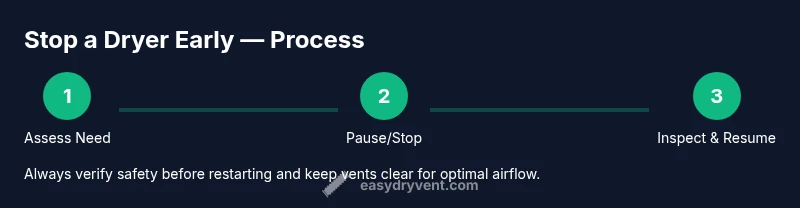
To stop a dryer early safely, use the dryer’s Pause/Stop function whenever possible. If you must intervene mid-cycle, open the door briefly to halt the tumble (avoid leaving it open long). If the dryer runs hot or you smell burning, unplug the unit immediately and switch off the circuit. Always follow manufacturer guidelines.
Why stopping a dryer early matters
According to Easy DryVent, stopping a dryer early when you need to intervene can prevent unnecessary wear, reduce energy waste, and minimize lint buildup between cycles. Modern dryers are designed to handle short pauses, and most models include a Pause or Stop button that safely suspends heat and tumbling without abruptly cutting power. The rationale is simple: over-drying wastes energy, fabrics, and can stress sensors that regulate heat. However, it’s crucial to distinguish between a routine pause and an emergency stop. Routine pauses are appropriate for repositioning clothing, rerouting items that are bunched, or changing cycle settings mid-dry. In cases where you detect burning smells, excessive heat, or smoke, you must act immediately and shut off power to the unit. Safety comes first, and a calm, deliberate approach reduces risk to you, your home, and your clothes.
Pause vs. stop: what the dryer does
Most residential dryers implement a “pause” function that briefly suspends operation without cutting all power, allowing you to safely rearrange clothes or remove damp items later. A true “stop” command ends the cycle, which can lock the door or reset certain sensors. Understanding which action your model supports is essential for safe handling. Always consult the owner’s manual for model-specific behavior, because some newer units may lock the drum temporarily or require a press-and-hold action to resume. When in doubt, use the pause function to minimize wear while you assess the load.
Immediate actions in an emergency
If you notice burning odors, smoke, or excessive heat, act quickly and calmly. Pause if possible, then unplug the dryer or switch off the circuit breaker. Do not reach into a running drum with your hands; instead, wait for the drum to stop if it’s safe to do so, and use the door to inspect only after power is secured. If a fire appears, evacuate and call emergency services. After the scene is safe, arrange for a professional inspection before resuming use, as repeated overheating can indicate a faulty heating element or sensor.
Practical examples: safe mid-cycle interventions
- Rebalancing a tightly packed load: pause and reopen the door briefly to rearrange items, re-close, and resume. This helps prevent tangling and ensures even drying without overheating a single fabric.
- Removing a damp item: stop or pause, remove the damp piece, then resume. Removing an item toward the end of a cycle can prevent over-drying other items and reduce energy waste.
- Testing fabric balance: pause to visually inspect how clothes lay inside the drum. Uneven loads can cause longer dry times and hotter spots, so repositioning improves efficiency and safety.
After stopping: what to check before resuming
Before restarting, inspect the lint screen for clogs, check that the vent is clear, and ensure the drum is free of small objects that could cause damage. If you smelled burning or detected heat that seems abnormally high, allow the dryer to cool, then perform a basic diagnostic with the owner’s manual guidance. If the dryer smells hot after restarting, stop again and consult a technician. Regular maintenance, including lint filtration and vent cleaning, reduces the need to stop mid-cycle for safety concerns.
Everyday safety practices and conclusions
Routine pauses are a normal part of efficient drying. Keep a small routine to check garments, redistribute loads, and clear lint buildup between cycles. This habit reduces energy use and extends your dryer's life. Always keep a clear working area around the dryer to allow quick access to power and controls. With mindful operation, you can stop a dryer early when necessary without compromising safety or fabric quality. The goal is to minimize risk, maximize efficiency, and keep your laundry routine smooth.
Tools & Materials
- Owner’s manual(Consult manufacturer safety instructions for your model)
- Pause/Stop control(Use the built-in feature to safely halt the cycle)
- Access to power supply or circuit breaker(If unplugging, ensure safe handling; switch off breaker if needed)
- Lint screen brush or vacuum(Optional for quick lint inspection after stopping)
- Flashlight(Optional for inspecting inside the drum in dim rooms)
- Heat-resistant gloves(Only if you need to handle a hot drum (short contact))
Steps
Estimated time: 15-25 minutes
- 1
Assess the need to intervene
Quickly determine if pausing is sufficient or if an immediate stop is necessary due to heat, smell, or fire risk. If the load is evenly distributed and the thermostat is stable, a brief pause is often enough to rearrange or check dampness without stopping the cycle entirely.
Tip: If you’re unsure, opt for a short pause first and observe the drum temperature after resuming. - 2
Use Pause/Stop to halt the cycle
Press the Pause or Stop button and wait for the drum to stop turning. If the appliance has a door sensor, wait for the door to be signaled closed before opening. Avoid opening while the drum is moving to prevent injury or fabric damage.
Tip: Hold the door steady as you approach to prevent the drum from shifting unexpectedly. - 3
Open the door safely (if needed)
Open the door only after the drum has come to a complete stop and power is secured. Check for heat or steam before reaching inside. If you must reach into the drum, do so briefly and wear gloves if the surface is warm.
Tip: Do not leave the door open for an extended period; this can cool the drum unevenly and affect sensor readings. - 4
Rearrange or remove items
Move items that are bunched, separated, or damp. Evenly distributed loads dry faster and cooler. If you’re removing a damp piece, place it aside and resume only after the load is evenly arranged.
Tip: Use a quick visual check to ensure there are no tangled fabrics that could bunch and overheat. - 5
Resume the cycle or switch to a shorter cycle
Close the door, reselect a suitable cycle or adjust drying time, and press Start. For very damp items, consider a shorter cycle with a cool-down or air-dry phase to finish safely.
Tip: Avoid running the dryer on a high-heat setting for longer than necessary; a medium or low heat reduces risk of overheating. - 6
Inspect after restart
If the cycle completes or resumes, check the lint trap and vent after stopping again. A clean vent maintains airflow and reduces risk of overheating on subsequent cycles.
Tip: Perform a quick visual check of the lint screen and vent area at the end of every load.
Common Questions
Is it safe to stop a dryer mid-cycle?
Yes, using the Pause/Stop feature is generally safe for short interruptions. Only move to a full stop if there is overheating, a burning smell, or a fire risk. Always follow the manual for your specific model.
Yes. Use Pause first to safely interrupt, and only stop completely if you notice heat or smell smoke.
Will stopping early affect fabric quality?
Stopping early can sometimes leave items a bit damp. Quick redistribution and a brief continuation at a lower heat setting can help prevent over-drying and fabric damage.
Stopping early might leave some items damp, but you can restart with a shorter cycle to finish drying evenly.
What should I do if I smell burning?
Immediately stop the cycle, unplug the dryer, and avoid touching the drum. If smoke or flames appear, evacuate and call emergency services. Then have a technician inspect the unit before reuse.
If you smell burning, power off and unplug right away. If smoke is present, call emergency services.
Can pausing affect sensor readings on modern dryers?
Pausing briefly generally does not harm sensors, but long or frequent pauses can sometimes reset humidity sensors. If you notice odd drying behavior after pausing, review the manual and consider a service check.
Short pauses won’t typically harm sensors; if you notice odd behavior after pausing, check the manual or contact support.
Is it better to unplug or switch off the circuit breaker to stop a dryer?
Unplugging or switching off the breaker both remove power, which is a safe way to stop a run if you cannot reach the control panel. Reconnect or restore power only after the drum has cooled and you’re ready to restart.
Either unplug or switch off the circuit breaker to stop power if you can't reach the control panel.
Should I call a technician if overheating recurs?
Yes. Recurring overheating indicates a potential fault in the heating element, thermostat, or venting system. A qualified technician should inspect the dryer to prevent a fire risk.
If overheating repeats, contact a technician to inspect heating elements, thermostats, and venting.
Watch Video
Key Points
- Pause when possible to avoid waste and wear.
- Do not open a running drum; secure power first.
- Regular lint/vent maintenance lowers mid-cycle stops.
- Inspect and rearrange loads for safety and efficiency.
- If in doubt, unplug and seek professional guidance.