How to Dry with Iron: Safe Last-Resort Guide for Clothes
Discover how to dry clothes with an iron as a safe, last-resort option when you have no dryer. Practical steps, fabric guidance, and safety tips for best results today.


Goal: dry clothing with an iron when a dryer isn't available. This last-resort technique uses heat and a dry barrier to wick moisture away. Steps: lay the damp garment on a heat-safe surface with a thick towel; set iron to low heat with minimal steam; press slowly in overlapping strokes. According to Easy DryVent, this method should be a last-resort option and is safest with sturdy fabrics.
Understanding the Context: When ironing to dry makes sense
In a pinch, corner cases in laundry situations may lead you to consider ironing as a drying aid. The technique should be used only when you have no access to a clothes dryer or outdoor drying space, and fabrics are sturdy enough to tolerate heat. Easy DryVent emphasizes that this is not a substitute for normal drying workflows but a contingency method to prevent delay when attention is needed now. For most households, air drying or quick-drying cycles remain the preferred options. This section explores why ironing can help in a pinch, the risks involved, and how to minimize damage to fabrics and your home.
Fabric safety and fabric types for iron-drying
Not all fabrics respond well to heat, moisture, and mechanical pressing. Natural fibers like cotton and denim tolerate higher heat better than synthetics, which can melt. Heavily wrinkled garments may benefit from a short, controlled pressing, but delicate weaves (silk, rayon, some synthetics) should be avoided or treated with extreme caution. Always test a small inconspicuous area first and never press a garment that's already stretched or damaged. If a fabric shows signs of sheen, discoloration, or fiber crunching, stop immediately. The barrier method (using a towel or cloth between the garment and iron) helps distribute heat and protect fibers.
Gear and setup you need
Before you start, assemble a few essential tools to reduce risk. Use a low-heat setting with no heavy steam, a clean ironing board or heat-safe surface, and a thick terry towel to act as a barrier. Keep a heat-resistant mat nearby and a timer or watch to monitor heat exposure. Clear space around the ironing area to avoid accidental contact with flammable items. If you must dampen the garment, use only a light, even mist and test the effect first on a scrap fabric. Compact, well-ventilated spaces help control humidity and reduce heat buildup.
The practical method: temps, barrier, and technique
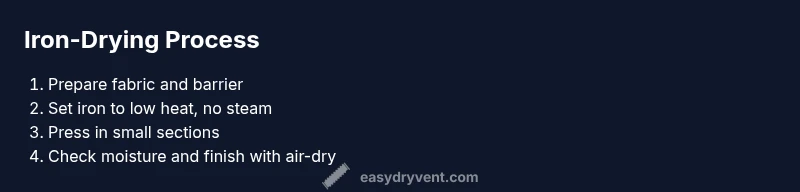
- Prepare the garment by blotting excess water with a towel rather than wringing. 2) Place a barrier under the fabric to protect the surface and spread moisture more evenly. 3) Set the iron to a safe low heat and disable steam; you may lightly mist the garment if required, but avoid soaking. 4) Press with slow, overlapping motions in small sections; avoid ironing back and forth in a single spot to prevent scorching. 5) Check moisture level after a few minutes and re-press as needed, always lifting the iron to avoid prolonged heat. 6) When the garment feels dry to the touch, allow air-drying to finish.
Troubleshooting and safety considerations
If you notice shiny marks, scorching, or melted fibers, stop immediately and reassess. A damp towel barrier can help, but excessive heat or steam can still cause damage. Ensure you have good airflow, and never leave an iron unattended while heating or re-heating a garment. If you must dry multiple items, work in small batches to prevent heat buildup. Finally, consider safer alternatives as soon as possible to avoid repeated heat exposure.
Alternatives and next steps
Iron-drying should be temporary. When possible, use a clothes dryer, a drying rack, or a laundromat dryer. If you live in a space without a dryer, consider air drying outdoors or in a well-ventilated room with a dehumidifier. For delicate fabrics or polished outfits, air drying is often the best choice, followed by ironing once completely dry. Regular maintenance, like lint removal and vent cleaning, supports faster air drying and reduces energy use over time.
Tools & Materials
- Iron(Set to low heat; avoid steam initially; perform test on scrap fabric.)
- Thick terry towel or barrier cloth(Place under garment to absorb heat and protect surfaces.)
- Heat-safe ironing board or flat surface(Stable, heat-resistant; avoid carpet.)
- Heat-resistant dish or mat(Optional barrier for extra protection.)
- Timer or clock(Track heat exposure per section.)
Steps
Estimated time: 60-90 minutes
- 1
Gather and prep
Collect your garments, the iron, a barrier cloth, and a heat-safe surface. Inspect fabrics for heat tolerance and moisture content. Wring lightly only if necessary, then blot excess water with a towel.
Tip: Having everything ready prevents rushing and reduces heat exposure. - 2
Choose fabrics wisely
Identify items suitable for this method (cotton, denim) and separate delicate fabrics. Avoid synthetics that melt or silk that scorches easily.
Tip: Keep delicate items away from irons entirely if possible. - 3
Set up barrier
Place a thick towel on the ironing board to absorb heat and provide a buffer. Lay the damp garment flat on top, smoothing wrinkles but not overstretching.
Tip: A barrier reduces direct heat transfer to fabric. - 4
Adjust iron temperature
Set the iron to a safe low heat with no steam. If your iron has a ‘synthetics’ setting, use it; otherwise stay on cotton/linen at low heat.
Tip: Never use high heat for drying. - 5
Begin pressing in sections
Press each section with slow, overlapping motions; avoid lingering on one spot to prevent scorching. Lift and recheck moisture levels as you go.
Tip: Keep motions steady and even. - 6
Check moisture and reapply
Periodically check the fabric for remaining dampness. Repeat section by section if needed, using small passes rather than long continuous pressing.
Tip: Re-dampen lightly only if fabric is too dry to absorb more moisture. - 7
Finish and air-dry
Once surface moisture is gone, allow the garment to air-dry completely away from direct heat. Avoid stacking while warm.
Tip: Air-drying completes the process without risk of heat damage. - 8
Evaluate safety and clean up
Turn off the iron, unplug, and store safely. Inspect the area for scorch marks and vent areas for lint build-up after use.
Tip: Clean up helps prevent accidental fires later.
Common Questions
Is it safe to dry clothes with an iron?
Drying with an iron should be considered only in emergencies and on fabrics that tolerate heat. It carries risks of scorching, melting, and fires if misused. Always test first and use the lowest effective heat.
Iron-drying is a last-resort method that should only be used on sturdy fabrics after testing a small area.
What fabrics should I avoid when attempting this?
Avoid synthetics that melt (polyester, nylon) and delicate fabrics (silk, silk blends). Cotton and denim are more forgiving but still require caution and barrier protection.
Avoid delicate or synthetic fabrics; cotton and denim are safer but still require caution.
Can I use steam while drying with an iron?
Steam can introduce moisture and heat that may damage fabrics. If you must use it, keep steam to a minimum and test first. Prefer dry pressing on most items.
Steam adds moisture and heat; use sparingly and test.
How long does the process take?
Expect 60-90 minutes for a small batch of sturdy fabrics, longer for larger items or multiple layers. Use this time as a practical window for careful, staged drying.
Plan for about one hour per load of sturdy fabrics.
What if I scorch the fabric?
If scorching occurs, stop immediately, blot the area, and let the fabric cool. Do not continue pressing on that spot; assess if the garment is still wearable.
If you scorch it, stop and assess; some damage may be permanent.
Are there safer alternatives?
Yes. Use a traditional dryer, a drying rack with good airflow, or a dehumidified room for quicker air drying. Reserve iron-drying for shortage scenarios.
Air drying or using a dryer is usually safer and more reliable.
Watch Video
Key Points
- Iron-drying is a last-resort option
- Always use a barrier to protect surfaces and fabrics
- Use low heat and minimal steam
- Test fabrics before full application
- Switch to safe drying methods when possible