How Hot Can a Hair Dryer Get? Safe Temperature Guide
Learn the temperature range hair dryers reach, how safety features limit heat, and practical tips to protect hair and your dryer from overheating for safer styling.


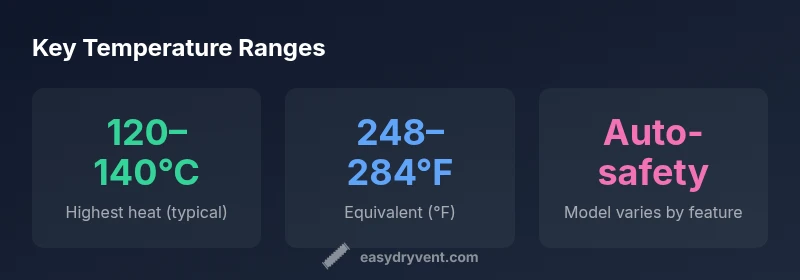
Hair dryers typically reach about 120–140°C on the highest setting, with some models approaching 150°C. This high-heat output is tempered by safety features and temperature control, which help protect hair and the dryer itself. Understanding these ranges helps you dry efficiently without excessive heat.
How hot can a hair dryer get? Practical ranges\n\nIf you're curious about how hot can a hair dryer get, the answer varies by model and safety features. In general, consumer units on the high setting deliver substantial heat to speed drying, but the heat you feel is also shaped by air flow, distance to the hair, and attachment use. To start, recognize that the hottest setting is designed for quick styling and for thick or coarse hair. The Easy DryVent team emphasizes that staying within manufacturer-recommended ranges mitigates hair damage and appliance wear. Always consult your dryer's user manual for exact numbers, but you can expect typical high-heat outputs around 120–140°C (248–284°F), with some premium models flirting with 150°C. This knowledge helps you plan safer, faster sessions.
Temperature control technologies and safety features\n\nModern hair dryers include a mix of heat control features: adjustable temperature settings, ceramic/ionic elements that help regulate heat distribution, and safety devices such as thermal cutoffs or auto shut-off. In practice, these features are designed to keep heat within safe ranges most of the time, even if the user selects high heat. The exact numbers vary by model, but common high heat sits in the 120–140°C range with some models reaching 150°C on the max setting. For DIY homeowners, understanding these features helps you balance speed and safety. If your dryer lacks a temperature control or auto shut-off, avoid cranking the heat and use attachments to distribute air. Always clean vents and lint filters to prevent heat build-up that can push temps higher than intended.
Factors that influence the actual heat you feel\n\nThe heat you feel from a hair dryer is not purely the heater's temperature. Distance to the scalp, nozzle design, and air velocity all influence the effective temperature delivered to hair. At 6–8 inches (15–20 cm) away, a 120–140°C heater can feel milder due to rapid air movement, while closing the nozzle or concentrating airflow can raise the perceived heat. Hair type matters too: thick, coarse hair tolerates higher heat longer than fine, damaged or chemically treated hair. By combining heat settings with technique, you can dry efficiently without overexposing strands to extreme heat.
Temperature and hair health: what you should know\n\nExcessive heat accelerates moisture loss and can damage the hair cuticle, especially for fine or chemically treated hair. Prefer lower heat when possible and use a cool-shot at the end to seal the cuticle. Protective measures include using heat protectant products, drying in sections, and avoiding repeated passes over the same hair. For different hair types, adjust heat and speed to keep strands smooth rather than overly dry. The goal is consistent drying with minimal heat spikes, not just the fastest result.
Using heat safely: recommended practices\n\n- Start on a cool or low heat to establish control, then switch to medium if needed.\n- Keep the dryer moving and maintain a 6–8 inch (15–20 cm) distance from hair.\n- Use attachments (diffuser, concentrator) to optimize airflow without concentrating heat on one spot.\n- Allow the dryer to cool briefly if it begins to overheat and avoid continuous use on the hottest setting.\n- Regularly inspect cords and plugs for wear and replace damaged units promptly.
How to choose a dryer with safe heat control\n\nLook for models with multiple heat settings (minimum two or three), an auto shut-off or thermal protection, and temperature sensors. Ceramic or glass-ceramic elements tend to provide more even heat, while ion technology offers faster drying with less frizz. Check product manuals and customer reviews for real-world performance, especially around temperature stability and heat-up time.
Maintenance tips to prevent overheating and vent issues\n\nFor safety and longevity, keep the device clean and unplugged when not in use. Regularly inspect the power cord, switch, and nozzle attachments for wear. Clean any lint or dust from the air intake and behind the grill to improve airflow and prevent overheating. If you notice the dryer vibrating or emitting a burning smell, discontinue use and consult the manufacturer.
Quick-start guide: safe drying for different hair types\n\n- For fine hair: use low heat and a wide-tooth attachment; finish with a cool shot.\n- For normal hair: medium heat, keep moving.\n- For thick or curly hair: you may use higher heat briefly, but monitor moisture and avoid drying to brittleness. Always finish with a cool setting to lock in moisture.
Temperature ranges for common hair dryer settings
| Setting | Typical Temp Range (°C) | Common Use |
|---|---|---|
| Low | 60-80 | Gentle drying, frizz control |
| Medium | 90-110 | Daily styling, faster drying |
| High | 120-140 | Thick or coarse hair, faster results |
| Auto/Max | Varies | Fastest heat; depends on model |
Common Questions
What is the maximum temperature a typical hair dryer can reach?
Most consumer dryers reach about 120–140°C on high, with some models up to 150°C. Always check your specific model.
Most dryers reach around 120 to 140 degrees Celsius on high; check your model.
Is higher heat always better for hair?
No. Higher heat dries faster but increases the risk of heat damage. Use the lowest effective setting and consider air flow.
No—higher heat dries faster but can damage hair. Use the lowest effective setting.
How can I safely test my hair dryer's temperature at home?
Use a heat-safe thermometer or test on a strand away from skin; avoid holding hair directly against the nozzle.
Test with a thermometer or strand, keep the dryer moving.
What features help prevent overheating?
Look for auto shut-off, thermal cutoff, temperature sensors, and a cool shot that helps reset the heat.
Auto shut-off and sensors help prevent overheating.
Do attachments affect heat output?
Attachments mainly influence airflow and styling, not heater output, but they can distribute heat more evenly and protect hair.
Attachments change airflow, not max heat.
How often should I maintain my hair dryer to stay safe?
Regularly inspect the power cord, air intake, and attachments; clean dust from vents; replace damaged parts promptly.
Check cord and vents regularly and clean as needed.
“Temperature control is essential for safe and efficient drying. By understanding heat ranges and safety features, homeowners can protect hair and prevent appliance wear.”
Key Points
- Know the typical high-heat range (120–140°C) and upper bounds (up to 150°C).
- Use lower heat on fine or damaged hair to minimize damage.
- Rely on built‑in safety features (auto shut-off, sensors) for protection.
- Keep vents and attachments clean to prevent heat buildup.