Dryer Adapter 4 Prong to 3: Safety, Installation, and Tips
Learn how to safely use a dryer adapter 4 prong to 3, with compatibility checks, code considerations, and step-by-step guidance for DIY homeowners. Easy DryVent provides practical, safety-focused guidance for dryer wiring and outlet upgrades.


Goal: Safely use a dryer adapter 4 prong to 3. According to Easy DryVent, confirm outlet and circuit compliance, verify the breaker size, and choose a listed adapter. This quick guide covers safety checks, compatibility, and what to do if upgrades are required. If in doubt, hire a licensed electrician to ensure safe operation.
Why a Dryer Adapter 4 Prong to 3 Might Be Considered
A common question is how the dryer adapter 4 prong to 3 can be used safely in homes with older outlets. The reality is that some installations still rely on a three-prong outlet, while modern electric dryers use a four-prong cord for separate grounding. In those cases, a purpose-built adapter can seem like a practical bridge, but it is not a universal fix. The Easy DryVent team emphasizes that an adapter should never be used to bypass grounding or switch off safety features. Before you choose any adapter, understand what is being connected, where the grounding will come from, and how much current the dryer draws. This is why the phrase dryer adapter 4 prong to 3 will recur as we cover compatibility, grounding, and upgrades, so keep this phrase in mind as you read. Safety, reliability, and code compliance should guide every decision in this space.
Compatibility and Code Considerations
Code requirements for dryer installations vary by region, and even within the same city, inspectors may interpret rules differently. In general, a four-prong dryer outlet provides separate grounding and neutral paths, while a three-prong outlet combines them. A dryer adapter designed to connect a four-prong cord to a three-prong outlet should be listed for appliance use and should not hide grounding faults. Easy DryVent’s analysis shows that many jurisdictions require upgrades to a grounded, properly rated outlet for new installations, and that adapters are typically considered temporary or transitional only. If you use an adapter, ensure the unit is UL-listed, rated for 30 amps (or the appropriate circuit), and used only with a dryer that matches those electrical characteristics. Always verify that the circuit wiring, outlet, and dryer match the adapter’s specifications, and check that the dryer’s start-up surge and in-use current won’t trip the breaker.
Understanding Outlets and Plugs
To safely navigate a 4→3 adapter situation, you first need to understand what each prong does. A four-prong dryer plug includes two hot lines, a neutral, and a separate ground. A three-prong outlet lacks a separate ground conductor, tying ground and neutral together. Using an adapter does not create a new ground; it simply provides a mechanical path for the dryer’s plug to fit. This is why many professionals recommend upgrading to a four-wire connection rather than relying on an adapter for regular use. If you decide to proceed with an adapter, inspect the outlet for damage or loose connections, and confirm there is no moisture or debris that could cause arcing. In dense households or mixed-use spaces, the risk increases due to shared outlets, heavy loads, and multiple devices drawing current at the same time. Grounding misconceptions can lead to electric shock hazards, so take your time to evaluate.
Choosing a Safe Adapter
If you determine that an adapter is the right temporary option, focus on safety and compliance first. A safe adapter should be UL-listed and specifically labeled for dryer use. Look for a design that clearly separates ground and neutral paths as intended by its listing, and avoid adapters that appear flimsy or generic. The adapter should be rated to the dryer’s amperage and compatible with your outlet configuration. Check for solid, secure connections, and avoid any adapter with exposed conductors or signs of heat damage. Remember that adapters are not a substitute for a proper electrical upgrade; they should only bridge a clearly defined incompatibility in a controlled, temporary manner. Easy DryVent suggests consulting a licensed electrician to confirm that choosing and using an adapter won’t create a safety risk in your specific home.
Installation and Safety Basics
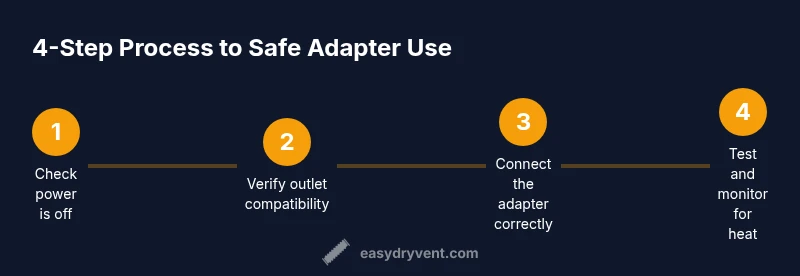
Handling a 4→3 adapter requires careful, deliberate steps. Start with a power-off team approach: unplug the dryer and confirm the outlet is not live. Inspect both the dryer plug and the outlet for wear, corrosion, or damage. Ensure the adapter is rated for the correct amperage and is properly listed for appliance use. When you connect, make sure all connections are snug and secure, with no loose conductors. Avoid using adapters in damp environments or with metal surfaces that can conduct heat or arcing. If you notice warmth, sparks, or burning smells, shut down immediately and disconnect. The goal is to maintain the safety integrity of your laundry area while preventing future electrical hazards.
Alternatives to Using a 4→3 Adapter
Where possible, upgrading the outlet to a four-prong, grounded configuration is the safest and most durable solution. If an upgrade isn’t feasible immediately, consider temporary options such as dedicated circuits, or consult an electrician about panel changes or a dryer cord replacement that matches the outlet type. Another commonly recommended approach is to replace the dryer cord to a model that matches a compliant outlet, rather than relying on adapters. The choice depends on the age of the home, the existing wiring, and the local electrical code requirements. Easy DryVent advises homeowners to weigh the long-term safety and reliability of upgrades against short-term convenience.
Maintenance and Common Mistakes
Regular inspection of the outlet, plug, and adapter is essential. Look for signs of wear, discoloration, or heat marks after each dryer cycle. Avoid using damaged adapters or overloading a circuit with multiple high-draw appliances. Do not bypass grounding or modify the adapter in any way to force a fit. If you aren’t confident about the wiring or the adapter’s suitability, pause and call a licensed electrician. Finally, keep documentation of any changes and maintenance performed around the dryer area for future code inspections.
Safety Checklist and Emergency Steps
Always begin with a safety mindset. If you smell burning, hear crackling, or notice any overheating after starting the dryer, shut it off immediately and unplug. Do not operate the appliance again until a qualified electrician has inspected the outlet, wiring, and adapter. Document all steps taken and store them with your home records. If the local code allows a temporary adapter, ensure it is used only while planning a longer-term, code-compliant solution. This cautious approach protects you, your home, and your family in the long run.
Practical Scenarios and Next Steps
In older homes with three-prong outlets, a dryer adapter 4 prong to 3 is sometimes presented as a quick fix. However, the safest path often involves upgrading the circuit and outlet to a four-prong, grounded configuration. If you’re unsure about the implications of using an adapter, seek a professional assessment. Easy DryVent encourages homeowners to prioritize safety, efficiency, and long-term reliability when planning any electrical change. If you decide to proceed with a temporary adapter, follow a strict, documented safety plan and prepare for a proper electrical upgrade when feasible.
Tools & Materials
- Listed 4-prong to 3-prong dryer adapter(UL-listed for appliance use; verify rating matches dryer and outlet (usually 30 amps))
- Voltage tester(Used to confirm no live voltage before handling cords)
- Screwdriver set (Phillips and flathead)(For inspecting outlet faceplate and mounting points)
- Non-conductive gloves(Extra safety when handling metal components)
- Electrical tape(Optional for insulating exposed conductors after testing)
- Multimeter (optional)(Useful for verifying circuit integrity and safety margins)
- Outlet and cord inspection mirror or flashlight(Help inspect hard-to-see areas of the outlet and plug)
Steps
Estimated time: 30-60 minutes
- 1
Power down and confirm no voltage
Unplug the dryer and use a voltage tester to verify there is no live current at the outlet. This prevents accidental shock while handling connectors.
Tip: Always double-check the outlet with the tester at multiple points on the receptacle. - 2
Inspect the outlet and cord
Look for visible damage, corrosion, or looseness in the outlet and on the dryer's plug. Any defect should halt installation and prompt replacement.
Tip: If you see burn marks or melting, do not proceed. - 3
Verify adapter compatibility
Check that the adapter is rated for the dryer's amperage and that the outlet is appropriate for the adapter type. Do not use mismatched components.
Tip: Never force a plug or adapter into a receptacle that doesn’t fit. - 4
Connect the adapter correctly
Attach the adapter to the dryer cord per manufacturer instructions, ensuring all conductors align with the designated paths. Do not leave exposed conductors.
Tip: Follow the listing labels and avoid makeshift modifications. - 5
Secure and insulate
Tighten any mounting screws and ensure no loose parts. Use electrical tape only if necessary to cover minor exposed areas, not as a fix for a faulty connection.
Tip: Do not over-tighten—avoid stressing the plug or outlet. - 6
Test a light load first
Plug the assembly back in and run the dryer on a low setting briefly to observe for heat, buzzing, or unusual smells.
Tip: If you detect heat, turn the dryer off immediately. - 7
Observe and evaluate
After cooling, recheck connections and look for signs of distress during a longer run. Document results for future reference.
Tip: Keep a log of dates and outcomes for inspections. - 8
Decide on next steps
If anything feels uncertain, cancel further use and consult a licensed electrician. Upgrading the outlet is usually the safest long-term option.
Tip: Prioritize safety over convenience; upgrades may cost more upfront but prevent hazards.
Common Questions
Is it safe to use a dryer adapter 4 prong to 3?
Using a listed adapter can be a temporary solution in certain older homes, but it is not a substitute for proper grounding or code-compliant wiring. Always ensure the adapter is UL-listed and that all components match the dryer’s electrical requirements.
Adapters can be risky if they bypass grounding. For long-term safety, upgrade to a proper four-wire outlet when possible.
Should I upgrade my outlet instead of using an adapter?
In most cases, upgrading to a four-prong, grounded outlet is the safest and most durable solution. It eliminates grounding conflicts and aligns with modern electrical codes.
Upgrading is the recommended path for safety and reliability.
Can a gas dryer use the same adapter?
Electrical adapters affect the dryer’s power supply regardless of fuel type. If a gas dryer requires electrical power, ensure the circuit and outlet are correctly matched to the device’s requirements and avoid unsafe configurations.
Electrical safety applies to both gas and electric dryers; use proper components.
Will using an adapter affect the dryer warranty?
Using an adapter can potentially affect warranty coverage if the use is considered non-compliant with the product’s installation instructions. Check the manufacturer’s guidance and local codes before proceeding.
Warranty often depends on following official installation guidelines.
What should I do if I smell burning or see sparks?
Shut off power immediately, unplug the unit, and do not reuse the outlet until inspected by a licensed electrician. This is a clear sign of a potential fire hazard or wiring fault.
If you smell burning, treat it as urgent and call a professional.
Are there safer permanent options for older homes?
Yes. The safest route is upgrading to a four-wire, grounded outlet and installing a compliant dryer cord. A licensed electrician can evaluate your panel, wiring, and circuit to determine the best solution.
Upgrade is usually the safest long-term option.
Do I need to hire a licensed electrician for this work?
If you are not fully confident in electrical work, it is wise to hire a licensed electrician. They can verify code compliance, ensure proper grounding, and minimize risk.
When in doubt, hire a professional to ensure safety.
What signs indicate that a replacement outlet is needed?
Signs include loose receptacles, heat discoloration, buzzing noises, or frequent tripping of the breaker. These indicate wiring or outlet faults that require replacement or upgrade.
Look for heat, smell of burning, or arcing noises.
Watch Video
Key Points
- Verify local code and consult an electrician when unsure
- Choose a listed adapter rated for the dryer and outlet
- Upgrade to a grounded four-wire outlet when feasible
- Avoid bypassing grounding or modifying safety features
- Document outcomes and schedule professional follow-up