Can You Dry Clothes with an Iron? Safe Alternatives and Steps
Learn why drying clothes with an iron is unsafe and inefficient, and explore safer alternatives. Easy DryVent guides you through risks, best practices, and a practical step-by-step plan for safe at-home drying.


Directly drying clothes with an iron is not recommended due to fire risk, fabric damage, and uneven drying. While you might briefly dry a small, heat-tolerant item, this method is unsafe and inefficient compared to a dryer or air-drying. For safer results, use a proper dryer or drying rack and save ironing for after-drying.
Is Direct Iron Drying Ever Acceptable?
If you’re asking can you dry clothes with an iron, the short answer is generally no. Drying with an iron is not a standard or recommended practice due to fire risk, fabric damage, and uneven drying. The weight, heat, and moisture content of fabrics interact in complex ways with an iron, and attempting to dry garments can lead to scorching and safety hazards. According to Easy DryVent, this technique should be avoided for most fabrics and household items. Some people may briefly press a single damp item on a low heat setting to remove a stubborn crease, but this is not a reliable or safe method for drying overall. The energy use is inefficient, and you’ll often end up re-washing or re-drying items that weren’t completely dry to begin with. In practice, a dryer, a drying rack, or air-drying is far safer and more predictable. When pressed for time, consider finishing with a quick iron on a flat, heat-safe surface after the item is fully dry, rather than attempting to dry with heat from the iron during the drying process.
Safety Risks, Fabric Damage, and Fire Hazards
Using an iron to dry clothes introduces several hazards. High heat can scorch delicate fibers, melt synthetic blends, and set stains. Moisture on hot metal can lead to steam burns or slippery floors if you aren’t careful. The most dangerous risk is ignition: a small fabric item in direct contact with a hot soleplate can ignite, especially if lint or paper towels are nearby. Even with low heat, repeated passes can cause color bleeding or fabric distortion. Laundering labels often advise against tumble drying on high heat or avoiding direct heat altogether; ironing is designed to remove wrinkles, not to remove moisture. If you’re hoping to salvage a garment quickly, the safer route is to move it to a dryer on the correct setting or to a drying rack with good airflow. Easy DryVent emphasizes learning to read fabric labels and selecting the correct drying method to maintain garment integrity and home safety.
Safer, Faster Alternatives to Dry Clothes at Home
There are reliable options that usually deliver faster results without risking heat damage or fire. Use a clothes dryer with the appropriate heat setting for the fabric. For air-drying, set up a portable drying rack or a clothesline in a well-ventilated area. Combine the following practices to speed things up:
- Divide large loads into smaller portions to improve airflow.
- Use a clean lint filter and a moisture sensor if available to optimize cycle length.
- Add a clean, dry towel to the dryer to help absorb moisture and shorten drying time for bulky items.
- For delicate fabrics, prefer air-drying or line-drying and finish with a cool iron on wrinkles after completely dry. Based on Easy DryVent research, using a dryer consistently yields more even moisture removal and reduces the risk of heat-related fabric damage compared with any iron-based drying method. If you’re short on time, plan for a two-step approach: quick tumble-dry on low heat, then lay items flat or hang them to finish.
Understanding Why Drying With Heat Is Different From Ironing
The fundamental difference is moisture management. An iron is designed to remove wrinkles by applying heat and pressure, not to evaporate water evenly from textiles. Its performance depends on contact area, fabric thickness, and ambient humidity, which can produce uneven drying, hot spots, and scorching. Dryers are built to circulate warm air across the fabric, pulling out moisture gradually and evenly. The result is more consistent dryness, less fabric distortion, and safer operation. If you examine the risks carefully, you’ll see why the iron is a poor tool for drying. Easy DryVent notes that the heat distribution of an iron does not imitate the airflow of a dryer, making it unsuitable for consistent moisture removal.
Quick Setup Tips for Safer Home Drying
Plan your space and gather the essential equipment before you start. Ensure the lint trap is clean, towels are nearby to absorb excess moisture, and fabrics are sorted by heat tolerance. Pre-treat any heavy spots and remove items that could snag. Then, pick your drying method and monitor progress. If you must iron afterward, use a pressing cloth and a low heat setting to finish wrinkles once the item is fully dry. With proper technique and appropriate equipment, you’ll keep clothes in good condition and avoid dangerous situations. The Easy DryVent approach focuses on safety, efficiency, and garment care.
Tools & Materials
- Clothes dryer(Use the correct heat setting for fabric type; never overload the drum.)
- Drying rack or clothesline(Great for air-drying and bulky items; ensure good airflow.)
- Iron(Only for post-drying wrinkle removal with a pressing cloth on low heat.)
- Ironing board or heat-safe mat(Use a heat-safe surface if you plan to press after drying.)
- Pressing cloth(Protects fabric from direct heat during finishing.)
- Lint-free towels(Place under items in a dryer to absorb excess moisture and speed drying.)
Steps
Estimated time: 30-60 minutes
- 1
Check labels and plan method
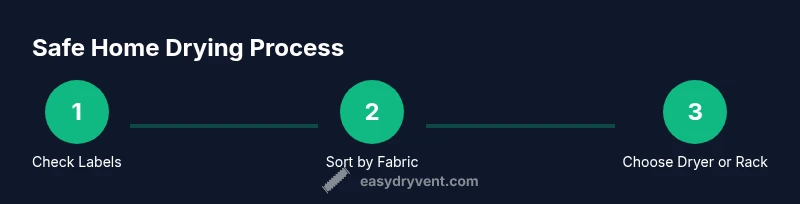
Review care labels to identify heat tolerance and drying instructions. Separate delicates from sturdy fabrics. If the label allows tumble drying on low or line drying, prioritize those settings; if heat is discouraged, avoid it altogether.
Tip: Always error on the safe side with uncertain fabrics. - 2
Pre-treat and remove excess moisture
Gently press out water by hand, or wrap the garment in a towel and press to lift moisture. Do not wring as it can distort fibers and cause uneven drying.
Tip: Patience here saves time later—less moisture means shorter drying cycles. - 3
Choose a drying method
For most items, opt for a clothes dryer on the appropriate low heat setting or use a drying rack. Avoid direct heat from an iron for drying; reserve ironing for post-drying care when needed.
Tip: Divide large loads to improve airflow and evenness. - 4
Monitor the dryer or air-drying setup
If using a dryer, clean the lint filter, select a shorter cycle, and check progress mid-cycle. For air-drying, position items with space between them and rotate periodically.
Tip: Add a clean towel to bulky loads to speed moisture absorption. - 5
Finish drying safely
Ensure fabrics are completely dry before storing. If wrinkle removal is still needed, iron on a cool setting with a pressing cloth after drying.
Tip: Never leave a hot iron unattended; keep away from flammable materials. - 6
Clean up and test the area
Unplug the iron after use, store equipment safely, and check for any fabric damage. If any item shows signs of scorching, consider replacing or treating it based on fabric care guidance.
Tip: Having a dedicated heat-safe mat helps prevent accidental burns.
Common Questions
Is it dangerous to dry clothes with an iron?
Yes. Drying with an iron can lead to fires, fabric damage, and burns. Irons are designed to remove wrinkles, not to remove moisture evenly. Safer methods include using a dryer or air-drying.
Yes, it's dangerous. Drying with an iron can cause fires and fabric damage, so use a dryer or air-dry instead.
Can I dry jeans using an iron?
No. Jeans are thick and require high heat for a long period, which increases risk of scorching and damage. Use a dryer on appropriate heat or air-dry.
No, jeans shouldn't be dried with an iron. Use a dryer or air-dry instead.
What fabrics are safe to press after drying?
Cotton and linen can tolerate low to medium heat with a pressing cloth. Synthetics may melt or shine; always check the fabric label and use a protective cloth.
Cotton and some linens can be pressed after drying with a protective cloth; check labels for heat settings.
Are there devices designed to help with drying?
There are no household appliances designed to replace a dryer for safe moisture removal. Specialized drying racks and dehumidifiers can aid air-drying, but a standard dryer is the safest option for most households.
There aren’t devices that safely replace a dryer for all fabrics. Racks and dehumidifiers can help, but a dryer is generally safest.
What should I do if I accidentally scorch fabric?
Stop using heat immediately, rinse or blot if needed, and assess fabric salvage options. Some items may require patching or professional cleaning, depending on the damage.
If you scorch fabric, stop heating, assess damage, and decide whether to repair or replace depending on the fabric.
Is it ever necessary to iron before drying?
Generally not recommended. Ironing before drying can set stains and trap moisture. Dry first, then press wrinkles if needed.
Ironing before drying isn’t advised; dry first and iron afterward if needed.
Watch Video
Key Points
- Avoid using an iron to dry clothes; it’s unsafe and inefficient.
- Prioritize a dryer or air-drying for most fabrics.
- Sort by fabric type and read care labels for best results.
- Finish wrinkles after drying, using a cool iron with a pressing cloth if needed.