Steam Dryer vs Regular Dryer: What's the Difference and Which to Buy
Compare steam and regular clothes dryers to understand how they work, impact on fabric care, energy use, installation, and overall value in 2026. Learn which type fits your laundry needs with practical guidance from Easy DryVent.


What’s the difference between a steam dryer and a regular dryer? In brief, a steam dryer adds built‑in steam to refresh fabrics and reduce wrinkles, while a regular dryer uses heat and tumbling without steam. Steam models can improve fabric care and odor control, but they cost more upfront and may require more maintenance. Your decision depends on fabric types, energy costs, and budget.
What's the difference between a steam dryer and a regular dryer?
What’s the difference between a steam dryer and a regular dryer? The core distinction is how moisture and heat are applied during the cycle. A steam dryer can introduce steam into the drum at specific points, helping relax fibers, reduce wrinkles, and refresh fabrics between washes. A conventional, non-steam dryer relies on heated air and mechanical tumbling to remove moisture. While both types dry clothes, the steam-enabled model targets fabric feel and appearance, whereas the regular dryer emphasizes fast, straightforward drying. According to Easy DryVent, the practical gap comes down to fabric care goals versus upfront cost. If your laundry includes delicate items or frequent wrinkle concerns, a steam dryer can offer tangible benefits; if you mainly need quick, cost‑effective drying, a standard model may be sufficient.
How steam dryers work: technology and modes
Steam dryers integrate a built‑in steam generator or a dedicated steam mode. They often provide settings like steam refresh, wrinkle release, and odor control. The steam is introduced into the drum at selected phases of the cycle, softening fabric fibers and smoothing out creases without soaking the load. In some models, you can run a light steaming phase after drying to further relax fibers before folding. It’s important to understand that steam does not replace heat; it complements heat by enabling gentler care for certain fabrics. Venting requirements vary by model, and many modern steam dryers offer ventless options or flexible installation.
How regular dryers work: heat, air flow, and cycles
Traditional dryers rely on a heating element (electric) or a gas burner to heat incoming air. A rotating drum tumbles clothes while warm air passes through, evaporating moisture. Sensor controls adjust heat and cycle duration based on moisture detected in the load. Regular dryers perform well for everyday fabrics and larger families who prioritize speed and convenience. They generally lack the moisture-adding phase that steam models offer, which means more straightforward fabric handling but less opportunity for wrinkle reduction without ironing.
Fabric care, wrinkles, and odor: what steam changes
Steam cycles address common textile challenges that stress traditional drying alone. Steam can help smooth wrinkles on shirts and trousers, reduce static, and refresh fabrics that have absorbed odors from previous wears. The effect is especially noticeable on cottons, blends, and synthetics that tend to wrinkle easily. For delicate fabrics such as silk or wool, steam can provide a gentler alternative to aggressive heat, but it’s essential to follow garment care labels. Steam also narrows the need for heavy ironing in some everyday outfits, potentially saving time and effort in your laundry routine.
Energy use and cost considerations
Energy usage varies by model and cycle selection, not just by whether a unit is steam or non-steam. Steam features may add to upfront cost, and some settings require extra water or energy for steam generation. When evaluating cost, consider both the purchase price and the long‑term energy use. Steam cycles can be energy-efficient for fabrics requiring less ironing and fewer re-drys, but that benefit is highly model-dependent. In 2026, Easy DryVent recommends weighing the value of fabric care against the additional cost and potential maintenance.
Drying performance: time, load size, and consistency
In practice, regular dryers often excel at speed, especially for large loads or bulky items. Steam models may take longer if you include a steam refresh phase, though many users find the overall cycle time comparable for typical family loads. The key performance factor is consistency across different fabrics and load sizes. A steam dryer’s advantage appears when you want steady results without sacrificing fabric integrity, while a standard dryer shines when you need simple operation and predictable cycles.
Maintenance and reliability: steam components vs standard
Steam dryers introduce additional components, such as a steam generator, humidifier lines, and seals that must remain leak-free. This can mean more maintenance checks and occasional service calls if humidity paths become blocked or mineral buildup occurs. Regular dryers have fewer water-related components, which can translate to simpler maintenance. Regardless of type, routine lint trap cleaning, vent inspection, and filter care help prevent efficiency loss and fire risk. Easy DryVent notes that reliability often hinges on model quality, proper installation, and timely maintenance.
Venting, installation, and safety considerations
Vent requirements differ between steam and non-steam models. Some steam dryers are vented, others are designed for ventless operation with condensers. Venting affects where you place the dryer, how you route exhaust, and the space needed for safe operation. Safety considerations include proper electrical supply, gas line compatibility (for gas dryers), and regular vent inspections to prevent lint buildup. If you’re renovating a laundry room, plan for future steam options and confirm with the installer which models your space supports.
Noise, space, and footprint considerations
Steam dryers often share the same footprint as traditional dryers but may include additional hoses or a slightly different panel layout for the steam system. Noise levels are comparable to other electric or gas dryers, but the steam module can introduce subtle mechanical sounds during steam cycles. Space planning should accommodate the dryer size, venting route, and nearby water connections if you choose a model with a built‑in steam generator.
Use cases: families, wardrobes, heavy fabrics
If your laundry includes frequent wrinkle-prone items (dress shirts, chinos) or fabrics that benefit from refreshing between wears, a steam dryer can reduce ironing time and enhance fit. Families dealing with active kids or athletes may notice faster fabric care cycles for uniforms and outerwear. For heavy fabrics like towels and denim, a conventional dryer can still deliver robust performance, but steam models may offer more consistent results with less wear on fibers when used properly.
Cost of ownership and value proposition
Total cost of ownership includes upfront purchase price, cycle lengths, maintenance, and potential energy savings. Steam dryers typically demand a higher initial investment but can reduce ironing time and fabric care costs over time. If your priorities are fabric longevity, reduced ironing, and odor control, steam may be worth the extra cost. If budget constraints or space limitations are dominant, a regular dryer remains a solid, reliable choice with broad availability.
Decision guide: quick-start planning
To decide quickly, list your laundry priorities: fabric care, wrinkle reduction, odor control, cycle speed, and budget. If wrinkle reduction and refreshing fabrics are important and you have the right installation space, a steam dryer is worth considering. If you need a straightforward, cost-effective solution with fast cycles, a regular dryer is likely the better fit.
Comparison
| Feature | Steam Dryer | Regular Dryer |
|---|---|---|
| Heating/Steam Method | Steam-assisted moisture for fabric care | Heat-based drying without steam |
| Fabric Care Impact | Wrinkle reduction and refreshing capabilities | Standard care with potential more creasing |
| Energy Use / Cycle Length | Cycle options include steam phases; overall length can vary | Typically shorter cycles with heat-only drying |
| Maintenance Needs | Possible steam system maintenance | Lower maintenance without steam components |
| Best For | Fabrics needing gentle care and wrinkle control | Budget-conscious households and quick-dry needs |
The Good
- Better fabric care and wrinkle reduction
- Odor control and fabric refresh capability
- Potentially gentler on delicate fabrics
Negatives
- Higher upfront cost
- Longer or similar cycle times depending on model
- Maintenance for steam components
- Limited availability in some regions
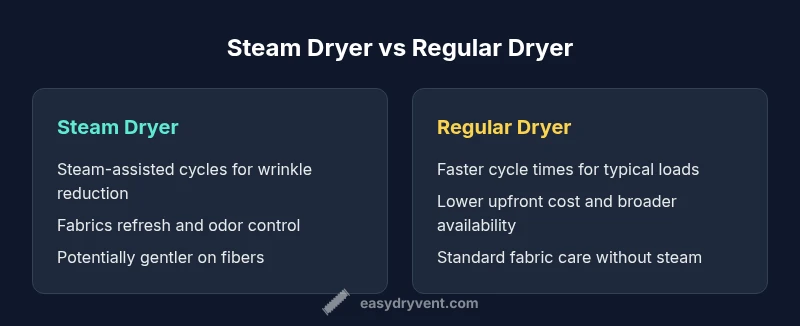
Steam dryers excel in fabric care and wrinkle reduction, while regular dryers offer lower upfront cost and broad availability.
Choose steam when minimizing ironing and refreshing fabrics matters. If budget, speed, and model availability are priorities, a regular dryer is typically the better fit.
Common Questions
What is a steam dryer and how does it work?
A steam dryer uses a built‑in steam generator or steam mode to introduce moisture during cycles, helping to refresh fabrics and relax fibers. It does not substitute heat; rather, steam enhances fabric care during drying. The result can be reduced wrinkles and easier ironing in many fabrics.
A steam dryer adds steam during drying to refresh fabrics and reduce wrinkles. It uses heat plus steam, so you still rely on standard drying to remove moisture.
Are steam dryers more energy-efficient than regular dryers?
Energy efficiency depends on model and usage. Steam features may add to upfront cost but can lower ironing and re-dry needs, which saves energy in some cases. Compare models based on cycle options and overall energy performance rather than category alone.
Energy use varies by model. Steam cycles can reduce ironing and re-drying, but overall efficiency depends on the specific unit and cycles you use.
Do steam dryers take longer to dry clothes?
Dry times with steam models are not universally longer; some cycles may be comparable to regular dryers, while others that include a steam phase can be longer. Real-world results depend on load size, fabric type, and cycle selection.
Dry times vary by model and cycle. Some steam cycles may take longer than standard dry cycles, depending on the load.
Can I install a steam dryer in a small laundry room?
Yes, many steam dryers are available in the same footprint as standard dryers and offer vented or ventless options. Space planning should account for an appropriate vent path or condensate disposal if ventless, plus accessible electrical and gas connections where applicable.
Steam dryers can fit in many standard laundry spaces. Check for venting requirements or ventless options and plan for connections.
Is a steam dryer worth the extra cost for a typical household?
For households prioritizing fabric care, reduced wrinkles, and odor refresh between wears, steam dryers can justify the extra cost. If your priority is budget, speed, and availability, a regular dryer is often the better value.
If you value fabric care and less ironing, a steam dryer can be worth it; otherwise, a regular dryer may offer better value.
Are there ventless steam dryers?
Some models offer ventless configurations with condensers or heat exchangers. Ventless options can simplify installation in limited spaces but may have different maintenance needs and cycle characteristics.
Yes, some steam dryers are ventless and use condensers. Check your space and the model spec for venting requirements.
Key Points
- Assess your fabric care priorities before buying.
- Steam features can reduce wrinkles and refresh outfits.
- Budget and quick-dry needs favor regular dryers.
- Check venting and installation requirements for steam options.
- Balance upfront costs with long-term energy and maintenance.