What to Do When Jeans Shrink in the Dryer: A Practical Guide
Learn practical, step-by-step methods to fix jeans that shrink in the dryer and prevent future incidents. Easy DryVent shares home-safe techniques for homeowners and DIY enthusiasts to restore fit and protect denim.


Goal: reverse minor denim shrinkage caused by the dryer and prevent future issues. Confirm the care label and fabric type, then dampen and gently stretch the jeans, use warm water (not hot), and air-dry flat. If needed, repeat gradually, or seek professional alterations if the fit remains off. Avoid drying at high heat, as that will cause further shrinkage.
Understanding how jeans shrink in the dryer
Denim is primarily cotton, and cotton fibers can shorten when repeatedly exposed to heat and agitation. The dryer amplifies shrinkage by applying warm or hot air while tumbling the fabric, which relaxes and then tightens the fibers. If your jeans include elastane or spandex, shrinkage can be more complex because stretch fibers respond differently to heat. According to Easy DryVent, heat exposure is the main driver of denim shrinkage, especially when combined with moisture and mechanical agitation. Before you jump into any fix, recognize that some shrinkage is natural after washing; the goal is to restore fit without sacrificing fabric integrity. Knowing your fabric content, dye stability, and care label guidance helps set realistic expectations for recovering the original size and shape.
Before you begin: check care labels and fabric content
Care labels tell you the rules for washing and drying and can indicate whether the denim is pure cotton or a cotton blend. Pure cotton jeans are more prone to shrinkage from heat, while blends with synthetic fibers may respond differently. Identify fabric content and cycle recommendations (cold vs warm wash, tumble dry vs air dry). If the label warns against machine drying, skip the dryer even for attempts to re-expand. Also note any dyes or finishes that could fade or bleed when exposed to moisture. By verifying labels, you avoid making problems worse and ensure your re-shrink attempts stay within the fabric’s tolerance. Easy DryVent’s team emphasizes using care-label guidance as the foundation for any shrinkage-recovery plan.
Safe, practical methods to reverse minor shrinkage (home remedies)
Several home techniques can help restore fit for jeans that have shrunk slightly. The most common approach uses controlled dampness and manual stretching to encourage the fibers to relax and re-expand. Start with warm, not hot, water and a gentle conditioner to soften the fibers. Submerge the jeans briefly or soak them to about the waist level, then carefully stretch them back to the desired dimensions while they’re damp. Rinse lightly and remove excess water, then lay flat to air-dry or place over a rounded form to maintain shape. It’s important to avoid aggressive pulling or heat-intensive methods, which can create new distortions or pockets that pull while wearing. The goal is to guide the fibers back toward their original length while preserving the garment’s structure.
How to prevent jeans from shrinking in the future
Prevention starts with choosing the right washing temperature, drying method, and load balance. Always test the care label, and prefer cold or warm washes for denim to minimize fiber contraction. When possible, air-dry jeans on a hanger or flat surface to avoid the agitation and heat of a tumbler. If you must use a dryer, select a low heat setting and remove the jeans promptly to reduce prolonged heat exposure. Washing with similar fabrics can also help reduce friction and uneven shrinkage. Finally, consider sizing up slightly and fabric blends with stretch to improve comfort and reduce post-wash distortion. Implementing these habits consistently helps maintain fit across multiple wears.
Step-by-step strategy to rebalance denim: a practical workflow
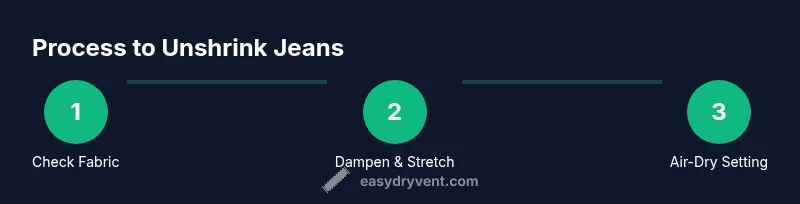
The following strategy blends caution with effective technique. Start by confirming labels (easy win, fewer surprises). Then dampen, stretch, and shape carefully on a flat surface, followed by controlled drying to set the new size. This section expands on those ideas with nuanced steps and logic, so you can adapt to various denim weights and blends while keeping fiber integrity intact. Maintain a focus on gradual adjustments rather than drastic size changes in a single pass, which reduces risk of tearing or uneven shrinkage. The goal is to achieve a usable fit without compromising durability.
When to seek professional alterations or consider replacement
If a pair of jeans has shrunk beyond comfortable wear or developed an unfixable warp after repeated attempts, professional alterations can salvage the garment. A tailor may let out seams where fabric allows, restore waistbands, or adjust the leg length with careful, controlled methods. In some cases, denim with heavy shrinkage may be more cost-effective to replace rather than pursue repeated home fixes. Use professional services when the garment is valuable or when DIY attempts risk damaging the fabric further. Easy DryVent recommends weighing the cost of alterations against the garment’s age and style to make a practical decision.
Tools & Materials
- Warm water (not hot)(Test on a small area first; aim for 90–110°F (32–43°C))
- Mild hair conditioner or fabric softener(Dilute per bottle directions, optional but helpful)
- Clean basin or sink(Large enough to submerge the jeans fully)
- Towel for drying and blotting(Old towel recommended)
- Flat drying surface or hanger(Keep shape during drying to avoid new distortions)
- Spray bottle with water (optional)(Light mist for micro-adjustments)
- Measuring tape or a flat object for shaping(Helps re-create original dimensions)
Steps
Estimated time: 60-90 minutes plus drying time
- 1
Gather supplies and prep
Lay out all tools so you can access them quickly. Confirm the care label and fabric content to tailor the method to your denim. This initial check minimizes wasted effort.
Tip: Keeping the work area clean prevents dye transfer and keeps denim pristine. - 2
Dampen jeans evenly
Fill the basin with warm water and submerge the jeans briefly, ensuring even saturation. Gently press out excess water without twisting the fabric.
Tip: Avoid hot water; high heat can set shrinkage rather than reverse it. - 3
Apply conditioner soak
Add a small amount of mild conditioner to the water to soften fibers and promote stretch. Soak for 5–10 minutes, then rinse lightly with clean water to remove excess soap.
Tip: Conditioner helps fibers relax but use sparingly to prevent stiffness after drying. - 4
Stretch to target size
Gently reshape the jeans to the desired waist, hip, and leg length while still damp. Use your hands and, if needed, a tape measure to match the original fit.
Tip: Work gradually from the waistband outward to maintain even distribution of stretch. - 5
Blot and air-dry
Blot with a towel to remove surface moisture, then lay flat or hang to dry. Shape cuffs and hems as needed.
Tip: Avoid direct heat; a steady air-dry is gentler on fibers than a heat source. - 6
Recheck fit and repeat if necessary
Once dry, try the jeans. If they’re still snug, repeat the damp stretch process in small increments rather than a full re-dress. Do not overshoot the target.
Tip: Patience beats aggressive stretching, which can cause seams to pull or fabric to warp.
Common Questions
Can jeans permanently shrink after repeated dryer cycles?
Yes. Repeated exposure to high heat can cause irreversible shrinkage. To minimize risk, avoid hot settings and limit tumble drying.
Yes, repeated high-heat dryer cycles can cause permanent shrinkage. Avoid hot settings and use low heat when possible.
Will washing jeans in cold water prevent shrinkage?
Washing in cold water reduces the risk of shrinkage but won’t reverse existing shrinkage. Combine cold washes with air-drying for best long-term outcomes.
Cold water helps prevent shrinkage, but it won't reverse existing shrinkage. Pair it with air-drying for best results.
Does this method work on all denim fabrics?
Most non-stretch denim responds well to damp stretch methods. Very heavy or specialty denims may require different approaches or professional adjustments.
Most non-stretch denim responds to this method, but very heavy or specialty denims may need different care.
How soon should I test fit after treatment?
Allow jeans to dry completely before testing fit. If still snug, repeat the gentle damp-stretch method in small increments.
Let them dry completely, then check the fit. If needed, repeat the gentle damp stretch in small steps.
Can I re-dry jeans after re-stretching?
If reseeking fit, air-dry is preferable. If you use a dryer, choose a low heat setting and monitor closely to avoid re-shrinking.
Air-dry is best after a stretch. If you must use a dryer, use low heat and watch closely.
Is there a risk washing with other clothes?
Yes—friction and differing fabrics can cause uneven wear. Wash denim separately if possible when performing shrink-recovery steps.
Fabrics rub against each other; wash denim separately during shrink-recovery steps when possible.
Watch Video
Key Points
- Check the care label before attempting any fix
- Use warm water and gentle stretching to restore fit
- Air-dry flat to avoid re-shrinking
- Avoid high heat and aggressive pulling
- Consider professional alterations for severe shrinkage