What Dryer Setting for Jeans: A Practical DIY Guide
Discover the best dryer setting for jeans to prevent shrinkage, protect color, and save energy. This Easy DryVent guide covers prep, settings, and post-drying care with actionable steps for denim lovers.


By the end of this guide, you’ll know exactly what dryer setting to use for jeans and how to prepare your load for best results. You’ll learn why medium heat is typically safer than high heat, when to air-dry, and how to minimize shrinking, color fading, and energy usage. Easy DryVent shares practical, step-by-step tips you can apply today.
Why the right dryer setting matters for jeans
If you’re wondering what dryer setting for jeans to use, the answer shapes denim longevity, fit, and color. The wrong heat or cycle can shrink the fabric, wear down fibers, and cause uneven fading. At Easy DryVent, we emphasize denim deserves a gentler approach than everyday fabrics. With the right setting, you can finish a load efficiently while preserving the structure of your jeans and avoiding unnecessary energy use. This section explains the why behind the recommendation and how tiny choices add up to big results over time.
How denim fibers respond to heat and agitation
Denim is a durable cotton weave, but it contains fibers that react to heat, moisture, and agitation. High heat can cause fibers to tighten and permanently shrink, while aggressive tumbling can cause micro-abrasions that fade color and wear edges. Lighter-weight denims are more prone to distortion, whereas heavier denim tolerates slightly more agitation. Understanding these dynamics helps you pick a setting that minimizes damage while still getting the job done.
Recommended dryer settings for jeans
For most everyday jeans, a medium heat setting on a timed cycle is the safest starting point. If your jeans are especially dark or high-weight, you can extend the cycle but stop early to avoid overdrying. Avoid automatic hot cycles on denim unless you’ve confirmed the label allows it. If you’re in doubt, err on the side of gentler heat and shorter duration, then finish with air-drying.
Load preparation and care: getting the most from a single cycle
Preparation matters as much as the setting. Always check the care label, sort by color and denim weight, and balance the load to prevent a spinning drum from becoming unbalanced. Pre-drying steps that help include turning jeans inside out to protect color and ensuring pockets are empty to reduce bulges that can cause uneven drying. A small precaution is to use a clean, dry towel nearby to help absorb moisture and reduce friction during the cycle.
Step-by-step drying approach: run, check, adjust
- Start with a light, balanced load of jeans and set the dryer to medium heat. 2) Run for 15 minutes, then pause to check dryness and feel for damp spots. 3) If needed, run another 10–15 minutes on the same setting. 4) Remove jeans while slightly damp and finish air-drying flat or on a rack to avoid heat-related stiffness. 5) If you see noticeable shrinkage early on, adjust the next cycle to a lower heat and shorter duration. 6) Always clean the lint filter after drying.
Alternatives to minimize shrinkage: air-dry and hybrids
Air-drying is the gentlest method for denim longevity. Consider hanging jeans on a bar or laying flat on a drying rack in a well-ventilated area. A hybrid approach—drying on medium heat for a portion of the cycle, then finishing on a rack—often yields a balance between convenience and fabric care. When weather or indoor space allows, air-drying remains the preferred option for most denim.
Troubleshooting common denim-drying issues
If jeans come out stiff, shrunk, or faded, revisit the cycle settings and load size. Overloading reduces air circulation and increases wet spots, leading to uneven drying. Faded color can often be prevented by turning jeans inside out and avoiding long exposure to heat. For persistent problems, consider washing with a color-safe detergent and air-drying the jeans moving forward.
Tools & Materials
- Dryer with adjustable heat (low/medium/high)(Set to medium for standard denim; high heat only for heavy-duty jeans as a last resort)
- Old towel or microfiber cloth(Place with jeans to cushion and reduce friction)
- Drying rack or hanger(Air-dry residuals or final drying to prevent heat damage)
- Care labels and denim weight guidance(Always check garment-specific instructions before drying)
- Denim-friendly detergent(Use mild detergent designed for color retention if needed)
Steps
Estimated time: 30-45 minutes
- 1
Inspect care label
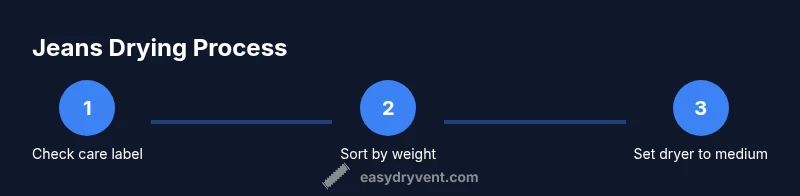
Read the jean’s care label to confirm approved heat levels and cycle recommendations. If there is no specific instruction, default to medium heat and a timed cycle. This prevents accidental damage from unknown fabrics.
Tip: When in doubt, choose a shorter test cycle on a small pair first. - 2
Sort by weight and color
Group jeans by denim weight and color family to avoid dye transfer and uneven drying. Lighter shades can fade if dried with darker denim due to heat exposure.
Tip: Never mix heavily embellished jeans with plain denim on the same load. - 3
Prepare the load
Turn jeans inside out, empty pockets, and zip or button closures. Ensure the load is balanced to prevent drum wobble and promote even drying.
Tip: Shake each pair gently before loading to minimize creases. - 4
Select the dryer setting
Choose medium heat and a timed cycle suitable for denim. Avoid auto-dry cycles on colors that may shrink with heat.
Tip: If your dryer has a ‘jeans’ or ‘cotton’ program, use it with the medium setting. - 5
Monitor and check
Run a short initial cycle (15–20 minutes) and assess dryness and feel. If still damp, resume in smaller increments to avoid overdrying.
Tip: Stop early and finish on a rack if edges feel brittle. - 6
Finish with air-drying
Remove jeans while still slightly damp and lay flat or hang to finish drying. This reduces heat exposure and helps maintain shape.
Tip: Combine with a towel under to absorb residual moisture more quickly. - 7
Assess fit and texture
Once fully dry, try on or measure legs for fit and check for stiffness. If needed, a gentle shake during wear can help restore softness.
Tip: If you notice stiffness, lightly mist with water and air-dry again.
Common Questions
Is it safe to dry jeans on a high heat setting?
No. High heat can cause shrinkage and color fading. Use medium heat and short cycles for most denim.
No, high heat is not recommended for jeans; use medium heat instead.
Can I dry multiple pairs of jeans at once?
Dry jeans in a balanced, not overloaded, load to ensure even airflow. If necessary, dry in batches.
Yes, but don’t overload the drum; balance the load for even drying.
Should I use dryer sheets when drying jeans?
Dryer sheets aren’t necessary for denim and can leave residues on clothes. It’s fine to skip them.
You can skip dryer sheets with denim to avoid residues.
How can I tell when jeans are fully dry?
Jeans are dry when they feel cool to the touch, sound hollow when thumped together, and show no visible dampness.
When they feel dry to the touch with no dampness, they’re ready.
Do different denim weights require different settings?
Yes. Lighter-weight denim may shrink more with heat; heavier denim can tolerate a touch longer on medium heat. Start with medium and adjust as needed.
Weights matter; start with medium heat and tweak if you notice too much shrinkage.
How can I prevent color fading when drying jeans?
Turn jeans inside out, wash in cold water, and dry on medium heat for a shorter period. Finish with air-drying whenever possible.
Turn inside out and finish on a rack to keep color longer.
Watch Video
Key Points
- Use medium heat for most jeans to reduce shrinkage.
- Do not overload the dryer; balance the load for even drying.
- Finish with air-drying to preserve color and shape.
- Always follow the garment care label for best results.