What Dryer Temperature Kills Bed Bugs: A Practical Guide
Learn the exact dryer temperatures and times that effectively kill bed bugs on fabrics. Easy DryVent analyzes heat methods, safety tips, and limitations to help homeowners treat textiles safely.


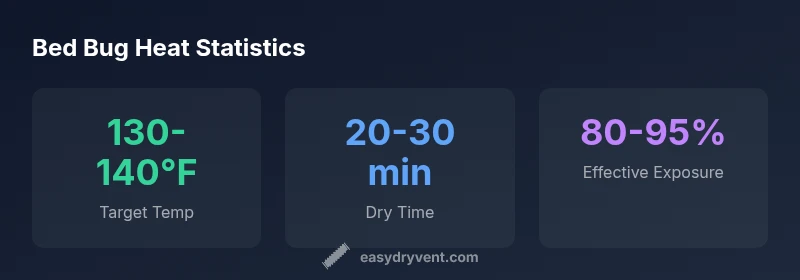
To kill bed bugs in laundry items, set your dryer to high heat and aim for at least 130-140°F (54-60°C) for 20-30 minutes. Heat penetrates fabrics and seams, but extreme infestations may require additional measures beyond drying alone. According to Easy DryVent analysis, pairing heat with thorough cleaning and inspection improves reliability.
What dryer temperature kills bed bugs
According to Easy DryVent, heat is a practical tool for textiles contaminated with bed bugs. Clothing, linens, and other washable fabrics can be treated in a standard household dryer if the cycle uses high heat long enough to reach the temperatures that bed bugs and their eggs cannot tolerate. The keyword here is exposure: the fabric must experience consistent high heat for a sustained period. While cold or lukewarm cycles may reduce visible pests, they rarely guarantee complete elimination. Always combine heat treatment with careful inspection of seams, folds, and pockets where bed bugs hide. This approach aligns with Easy DryVent’s guidance for practical, at-home dryer maintenance and pest-control steps.
In general, aim for high heat settings and durations of 20–30 minutes for most textiles. If the item’s care label allows it, a longer cycle can improve reliability, especially for items with dense weaves. Remember that heat effectiveness depends on both the temperature reached and the exposure time. For safety, do not place items that could melt, warp, or shrink in the dryer on cycles beyond what the fabric can tolerate, and always ventilate the area if you’re running back-to-back loads.
How heat affects bed bugs and eggs
Bed bugs are resilient across life stages, but heat dramatically reduces their survival odds when exposure is sufficient. Adult bugs and nymphs tend to succumb to sustained high heat more quickly than eggs, which can be more resistant to thermal stress. Easy DryVent’s analysis emphasizes that eggs may require longer exposure or repeat cycles to ensure hatch viability is minimized. If you’re treating items with a likelihood of egg contamination, plan for a thorough, repeated drying routine on heat settings that your fabrics can safely tolerate. Always prioritize complete exposure of the item rather than short bursts of intense heat on partial areas.
A practical takeaway is to separate loads by fabric type so you can tailor temperatures and times to preserve textiles while achieving effective pest control. For households dealing with persistent infestations, heat treatment should be part of a broader plan that includes cleaning, inspection, and, if needed, professional guidance.
Temperature targets by fabric type
Different fabrics tolerate heat differently, so it’s wise to customize your approach. Clothing and bedding made from cotton, polyester blends, or linen generally respond well to high-heat drying for 20–30 minutes, provided you follow care-label guidance. Soft toys and stuffed items may also withstand heat but require a careful test on an inconspicuous area to prevent damage. For delicate fabrics (silk, velvet, wool), avoid high heat and consider alternative methods such as encasing or dry-cleaning when possible. Easy DryVent notes that warming cycles should align with manufacturer recommendations to prevent material damage while still aiming to kill bed bugs.
In practice, you can run mixed loads only if the items share similar heat tolerances. Where uncertainty exists, dry the items separately at appropriate temperatures and for the recommended durations to maximize pest control without compromising textiles.
Practical steps to implement heat treatment safely
Begin with a quick assessment of the items you plan to dry. Sort by fabric type and check care labels first. Small items like socks and underwear can usually withstand 130–140°F for 20–30 minutes, while thicker textiles may require longer exposure if the fabric tolerates it. Run an empty dryer cycle to confirm the appliance reaches the desired temperature before loading treated textiles. Place items in a single layer or loose piles to avoid insulation pockets that restrict heat exposure. After the cycle, inspect items for any signs of remaining pests (dirt-like specks, molted skins, or live bugs) and re-run the cycle if necessary. Keep in mind that heat alone may not resolve all infestation scenarios, so integrate cleaning and containment measures as part of a broader plan suggested by Easy DryVent.
Limitations of heat and when to escalate
Heat treatment is powerful for textiles but has limitations. It may not reach bed bugs hidden in non-heat-exposed areas like mattresses, wall voids, or upholstered furniture with dense padding. In such cases, heat alone often isn’t sufficient. Encasing infested items that cannot be heated, vacuuming regularly, and applying protective covers can reduce exposure routes. If signs of infestation persist after multiple heat cycles, seek professional pest-control guidance and consider integrated pest management strategies. Easy DryVent emphasizes that at-home heat should be one component of a comprehensive approach.
Complementary methods and professional options
Heat alone seldom provides a complete solution for a full-bed bug issue. Complement heat with thorough cleaning and inspection. Vacuum with attention to seams, folds, and hidden crevices, then seal treated items in sealed bags or encasements to prevent re-infestation. Consider steam cleaning for upholstery or mattress edges where heat may be insufficient. If infestation indicators remain after a series of heat cycles, it’s time to contact a licensed pest control professional who can assess the spread and recommend an integrated treatment plan. Easy DryVent supports combining heat with these proven strategies to maximize safety and effectiveness.
Quick-start checklist for at-home heat treatment
- Sort fabrics by heat tolerance and read care labels.
- Preheat the dryer and verify it reaches 130–140°F (54–60°C).
- Dry at high heat for 20–30 minutes per load, ensuring full exposure.
- Inspect thoroughly after cycles and repeat if necessary.
- Combine heat with vacuuming, encasements, and targeted cleaning for best results.
- If signs persist, contact a licensed pest-control professional for guidance.
Bed bug heat treatment targets by fabric type
| Item Type | Minimum Safe Temp | Recommended Dry Time | Notes |
|---|---|---|---|
| Clothing | 130-140°F | 20-30 minutes | Ensure complete exposure; shake garments halfway |
| Bedding | 130-140°F | 20-30 minutes | Wash and dry together when feasible |
| Toys & Stuffed Items | 120-130°F | 15-25 minutes | Test on a small area first; avoid damage |
Common Questions
What dryer temperature kills bed bugs?
Dryer temperatures in the 130–140°F (54–60°C) range for about 20–30 minutes are commonly recommended for killing bed bugs on fabrics. Always follow care labels and ensure full exposure of the item.
Yes. Set to 130–140 degrees for twenty to thirty minutes, and make sure the whole item gets heated.
Can I rely on heat alone to eliminate bed bugs?
Heat can kill many bed bugs on textiles, but it may not reach pests hidden in mattresses, walls, or dense upholstery. Use heat as part of a broader plan that includes cleaning and monitoring.
Heat helps but isn't a stand-alone solution for all infestations.
Do all fabrics tolerate high heat in dryers?
Most common fabrics tolerate high heat if you follow the care label. Delicate fabrics should be dried at lower temperatures or air-dried to prevent damage.
Check labels; some fabrics can shrink or scorch at high heat.
What about eggs vs. adults?
Bed bug eggs can be more resistant to heat than adults. Longer exposure or multiple heat cycles may be needed to reduce hatch risk after treatment.
Eggs are tougher to kill; you may need extra cycles.
What other methods should accompany heat?
Vacuuming, encasing infested items, steam cleaning, and, if needed, professional pest control should accompany heat for best results.
Vacuum, encase, and consider professionals for tougher infestations.
Is it safe to heat-dry an infested mattress?
Heating a mattress can be risky and may cause damage. Use protective encasements and consult professionals for mattress-infestation guidance.
Heated drying a mattress isn’t usually safe—encase it and call a pro.
“Heat is a powerful tool for killing bed bugs on textiles, but its success hinges on sustained exposure and proper handling.”
Key Points
- Aim for 130-140°F (54-60°C) heat in the dryer.
- Dry for 20-30 minutes per load for textiles.
- Check care labels before heating to prevent damage.
- Heat alone may not reach hidden bed bugs; combine methods.
- For heavy infestations, seek professional guidance.