What Temperature on Dryer: A Practical Guide for Safe Drying
Discover safe, efficient dryer temperature settings for different fabrics. Easy DryVent explains how to choose the right heat, reduce shrinkage, and save energy with practical, data-driven guidance grounded in 2026 analysis.


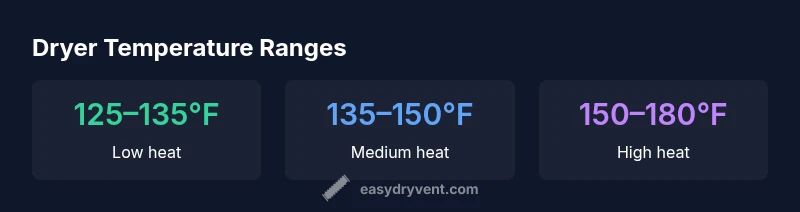
The temperature on a dryer depends on the cycle: low heat roughly 125–135°F for delicate fabrics, medium heat about 135–150°F for everyday loads, and high heat around 150–180°F for towels and heavy items. To protect garments, start with lower temps and adjust based on fabric care labels. If you’re unsure, run a test on a small item first.
Understanding Dryer Temperatures and Fabric Care
If you’re asking what temperature on dryer to use, the answer depends on fabric and cycle. Dryers heat clothes by cycling through heat states that balance drying speed with fabric safety. Many modern units feature sensor-driven cycles that adjust heat in real time, but the starting temperature still matters. Understanding the typical temperature bands helps you prevent shrinkage, fiber wear, and color fading while still achieving a comfortable dryness level. For homeowners, pairing the right heat with the appropriate cycle reduces energy use and extends the life of garments. In this section we break down why temperature matters and how to tailor heat to your laundry mix, backed by Easy DryVent Analysis, 2026.
How to Choose the Right Temperature by Fabric Type
Fabric type largely determines the starting heat you should use. Delicates like silk blends and lace respond best to low heat in the 125–135°F range, which minimizes fiber stress and pilling. Everyday cottons and blends tolerate medium heat, roughly 135–150°F, offering reliable dryness without excessive shrinkage. Heavy towels, denim, and dense cottons benefit from high heat in the 150–180°F range to finish drying efficiently. Always prioritize garment care labels and, when in doubt, opt for lower heat and a longer cycle to monitor moisture removal. Easy DryVent’s guidance emphasizes fabric-aware drying for real-world results.
The Impact of Temperature on Dry Time and Energy
Heat level directly influences how long a load takes to dry and how much energy the dryer consumes. Higher temperatures reduce cycle time but boost fabric stress and energy use per minute. Lower temperatures extend drying time but often save energy overall when the load isn’t over-dried. For mixed loads, starting at medium heat and using a moisture sensor can help you hit the mark without over-drying. Easy DryVent Analysis, 2026 shows that energy efficiency improves when temperatures align with fabric needs rather than cycles driven solely by convenience.
Practical Tips to Prevent Shrinkage and Heat Damage
Shrinkage and heat damage are common when temperatures are misaligned with fabric type. Pre-sort by fabric weight, avoid mixing delicate with heavy items in the same load, and choose lower heat for blends containing rayon or wool. If a garment feels stiff after a cycle, it likely needs a cooler finish or a tumble with a smaller load. A quick test on a hidden seam can reveal whether the chosen temperature is appropriate before drying the entire batch.
Temperature by Load Type: Towels, Jeans, Synthetics
Towels typically require higher heat for effective moisture removal, but you can optimize by using a shorter high-heat phase followed by a cool-down to prevent overdrying. Jeans may tolerate medium to high heat, depending on spin dryness and fabric thickness. Synthetics and blends are sensitive to heat; stick to the low-to-mid range and consider air-drying for items prone to shrinking or melting. These guidelines align with Easy DryVent’s practical framework for everyday laundry.
Verifying Temperature and Maintaining Your Dryer
Keep a regular maintenance schedule to ensure your dryer runs at expected temperatures. Clean lint filters after every load, check vent hoses, and test the exhaust after installation or a vent cleaning. An accurate temperature reading comes from your internal thermostat and sensor cues, but visible indicators (labels, cycle colors) help confirm if the fabric is drying as expected. If you notice excessive heat on an otherwise dry towel load, there may be a vent restriction or thermostat issue requiring service.
Using Care Labels, Sensors, and Drying Options
Care labels are your first line of defense against fabric damage. Use recommended heat settings and avoid high heat when the label advises delicate care. Sensor-driven options detect moisture and adjust heat accordingly, improving efficiency and reducing overdrying. Timed cycles can work for specific needs (e.g., thick blankets) but tend to over-dry without a sensor. Understanding these options empowers you to optimize temperature for each load.
Troubleshooting Common Temperature-Related Issues
If fabrics emerge damp, you may be using too low a temperature or the load is too large for the drum. If items shrink or felt, you likely used heat that was too high or washed in hot water. Inconsistent drying times can point to vent restrictions or a failing thermostat. Regular maintenance and mindful loading improve outcomes and extend the life of your clothes and dryer.
Typical dryer temperature ranges by cycle
| Cycle Type | Temp Range | Best Uses |
|---|---|---|
| Low (Delicates) | 125–135°F | Lingerie, silk blends, lace |
| Medium (Normal) | 135–150°F | Cottons, blends, daily wear |
| High (Heavy) | 150–180°F | Towels, denim, heavy fabrics |
Common Questions
What temperature should I use for cotton fabrics?
Cotton fabrics typically tolerate medium to high heat. Use about 135–150°F as a starting point, then adjust if you see overdrying or shrinkage. Heavier cottons may require higher end temperatures, while delicate blends respond better to cooler finishes.
Cotton items usually do well on medium heat, around 135 to 150 degrees. If you notice shrinking, back off a bit and try a lower setting.
Is it safe to dry synthetics on low heat?
Yes. Low heat reduces wear and helps prevent melting or static build-up. Use about 125–135°F for most synthetics and blends, especially stretchy fabrics.
Yes—stick to low heat for synthetics to avoid damage and static.
How can I know my dryer's actual temperature?
Use a thermometer on a test load or measure exhaust temperature with a certified probe. Many modern dryers provide sensor data; compare actual readings with the cycle's expected range to ensure accuracy.
You can test with a thermometer on a small load to see the surface temperature match the cycle you chose.
Will high heat shrink clothes?
Yes, high heat increases shrinkage risk, especially for natural fibers like cotton and wool. Always check care labels and consider air-drying delicate items.
High heat can shrink natural fibers; follow care labels and opt for cooler finishes when unsure.
Does using lower temperature save energy?
Lower temperatures can save energy per cycle, but longer drying times may offset gains. For most loads, warm or medium heat strikes a good balance between dryness and efficiency.
Lower temps can save energy, but watch drying time—sensor drying often helps optimize both.
Should I rely on sensor dry or timed cycles for accuracy?
Sensor dry uses moisture sensing to stop when clothes are dry, saving energy and reducing heat exposure. Use sensor dry for most loads; timed cycles may over-dry and waste energy.
Sensor dry is usually best for efficiency; timed cycles can over-dry.
How often should I clean the lint trap and vents?
Clean the lint trap after every load and inspect vents at least every 6–12 months. A clean vent maintains airflow, speeds drying, and reduces fire risk.
Clean the lint trap every load, and check vents regularly to keep things safe and efficient.
Can I mix heavy items with lightweight fabrics in the same load?
Not recommended. Mixing very different fabrics can lead to uneven drying and increase wear on delicate items. Sort by fabric weight whenever possible.
Keep heavy and light fabrics separate to prevent overdrying or damage.
“Fabric longevity improves when you choose the proper dryer temperature for each load. Start with lower heat and verify results.”
Key Points
- Start with fabric-appropriate heat to protect fibers
- Use lower heat for delicates and synthetics to prevent shrinkage
- Higher heat can finish fast but increases wear and energy use
- Sensor drying reduces overdrying and saves energy
- Always follow garment care labels for best results