Wash and Dry Washing Machine: A Practical Maintenance Guide
Learn how to wash and dry washing machine safely, reduce odors, and keep it running efficiently with Easy DryVent's practical maintenance guide for DIY lovers and homeowners.


Learn how to wash and dry washing machine safely, remove odors, and prevent mold with a simple, repeatable routine. This guide covers cleaning cycles, vent considerations, and maintenance steps you can perform in under an hour. No special tools required—just basic household items and a routine you can repeat monthly.
Understanding the goal of wash and dry washing machine maintenance
The goal is to perform a routine that helps you wash and dry washing machine surfaces and components, reducing odors and preventing mold. Regular upkeep improves efficiency, avoids moisture-related wear, and extends the life of both the washer and surrounding laundry space. In practical terms, it means cleaning the drum, gasket, and detergent drawer, followed by controlled drying or air-drying of interior components after each cycle. According to Easy DryVent, a consistent maintenance cadence reduces energy waste, lowers the likelihood of breakdowns, and helps you spot issues before they escalate. This section outlines why a structured routine matters, what to clean, and how often you should act.
When you wash and dry washing machine, you're addressing residue from detergents, fabrics softeners, minerals in hard water, and residual moisture that encourages mold. The approach below uses safe cleaners and universal steps that work across most consumer washers, whether front-load or top-load. It emphasizes safety: unplug before cleaning, avoid harsh chemicals on seals, and respect manufacturer guidelines. The overall objective is to create a simple, repeatable pattern you can perform on a weekend or weekday evening, ensuring your laundry area stays fresh and energy-efficient.
Tools & Materials
- Microfiber cloths(2–3 for wiping and drying)
- Mild all-purpose cleaner(Non-abrasive spray suitable for rubber and stainless steel)
- Spray bottle with water(For light rinsing)
- Soft-bristle brush(To reach gasket folds)
- Toothbrush or detail brush(For tight crevices)
- Gloves(Protect hands from cleaners)
- White vinegar(Odor removal and mineral buildup)
- Baking soda(Optional deodorizer)
- Bucket or shallow tub(Convenience for rinsing)
- Old towels(Absorbs moisture during drying)
Steps
Estimated time: 60-90 minutes
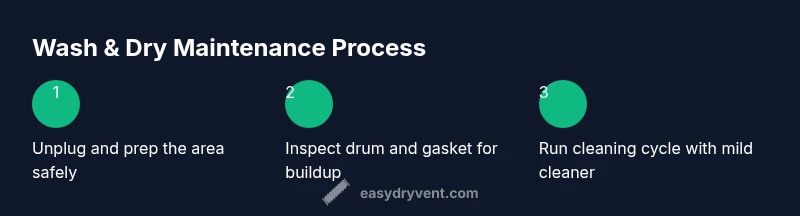
- 1
Unplug and prep
Begin by unplugging the machine and ensuring the lid is closed to avoid splashes. Remove laundry and detachable parts so you can access the drum, gasket, and dispenser. Gather your tools and cleaners in a nearby tray to keep the workspace organized. This step reduces electrical risk and makes the rest of the process smoother.
Tip: Always unplug before starting; never work on a powered appliance with cords live. - 2
Empty drum and inspect
Take out any remaining items, then visually inspect the drum for residue, dents, or foreign objects. Wipe the interior lightly with a damp microfiber cloth to remove loose debris. This helps you spot issues early and prevents contamination of future loads.
Tip: Look for odd remaining objects that could damage clothes or the drum during cycles. - 3
Run a cleaning cycle with safe cleaner
If your model supports it, run a cleaning or maintenance cycle using a mild cleaner such as white vinegar (no bleach) in the drum with hot water. If your manual recommends otherwise, follow those guidelines. This flushes away detergent residue and mineral buildup and freshens the drum.
Tip: Do not mix cleaners in the same cycle; vinegar alone is typically gentler than harsher chemicals. - 4
Clean dispenser and filters
Remove the detergent dispenser and rinse under warm water. Scrub away powder and mildew with a soft brush, then dry completely before reinserting. If your machine has filters or screens near the dispenser, clean those as well to ensure proper rinse and drain performance.
Tip: Dry components thoroughly to prevent mold growth between uses. - 5
Wipe the door seal and exterior
Inspect the rubber door seal for mold, slimy buildup, or trapped lint. Wipe clean with a damp cloth and mild cleaner; use a soft brush for stubborn spots. Dry the seal completely and leave the door ajar after cleaning to promote air drying.
Tip: Avoid sharp tools that could tear the gasket. - 6
Dry and air out the drum
After cleaning, wipe the drum and interior surfaces dry with a clean towel. Leave the door open for at least an hour or until completely dry to prevent moisture retention that fosters odors or mold.
Tip: Good drying reduces next cycle odors and mold risk.
Common Questions
How often should I clean my washing machine?
Aim for monthly cleanings; a deeper cleanse every 3-6 months helps prevent odor and mineral buildup.
Most homeowners should clean monthly, with a deeper cleanse every few months.
Can I use bleach in the washing machine?
Bleach can damage seals over time; use sparingly and follow manufacturer guidance.
Bleach can help, but use it sparingly and follow the manual.
Is vinegar safe for cleaning?
White vinegar is commonly used to deodorize, but avoid mixing with bleach and check your appliance manual.
White vinegar is helpful, but don’t mix with bleach and check your manual.
What if there is mold in the gasket?
Wipe with a mild cleaner, then run a sanitizer cycle; if it persists, consider professional service.
Wipe away visible mold and run a sanitize cycle; seek professional help if it persists.
Why does the washer smell after cleaning?
Residual moisture and clogged dispensers can cause odors; ensure thorough drying after cleaning.
Moisture buildup can cause odors; dry thoroughly after cleaning.
Should I leave the door open after cleaning?
Yes, leaving the door ajar helps air-dry the interior and prevents musty odors.
Leaving the door open helps air-dry and keeps odors at bay.
Watch Video
Key Points
- Establish a monthly maintenance routine.
- Avoid harsh chemicals on seals and gaskets.
- Clean dispenser and gasket regularly.
- Keep the laundry area well ventilated.
- Track issues to catch recurring problems early.