James Vince Hair Dryer Maintenance: Safe Use & Care
Learn how to safely use and maintain a James Vince hair dryer with practical tips, cleaning routines, safety checks, and long-term care guidance from Easy DryVent.


By the end of this guide, you will safely use, clean, and maintain a James Vince hair dryer, improving safety and performance. You’ll learn essential safety checks, practical cleaning routines, cord care, and simple troubleshooting you can perform at home. This step‑by‑step approach is designed for DIYers and homeowners, with practical tips from Easy DryVent.
Understanding the James Vince Hair Dryer: Design, Use, and Safety
The James Vince hair dryer is a compact household appliance designed for quick drying and styling. It offers multiple heat settings, a cool shot, and various attachments. For readers of Easy DryVent, treat it like any other electric device: inspect the power cord, check the housing for cracks, and follow the user manual for heat levels. For our demonstration, imagine a model with three heat levels, a cool shot, and a removable diffuser. The most important safety principle is to keep the dryer away from water, never use it while damp, and unplug before maintenance. According to Easy DryVent Analysis, 2026, safe operation reduces the risk of electrical hazards and overheating. This guide uses the James Vince hair dryer as a practical case study to illustrate best practices for home maintenance and safe usage.
Why Regular Maintenance Matters
Regular maintenance helps ensure consistent heat performance, reduces the risk of overheating, and extends the life of the James Vince hair dryer. Easy DryVent Analysis, 2026, shows that predictable upkeep—such as cleaning intake vents, checking the cord, and inspecting attachments—keeps airflow efficient and minimizes wear on internal components. By treating maintenance as a routine, you’ll avoid surprises and save time in the long run. This section lays the groundwork for actionable steps you’ll follow later in the guide.
Essential Safety Checks Before Each Use
Before plugging in the James Vince hair dryer, perform quick safety checks: inspect the power cord for nicks or cracks, examine the plug for bent prongs, and look over the housing for visible damage. If you notice any wear, stop using the device until it’s repaired. Never use a damaged appliance near water and avoid using while standing on a damp surface. These checks align with general home electrical safety practices and reflect Easy DryVent’s emphasis on proactive inspection as part of routine maintenance.
Cleaning Exterior and Detachable Attachments
Turn off and unplug the James Vince hair dryer before cleaning. Wipe the exterior housing with a microfiber cloth slightly damp with water or a mild soap solution, then wipe dry. Detach nozzles, diffusers, and concentrator attachments and clean them separately with warm soapy water. Rinse and dry thoroughly before reattaching. Avoid getting water into the motor or vent openings. Regular cleaning helps maintain airflow and reduces buildup that can affect performance.
Clearing the Air Intake: Preventing Overheating
Dust and lint can clog the air intake on any hair dryer. Use a soft-bristled brush to gently remove surface dust from the intake grille. If you can access the interior with a small vacuum, use a brush attachment to avoid damaging the internal components. Do not insert metal objects into vents, and never spray liquids directly into the intake. Regular intake cleaning keeps airflow unimpeded and supports consistent drying temperatures for the James Vince hair dryer.
Cord Care and Electrical Safety
Inspect the cord’s length, insulation, and connector every few weeks. Avoid wrapping the cord around the dryer while it’s hot; use a loose, gentle coil instead. If the cord shows signs of wear or if the insulation is damaged, stop using the appliance and consult a professional for repair or replacement. Maintaining a healthy cord reduces the risk of electric shock or fire and aligns with the safety principles Easy DryVent promotes for home appliances.
Attachments and Performance: Getting the Most from Your Dryer
Use the appropriate attachments for hair type and styling goals. Diffusers and concentrators influence airflow and drying efficiency, so choose the accessory that best suits your needs. Clean attachments after each use and ensure they are completely dry before reattachment. The James Vince hair dryer can deliver consistent results when used with correct attachments and clean, unobstructed vents. This approach also helps protect the device from heat-related wear over time.
Troubleshooting Common Issues
If the James Vince hair dryer is not heating, verify the heat setting, ensure the device is plugged in, and check for any visible damage. If the unit runs but feels underpowered, inspect the air intake for dust buildup and clean as described. If overheating occurs frequently, allow the device to cool completely between sessions and consider a professional inspection if issues persist. These steps keep the device functioning and are aligned with Easy DryVent’s practical maintenance guidance.
Maintenance Schedule for Home DIYers
Create a simple routine: a quick visual check before each use, a light exterior wipe weekly, a thorough intake clean monthly, and professional inspection if you notice persistent performance changes. Keeping a small log can help you track when parts were cleaned or replaced. A predictable schedule reduces downtime and ensures the James Vince hair dryer performs reliably over time.
Storage and Long-Term Care
Store the James Vince hair dryer in a cool, dry place away from direct sunlight. Coil the cord loosely, avoid wrapping tightly, and keep attachments stored with the unit to prevent misplacement. For long-term care, run the dryer briefly every few weeks to prevent seals from stiffening, and inspect for any signs of aging. Proper storage preserves electrical safety and preserves performance.
Tools & Materials
- Soft-bristled brush(Use to gently clear dust from air intake grilles)
- Microfiber cloth(Dampened slightly for wipe-down; avoid liquid on motor)
- Isopropyl alcohol (70%)(For stubborn grime on hard plastic only)
- Vacuum with brush attachment(Useful to remove dust from vents without wetting)
- Screwdriver set (Phillips #2)(Only if you need to remove screws for cleaning)
- Safety gloves(Protect hands during handling of hot surfaces)
- Compressed air canister(For shifting dust from interior vents; follow canister instructions)
Steps
Estimated time: 20-40 minutes
- 1
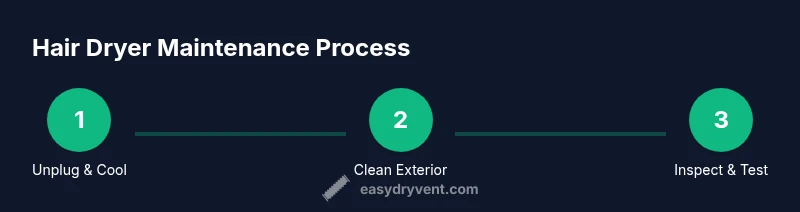
Unplug and cool down
Before any maintenance, unplug the James Vince hair dryer and allow it to cool completely if recently used. This prevents accidental shocks and burns while handling hot surfaces.
Tip: Wait 5 minutes after unplugging to ensure surfaces are safe to touch. - 2
Inspect for visible damage
Check the cord, plug, and housing for cracks or fraying. Do not use the dryer if you see any damage; replace or repair before the next use.
Tip: Look behind attachments where wear often hides. - 3
Detach attachments and prepare
Remove all attachments and set them in a clean, dry area. This prevents moisture from migrating into the motor and makes cleaning easier.
Tip: Keep track of each attachment so you can reassemble correctly. - 4
Clean exterior housing
Wipe the exterior with a microfiber cloth lightly dampened with water or mild soap. Dry thoroughly to prevent moisture ingress into internal components.
Tip: Never spray liquid directly into vents or motor housing. - 5
Clear the air intake
Use a soft brush to remove dust from the intake grille. If accessible, vacuum with a brush attachment to lift debris without pushing it deeper inside.
Tip: Keep the intake free of lint to maintain airflow and heat control. - 6
Clean attachments
Wash concentrators and diffusers in warm, soapy water. Rinse well and dry completely before reuse.
Tip: Ensure no moisture remains in any attachment before reconnecting. - 7
Check cord and plug
Examine cable insulation and the plug for warmth during use. If you notice heat along the cord or a hot plug, discontinue use and seek professional service.
Tip: Avoid coiling the cord tightly while the unit is warm. - 8
Test run and safety check
Reconnect attachments, plug in and run the dryer on a low setting for a few minutes to verify airflow and heat without abnormal noises.
Tip: If you hear unusual sounds or smells, stop immediately.
Common Questions
Is it safe to use a James Vince hair dryer near water?
No. Keep the dryer away from water and never use it with wet hands or over damp surfaces. If the cord or plug is damaged, avoid use until repaired.
Keep it away from water, and inspect for damage before use. If any part looks worn, do not use.
How often should I clean the air intake?
Clean the air intake monthly or more often if you notice reduced airflow or unusual heat. Regular cleaning helps maintain consistent performance.
Clean the intake monthly, or sooner if airflow seems blocked.
What should I do if the cord is damaged?
Stop using the dryer immediately and replace the cord or have it repaired by a qualified technician. Do not attempt DIY cord repairs.
If the cord is damaged, stop using it and get it repaired or replaced.
Can I use household cleaners on the housing?
Use mild soap and water on the exterior only. Avoid cleaners that could leave residues or affect the plastic over time.
Use mild soap and a damp cloth on the outside; avoid harsh cleaners.
How long does a James Vince hair dryer typically last?
Lifespan varies by use and care. Regular maintenance and careful handling can extend the appliance life, but internal components wear with frequent use.
With good maintenance, you can extend its life, but internal parts will wear over time.
Should I seek professional service for interior cleaning?
Yes. Avoid attempting to open the interior housing yourself. A qualified technician can safely inspect and service internal components if needed.
If you suspect internal issues, get a professional service to inspect it.
Watch Video
Key Points
- Unplug before any maintenance work.
- Regularly clean intake and attachments to maintain airflow.
- Inspect cord and housing for damage and replace if needed.