Ideas for Space Between Washer and Dryer: Smart Layouts and Storage
Discover practical ideas for space between washer and dryer, with layout options, safety tips, and storage solutions to optimize your laundry area.


Goal: create a safe, efficient laundry corner by optimizing the space between the washer and dryer. Ideas for space between washer and dryer include side-by-side with a slim shelf, a shallow cabinet, a pull-out drawer system, or stacking with a compact pedestal. According to Easy DryVent, proper spacing improves airflow and reduces vibration while keeping essentials within reach. Implement one layout today to boost safety and convenience in your laundry zone.
Why space matters in a laundry nook
In a compact laundry corner, the space between your washer and dryer is more than a visual gap—it’s a performance feature. Adequate clearance promotes ventilation, reduces moisture buildup, and makes routine maintenance easier. If airflow is restricted, lint remnants and humidity can linger, accelerating wear and potentially triggering odors. By planning spacing that aligns with appliance dimensions and vent routes, you give both machines room to operate without fighting for air. Easy DryVent emphasizes that consistent spacing also minimizes vibration transfer and improves accessibility for service checks and vent cleanouts. As you measure, account for hoses, power cords, exhaust ducts, and any future upgrade paths. A well-planned gap also helps door swings clear each other and keeps the walkway safe. In short, a thoughtful space between washer and dryer supports safety, efficiency, and a longer appliance life.
Layout options: side-by-side with storage and open shelving
A common choice is a simple side-by-side layout with a compact storage solution on top or alongside. Install a slim cabinet or open shelving that spans both units to hold detergents, stain removers, and rags. If the room allows, add a countertop that runs over the machines to create a folding area or a landing spot for baskets. Use wall space on the adjacent side to mount vertical organizers—baskets, hooks, or a rolling cart that slides out when needed. Keep the rear clearance for vent ducts and the front clearance for hinge movement and user access. By mixing horizontal shelves with vertical organizers, you maximize usability without crowding the floor. This approach is flexible and adjustable as your laundry needs change over time.
Stacking and pedestals: when space is tight but you want accessibility
If floor space is limited, stacking washers and dryers can free generous vertical room. Choose a manufacturer-approved stacking kit and sturdy pedestals to raise the unit heights for easier loading. Ensure the units are properly ventilated and that the exhaust, electrical, and water connections meet clearance requirements. Use anti-vibration pads or rubber feet to dampen movement during cycles and reduce noise. Label connections so future service calls are straightforward. Remember that stacking is not universal; always verify compatibility with your specific models and local code. When done correctly, stacking keeps a compact footprint while preserving convenient access to controls and lint traps.
Slim cabinets, pull-out drawers, and recessed nooks
For ultra-tight spaces, consider slim cabinets or recessed storage between the units or above them. A shallow 6–8 inch-deep cabinet can hold detergents and dryer sheets without crowding the room. A pull-out drawer built into a side cabinet provides easy access to small items like dryer sheets, dryer balls, and stain removers. If there’s a gap near the wall, a recessed nook with a magnetic or touch-latch panel keeps things tidy and out of sight. Use soft-close hinges and rounded edges to prevent injuries when you reach behind a running machine. These solutions add storage without expanding the floor plan.
Clearance, ventilation, and safety considerations
Always maintain a small, defined clearance behind and to the sides of both appliances to allow hot air and moisture to escape. Check that vent hoses and ducting are free of kinks and securely fastened; blocked ventilation can lead to heat buildup and dryer inefficiency. Ensure outlets and water valves remain accessible and not blocked by furniture or cabinetry. Avoid placing items that generate heat or moisture directly between appliances. Finally, keep lint and debris away from the edge of the units by cleaning the lint screen regularly and avoiding clutter that blocks airflow.
Practical installation tips and common mistakes
Before drilling or mounting anything, re-measure the space with the machines in place and verify clearances. Use a level to align shelves, cabinets, and countertops so they’re level across both machines. When running cords and hoses, route them neatly to prevent trip hazards and pinching. Avoid over-tightening screws near heat-sensitive components and use grommets or bushings to protect wires. A frequent error is underestimating the weight of stacked configurations; always follow the manufacturer’s stacking instructions and weight limits. Finally, test the setup by running a short cycle to listen for vibration and verify that doors open without obstruction.
Quick-start checklist to implement ideas today
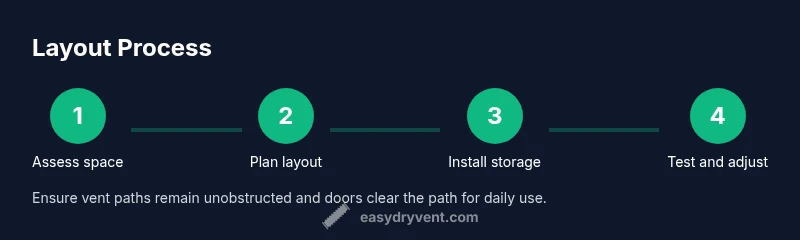
- Measure space and record washer/dryer dimensions, vent routes, and clearance needs.
- Decide on a layout (side-by-side, stacked, or slim cabinet).
- Gather storage options (shelves, pull-outs, recessed nooks) and select a color/finish that matches the room.
- Install support surfaces and organizers, then connect hoses and cords.
- Do a test run to check airflow, clearance, and ease of use.
- Adjust as needed and add protective felt pads to reduce vibration.
Tools & Materials
- Measuring tape (min 25 ft)(precision is key; measure front-to-back and side-to-side)
- Pencil and notepad(for quick sketches and dimension notes)
- Stud finder(optional if mounting shelves to walls)
- Level(to keep installations straight)
- Drill/driver with bits(for mounting cabinets or supports)
- Screwdriver set(flat and Phillips heads)
- Shelf brackets and mounting screws(for any added shelves)
- Slim cabinet or rolling cart(optional storage accessory)
- Anti-vibration pads(reduce noise for machines)
- Vent hose and clamps(ensure safe venting)
- Cord management ties or clips(tidy up cords)
Steps
Estimated time: 2-4 hours
- 1
Measure the space
Clear the laundry area, measure width, depth, and height available between the machines. Record exact exterior dimensions, door swings, and vent paths. This ensures any storage or shelves will fit without blocking movement.
Tip: Double-check measurements at multiple points to catch irregularities. - 2
Choose a layout
Decide between side-by-side, stacked, or slim cabinet options based on your room shape and usage. Consider future replacements and whether you’ll need extra folding space or a landing area.
Tip: Validate vent clearance and access to shutoffs before proceeding. - 3
Prepare mounting surfaces
Mark drilling points, install supports or a sturdy shelf system, and ensure surfaces are level. Use a stud finder for secure mounting on walls when adding cabinets or shelves.
Tip: Pre-drill holes to prevent wall cracking and use wall anchors when needed. - 4
Install storage components
Attach shelves or a slim cabinet over or beside the machines. Ensure the unit is level and securely fastened to minimize wobble during cycles.
Tip: Use anti-tip brackets for added safety on top-heavy setups. - 5
Manage cords, hoses, and venting
Route cords and hoses neatly behind or beside the appliances. Secure with clips, avoid kinks in vent hoses, and ensure vent paths stay clear for airflow.
Tip: Do not bend vent hoses sharply; keep bends gentle to maintain airflow. - 6
Install pedestals or stacking kit
If stacking, install a manufacturer-approved kit and pedestals. Confirm weight limits and alignment before powering on the appliances.
Tip: Take photos of each stage for future service reference. - 7
Test fit and adjust
Run a short cycle to check for vibration, door clearance, and easy access to controls. If anything binds, shift furniture slightly and recheck clearances.
Tip: Keep a small spare gap for future upgrades.
Common Questions
What is the recommended minimum space between a washer and dryer?
There isn’t a universal standard; aim for at least a couple inches to allow airflow, door clearance, and service access. If you’re stacking, follow the manufacturer’s stacking instructions.
There isn’t a universal minimum; aim for a couple inches and always follow stacking instructions if stacking.
Can I place a shelf between the two machines?
Yes, a shallow shelf or cabinet can work as long as it doesn’t obstruct venting, wiring, or movement. Use proper support and ensure ventilation clearance.
Yes, you can place a shallow shelf so long as it won’t block vents or access.
Is stacking safe for most homes?
Stacking is safe when using manufacturer-approved kits and following installation guidelines. Check weight limits and ensure proper venting if needed.
Stacking is safe if you use the approved kit and follow instructions.
What safety considerations should I keep in mind?
Maintain fire and electrical clearance, avoid clutter near vents, and regularly inspect hoses and lint traps. Keep shutoffs accessible.
Keep clearances, inspect hoses, and avoid clutter; have accessible shutoffs.
Should I hire a professional for vent or plumbing changes?
If your plan involves vent rerouting, duct work, or plumbing changes, consult a licensed professional. DIY can be safe for simple shelf or cabinet installations following manufacturer guidelines.
If it involves vent or plumbing changes, hire a pro; for simple shelves, DIY is okay if you follow the guidelines.
Watch Video
Key Points
- Measure space carefully before picking storage options.
- Choose a layout that preserves vent clearance and door swing.
- Utilize vertical storage to maximize room without clutter.
- Keep ventilation paths clear and test for vibration after setup.
- Follow manufacturer guidelines for any stacking or shelving.