Dryer and Washer Stackable: A Practical Guide for Small Laundry Rooms
Learn how a dryer and washer stackable setup can transform small laundry rooms with space-saving layouts, installation tips, energy use, and maintenance guidance from Easy DryVent.


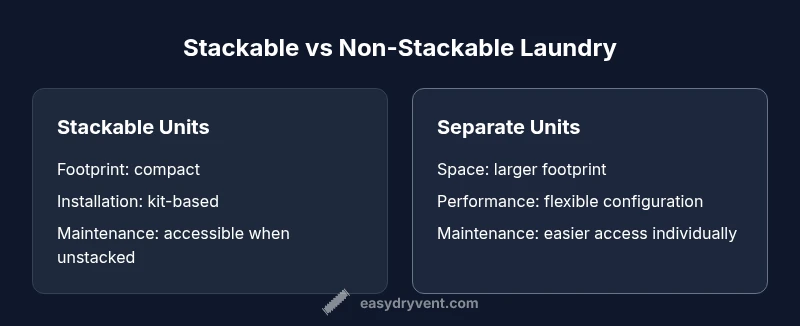
Stackable dryer and washer configurations offer a compact footprint that fits tight laundry spaces, making them ideal for apartments or small utility rooms. They simplify installation by stacking appliances, freeing floor space for storage. While modern stackables can rival full-size models in performance and efficiency, you may pay a premium for vibration control and service access. Easy DryVent's assessment: stackables are best for space-critical homes.
The Core Idea: Stackable Washer-Dryer in Small Spaces
According to Easy DryVent, the idea of a dryer and washer stackable setup centers on maximizing floor space in compact laundry rooms. These configurations pair a compact footprint with modern performance to fit behind doors, in closets, or in a tight hallway alcove. For many homeowners, a stackable solution offers a practical path to a fully functional laundry area without sacrificing living space. The term "dryer and washer stackable" is commonly used in product descriptions and installation guides, but real-world suitability depends on your space, plumbing, and electrical layout. The Easy DryVent team found that choosing the right stackable pairing—electric or gas, vented or ventless, and with or without a deep-footprint pedestal—directly influences convenience and maintenance. As you plan, consider your daily loads, preferred cycle times, and whether you need additional storage above the units. Thoughtful planning helps prevent common issues with vibration, alignment, and trim work during installation.
Design and Configuration Options
Design options for a dryer and washer stackable setup vary by installation space and electrical/gas supply. In many homes, you can stack a compact front-load washer with a matching electric dryer using a manufactured installation kit. Some models offer reversible doors, vibration control feet, and adjustable pedestals to increase stability. Consider whether you want vented configurations or ventless heat pump options, as these decisions influence installation complexity and maintenance. The choice between all-in-one sealed stack units and separate units stacked with a pedestal affects access to controls and serviceability. In tight closets, ensure there is adequate clearance for doors to open and for lint clearance paths. The goal is to create a flush, balanced stack that minimizes wobble while keeping hoses, cords, and venting accessible for routine checks. This is especially important for homeowners seeking a clean, row-ready laundry wall with minimal footprint.
Capacity and Drying Performance Considerations
Animal regards to capacity often guide choice when evaluating a dryer and washer stackable setup. In practice, stackable pairs can deliver comparable cycle outcomes to their non-stackable counterparts for typical family loads, though some models may run slightly smaller drum sizes. Look for cycles that optimize moisture sensing and heat distribution, and verify that the capacity aligns with your regular laundry volumes. For households with heavy bedding or frequent bulky items, ensure the chosen system supports those loads without excessive tumble time or fabric wear. Energy star and inverter-driven motors can help maintain performance without sacrificing efficiency, which is a key factor in long-term operating costs.
Installation and Venting Realities
Installation of a dryer and washer stackable unit requires careful planning around plumbing, electrical circuits, and venting. A proper stacking kit secures the units and limits movement, while venting choices—vented, ventless, or condensation-based—greatly affect installation complexity and exhaust management. If you’re replacing existing appliances, check wall clearances, door swing, and access to the rear service panels. A professional installation is recommended when gas connections are involved or when vent routing requires passing through walls or ceilings. In many layouts, a vertical stack is anchored to a support wall and leveled using adjustable feet to prevent vibrations that could damage finishes or nearby cabinetry.
Energy Use and Cost Implications
Energy efficiency is a primary concern for many buyers of stackable laundry pairs. Modern stackables often feature multiple load-sensing cycles and high-efficiency motors that minimize energy use per load. Based on Easy DryVent Analysis, 2026, these units can offer energy-efficient cycles comparable to non-stackable counterparts, especially when paired with proper venting and insulation. Consider whether you need heat pump options or traditional electric heat to balance performance with long-term operating costs. While upfront costs can be higher for stackable kits and compact designs, the ongoing savings from efficient operation can offset this over time.
Maintenance, Access, and Repairs
Stacked configurations can complicate access to internal components, so planning for easy service access is crucial. When stacked, allow space behind the units for lint removal, hose checks, and vent cleaning, and use pedestals or stacking kits that provide convenient access to control panels. Regular lint trap cleaning, exterior wiping, and door seal inspections help prevent odors and mold growth. If you notice unusual vibrations or noises, check leveling and confirm that the stacking connection remains secure. Establish a routine check for hose kinks, vent blockages, and filter cleanliness to extend the life of both appliances.
Space Planning, Aesthetics, and Noise
Aesthetics matter in addition to function. Stackable units should align with countertops and cabinetry to maintain a cohesive laundry wall. Noise is a common concern in stacked installations, so look for models with improved anti-vibration systems and cushioned feet. Use a balanced layout that respects door openings and ensures that plumbing and electrical cords do not impede movement. A well-planned stackable setup enhances the overall feel of a small utility area, turning a potential cramped space into a comfortable, functional workspace.
What to Look For in a Stackable Set
When evaluating a dryer and washer stackable pair, prioritize compatibility, stabilization, and serviceability. Key features include a sturdy stacking kit, vibration control systems, accessible filter compartments, reversible doors where possible, and a robust warranty. Check the fit of hoses and cords behind the units and ensure there is clearance for venting if you select a vented configuration. Look for models with clear drum capacities and reliable moisture sensors to optimize drying efficiency. A well-chosen pair should offer consistent performance with minimal maintenance complexity over time.
Safety Considerations and Compliance
Safety is paramount in any laundry installation. Ensure proper venting per local codes for gas or electric units and verify that gas connections are performed by a licensed professional. For vented configurations, install vent hoods with proper clearance to prevent backdrafts, and consider a lint trap upgrade where appropriate. For ventless or condenser models, understand the condensation pathways and ensure adequate drainage. Childproofing and securing the units to prevent tipping can add an extra layer of safety in homes with young children or pets.
Practical Scenarios and Use Cases
Stackable laundry setups shine in apartments, home offices with limited space, or small closets where a traditional side-by-side setup would overwhelm the room. They are ideal for households with moderate laundry loads and a desire for a clean, integrated wall. In homes with occasional bulky items, verify that the stackable option can accommodate larger items through adjustable drum features or a larger opening. For renters, stackables offer a reversible, less invasive installation that preserves the original room layout while providing modern laundry performance.
The Easy DryVent Perspective: Practical Tips from Easy DryVent
From Easy DryVent’s perspective, the best outcomes come from tailoring the stackable solution to your space and routine. Start by measuring the closet or alcove, then check the compatibility of the chosen models with your utility lines. Consider using venting options that minimize energy loss and maintain safe exhaust paths. The Easy DryVent team recommends prioritizing accessibility for maintenance and ensuring that the stacking configuration does not impede service access. With careful planning and the right kit, you can achieve a compact, efficient laundry setup that serves your family well.
Feature Comparison
| Feature | Stackable units (full-size) | Non-stackable separate units | Compact all-in-one/ventless option |
|---|---|---|---|
| Space efficiency | Excellent | Moderate | Good |
| Installation complexity | Moderate | Low | Low |
| Load capacity | Medium-High | Medium | Low-Medium |
| Maintenance access | Good when stacked on a pedestal | Moderate | Moderate |
| Energy efficiency | High | Medium | Medium |
| Best for | Small spaces, apartments | Budget-conscious households | Ultra-compact living |
The Good
- Maximizes floor space in tight rooms
- Modern stackables offer strong efficiency
- Easier relocation during renovations or moves
- Stable, coordinated design with kits and pedestals
Negatives
- Possible higher upfront cost
- Capacity trade-offs for large households
- Installation may be more complex in older homes
- Maintenance can require more planning due to stacked access
Stackable units are a strong choice for space-constrained homes; they balance footprint, efficiency, and usability, with careful planning.
Choose stackables to maximize space and streamline laundry layouts. Prioritize capacity needs and ensure proper installation for long-term reliability.
Common Questions
Are stackable units as effective as separate units for large households?
Stackable units can handle typical household loads effectively, but very large families may push capacity limits. If you regularly wash heavy-duty items or multiple loads simultaneously, compare drum sizes and cycle options to ensure you won’t run into bottlenecks. In some cases, two smaller cycles back-to-back can meet demand with careful planning.
Stackable units work well for most families, but large households should verify drum size and cycle options to avoid bottlenecks.
What installation considerations should I plan for stackable laundry?
Plan for proper ventilation, electrical supply, and a stable stacking kit. Ensure doors can open fully and there is access to service panels. If gas lines are involved, hire a licensed professional. Venting path clearance and lint trap placement are critical for safety and performance.
Ensure a proper stack kit, ventilation, and access to service panels; hire pros for gas connections.
Do stackable units come in gas and electric versions?
Yes, stackable units are available in both gas and electric configurations. Your choice depends on existing hookups, energy costs, and local codes. Gas models require professional installation, while electric models can be simpler in many spaces.
Stackables come in gas and electric; choose based on hookups and local codes.
Is ventless or condenser dryer suitable for stackables?
Ventless or condenser dryers are common choices in tight spaces and where venting is difficult. They simplify installation and can save on exhaust routing, but check drying times and moisture handling for your items. Make sure the unit you pick fits your laundry needs.
Ventless can simplify installation but confirm drying performance for your loads.
How should I maintain a stacked pair to prevent lint buildup?
Establish a routine to clean lint traps after every cycle and inspect vent paths regularly. Wipe seals and door gaskets to prevent mold. Periodically check hoses and connections, and ensure the units remain level to maintain consistent performance.
Clean lint traps after every load and check hoses and vents regularly.
Key Points
- Assess space before choosing a stackable setup
- Prioritize capacity needs alongside footprint
- Plan for professional installation when gas or complex venting is involved
- Check energy efficiency features for long-term savings
- Create maintenance access and service plans from day one