How to Make Dryer Sheets: Easy DIY Guide
Learn how to make dryer sheets at home with safe, eco-friendly ingredients. Three practical methods, storage tips, safety notes, and a step-by-step guide from Easy DryVent to cut waste and customize fragrance.


How to make dryer sheets at home is simple and rewarding. Use washable fabric squares or cotton cloth and a fragrance solution to create a reusable alternative. Soak, wring, and store; reuse for multiple loads. This DIY approach reduces waste, allows scent customization, and avoids harsh commercial additives when used with mild ingredients at home.
What Are DIY Dryer Sheets and Why Use Them
DIY dryer sheets are reusable fabric squares or cut cloth that you scent with a simple, skin-friendly mixture. They work by reducing static cling and imparting a light, fresh fragrance, without the waste and packaging associated with disposable dryer sheets. According to Easy DryVent, you can tailor the scent to your preferences, avoid harsh artificial additives, and reuse sheets for many loads, which helps cut ongoing costs. Start with clean, colorfast fabrics and a mild fragrance option if anyone in the household has sensitivities. If you have pets or small children, consider fragrance-free or plant-based scents and test on a small batch first to ensure compatibility with fabrics and skin. Reusing sheets also supports energy-conscious laundry habits because you can air-dry them between uses and avoid excessive washing of the sheets themselves. The key is to choose materials that are sturdy enough to stand up to repeated use but gentle on fabrics, so your laundry stays pleasant without residue.
Three Practical Methods to Make Dryer Sheets
Here are three practical, low-cost approaches you can try. They share a focus on reusability and mild scents, so you can tailor the fragrance to your preferences.
Method A: Fabric Squares Saturated in a Fragrance Solution
Cut clean 4x4 inch cotton squares. In a bottle, mix 0.5 cup distilled water with 1 tablespoon white vinegar and 6-10 drops of essential oil. Soak the squares for 5-10 minutes, wring them lightly, and air-dry completely before storage. To use, place one square per load. Pro tip: test on a small load first to gauge fragrance intensity.
Method B: Wool Dryer Balls with Light Oils
If you already own wool dryer balls, add 3–4 drops of essential oil directly to each ball, then tumble for several loads to distribute scent. This method avoids fabric residue and reduces waste because you are not producing paper-like sheets. Pro tip: refresh scent every week or two with fresh oil.
Method C: Fabric Inserts from Old Towels or Sheets
Use old flannel or cotton fabric cut into 6x6 inch inserts. Soak in a gentle blend of water, a splash of witch hazel, and 4–8 drops of essential oil. Dry completely and store in a breathable container. Pro tip: choose a tight weave to limit lint.
Safety, Storage, and Maintenance Tips
Safety comes first when making and using DIY dryer sheets. Always patch-test any essential oil blend on a small fabric sample and on a non-finished surface to ensure there is no staining or skin irritation. Dilute essential oils appropriately and avoid highly concentrated blends, especially if anyone in the home has sensitive skin or allergies. Store finished sheets in a clean, dry container away from heat and direct sunlight to preserve fragrance without degrading the fabric. If using vinegar in the fragrance solution, rinse or air out fabrics between uses to prevent a vinegar odor from becoming overpowering. When finished with a batch, launder the fabric sheets with your regular laundry to remove built-up residues and refresh scents on subsequent uses. Easy DryVent suggests rotating scents over time to keep laundry experiences pleasant and consistent.
Troubleshooting Common Issues
If your sheets lose scent quickly, try a slightly higher concentration of essential oil or swap to a longer-acting carrier blend. If you notice residue on clothing, reduce the amount of oil and verify the fabric you used is dye-free and colorfast. Static reduction may be weaker with certain fabrics; for more static control, ensure there is adequate humidity in the laundry room, or pair sheets with dryer balls. If the fabric becomes stiff or rough after multiple uses, consider using softer fabrics or replacing inserts more frequently. Always dry inserts completely before storing to prevent mold or mildew.
Environmental and Cost Considerations
DIY dryer sheets can lower waste by replacing disposable sheets with reusable fabric pieces and a small set of ingredients. They also offer customization options, letting you pick fragrance profiles that suit your home. From a cost perspective, reusing a handful of fabric squares or inserts over many loads typically reduces ongoing expenses compared with continually purchasing disposable sheets. Easy DryVent notes that while initial material costs matter, the long-term savings and environmental benefits make DIY sheets a practical choice for households aiming to reduce waste and exposure to synthetic agents. By choosing natural oils and fragrance-free options when needed, you further minimize environmental impact while maintaining fresh laundry.
Real-World Use and Maintenance of Reusable Sheets
In real-world use, you’ll likely settle on one or two favorite methods and rotate scents seasonally. Keep a dedicated storage bin for used squares and a separate drying area to ensure they dry fully before reuse. When washing, launder the sheets with your regular laundry to remove any built-up residue, then air-dry or tumble dry on a low setting before storing again. Over time, you may find certain fabrics hold up better than others; cotton and microfiber tend to be sturdy choices for repeated use. With a little practice, you can tailor fragrance strength to each load and seamlessly integrate DIY sheets into your laundry routine.
Tools & Materials
- Cotton or microfiber fabric squares (clean, colorfast)(Cut to 4x4 inches for compact sheets)
- Scissors(For cutting fabric to size)
- Distilled water(Base liquid for fragrance solution)
- White vinegar (optional)(Helps reduce static; can substitute with distilled water)
- Essential oils (skin-safe)(E.g., lavender, lemon; test for sensitivities)
- Spray bottle(Glass or BPA-free preferred)
- Witch hazel or vodka (optional)(Can help fragrance dispersion)
- Mason jar or airtight container(Store soaked sheets sealed)
- Wool dryer balls (optional)(For Method B if you choose a ball-based approach)
- Washable storage bag or bin(Keep used/unused sheets organized)
Steps
Estimated time: 40-60 minutes
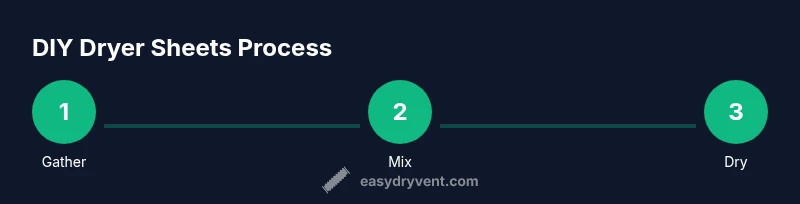
- 1
Gather materials
Collect all ingredients and tools in one workspace. This keeps the process smooth and prevents missing items later.
Tip: Double-check for colorfast fabrics before cutting. - 2
Cut fabric squares
Use clean scissors to cut 4x4 inch squares from your chosen fabric. Aim for uniform size to ensure even drying.
Tip: Save time by stacking and cutting multiple layers at once. - 3
Prepare fragrance solution
In a measuring cup or bottle, mix 0.5 cup distilled water with 1 tablespoon white vinegar and 6–10 drops of essential oil.
Tip: Start with fewer drops and add more after testing on a small batch. - 4
Soak fabric squares
Soak the squares for 5–10 minutes, ensuring they are fully saturated but not dripping.
Tip: Wring gently to avoid pooling but keep enough moisture for scent transfer. - 5
Dry and store
Lay squares flat or hang to air-dry completely before storing in an airtight container.
Tip: Dry fully to prevent mold; consider a warm, dry area. - 6
Prepare for dryer use
Place one saturated square with heavy loads, or two for larger loads, depending on scent preference.
Tip: Test on a small load first to gauge scent strength. - 7
Optional maintenance
Refresh fragrance by adding a few more drops of oil to squares or replace with new squares after several uses.
Tip: Rotate scents to keep laundry experiences fresh. - 8
Cleanup and safety
Wash hands after handling oils; store leftovers in a sealed container away from children and pets.
Tip: Label containers with scent and date prepared.
Common Questions
Are homemade dryer sheets as effective as store-bought ones?
Homemade sheets can reduce static and soften fabrics, but effectiveness varies with fabric choice and oil concentration. Start with gentle formulations and adjust over time.
Homemade sheets can work well for reducing static and adding scent, but you may need to tweak the blend for your fabrics.
Can I use essential oils for scent?
Yes, but dilute properly and patch-test. Choose skin-safe oils and avoid heavy concentrations, especially for sensitive households.
Yes, you can, but dilute and test first. Some people prefer fragrance-free for sensitive users.
How long do DIY sheets last?
Reuse sheets for many loads until the fragrance fades or the fabric shows wear. Replace when scent is weak or fibers are degraded.
Reuse until the scent fades or fabric shows wear.
Are these safe for babies or pets?
Opt for fragrance-free or milder plant-based scents around babies and pets. Always patch-test and monitor reactions.
Use fragrance-free options around babies and pets and patch-test first.
Are DIY sheets environmentally friendly?
Yes, reusing fabric sheets reduces disposable waste and lowers ongoing purchases of commercial sheets when used long-term.
Yes, reusing fabric reduces waste and lowers ongoing costs.
What fabrics work best?
Cotton and microfiber are sturdy for repeated use. Avoid very lint-prone or delicate fabrics unless you test first.
Cotton and microfiber tend to work best for durability and reduced lint.
Watch Video
Key Points
- Choose a method and stay consistent to gauge results.
- Use clean, colorfast fabrics to prevent dye transfer.
- Patch-test fragrances to avoid skin irritation.
- DIY sheets reduce waste and can save money over time.
- Rotate scents to keep laundry experiences fresh.