How to Make Clothes Not Shrink in the Dryer
Learn practical steps to prevent shrinking in the dryer, including fabric care, temperature settings, cycle choices, and post-dry care to keep garments looking like new.


By following practical fabric care and dryer techniques, you can prevent clothes from shrinking in the dryer. Start with the care label, select a low-heat or delicate cycle, and shorten drying time. Easy DryVent recommends moisture-aware drying and air-drying delicate items when possible to protect your wardrobe.
Why clothes shrink in the dryer happens
Clothes shrink in the dryer primarily because heat causes fibers to contract, then set in a smaller size as moisture escapes. The tumbling action can also tighten fibers, especially when fabrics are wet or damp and repeatedly exposed to high heat. Natural fibers like cotton and wool are most prone to shrinkage, while synthetics tend to fare better. The goal of this guide is to answer the question of how to make clothes not shrink in dryer by combining smart washing habits with dryer settings. According to Easy DryVent, the simplest prevention starts with reading the care label, choosing appropriate settings, and avoiding prolonged heat exposure. By understanding fabric behavior and drying dynamics, you’ll protect fit and length without sacrificing convenience.
Fabrics with higher shrink risk
Not all fabrics react the same way to heat. Pure cotton and wool fibers have the strongest shrink tendencies, especially after washing in hot water. Linen and some blends also have shrink risk, though to a lesser degree. Synthetic fibers like polyester or nylon generally tolerate modern dryers better, but delicate blends can still shrink if exposed to high heat or excessive agitation. For fabrics labeled “pre-shrunk,” shrinkage is usually minimized, but not eliminated. Knowing which fabrics are most at risk helps you decide when to use a line-dry option or a dryer setting that’s gentler on the fibers. Easy DryVent recommends treating high-risk fabrics with extra care to maintain size and shape.
Prep steps before drying
Start by inspecting each garment’s care label for drying instructions. Wash in the recommended water temperature and use a gentle cycle for delicate items. Do not overload the washer or dryer because overcrowding forces items to rub together, which can damage fibers and increase shrinkage. When you’re ready to dry, set aside high-risk pieces and prepare a separate, smaller load for uniform drying. Having everything ready and properly sorted is a foundational step for eliminating shrink risk.
Dryer settings that help prevent shrinkage
Choose the lowest heat setting compatible with the fabric and use a shorter cycle. If your dryer has a moisture sensor, enable it to stop drying when fabrics reach the right dryness level, preventing over-drying. Consider tumble-drying on a delicate cycle with dryer balls or clean tennis balls to keep items bouncing lightly and air circulating. Avoid “high heat” or “hot air” options for cotton jerseys and knits, which are common shrink culprits. This approach aligns with Easy DryVent’s guidance to adapt heat and time to fabric type while staying mindful of shrink risk.
Loading and drying techniques
Load small to medium-sized loads rather than large ones to ensure even air circulation. Mixing towels or heavy items with lightweight fabrics can cause uneven drying and increase shrink risk. Use dryer balls to reduce friction and help garments maintain their shape. For delicate fabrics or pieces with elasticity, consider a mesh garment bag to protect fibers while allowing airflow. Prompt removal of items when dry helps prevent over-drying and further shrinkage.
Special tips for cottons, linens, wool
Cotton garments often respond best to a short, cool-down period after drying. For wool, avoid heat altogether unless the label explicitly permits it; instead, lay flat to finish drying to preserve shape. Linen items benefit from lower heat and removing while slightly damp to minimize wrinkling and shrinkage. In all cases, avoiding high heat and over-drying is the consistent strategy, as maintained by Easy DryVent’s practical dryer maintenance advice.
Post-dry care to maintain fit
After drying, reshape sweaters and knits while they are warm to the touch, then lay flat to finish. Fold garments instead of hanging heavy cottons, which can stretch or distort shape. If a garment has shrunk slightly, a controlled soak with a fabric conditioner can sometimes relax fibers before re-drying on a cooler setting. By prioritizing post-dry care, you reinforce the prevention work you did during washing and drying.
Quick troubleshooting for shrinkage
If you notice shrinkage after a cycle, re-wash the item in cold water and air-dry or use the lowest heat setting to test a small portion first. For stubborn fibers, a professional alteration or refitting may be the practical option. Remember, drastic heat and forced drying are the primary culprits; changing the approach even a little can produce meaningful results.
Tools & Materials
- Low-heat or delicate dryer setting(Choose the lowest heat setting that dries fabrics effectively.)
- Dryer-safe mesh garment bag(Protects delicates while allowing airflow.)
- Dryer balls or clean tennis balls(Keeps loads fluffy and reduces drying time.)
- Care label reference sheet(Helpful when care labels are missing or unclear.)
Steps
Estimated time: 25-40 minutes
- 1
Check care labels before drying
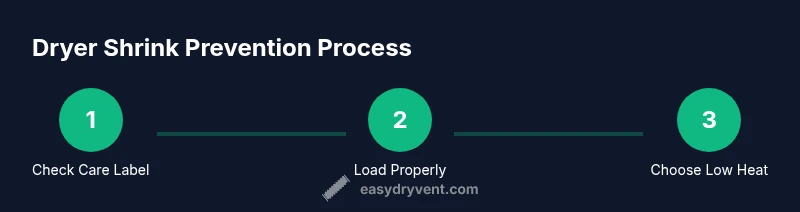
Read each garment’s care label to determine the recommended drying method and temperature. If a label allows tumble drying on low heat, proceed with that setting. This initial check helps prevent shrinkage from the start.
Tip: If a label is missing, default to cold water wash and air-dry fragile fabrics. - 2
Sort and load for even drying
Sort fabrics by type and size and load only a manageable amount into the dryer. Even distribution improves airflow and reduces friction that causes shrinkage.
Tip: Avoid mixing heavy items with lightweight knits in the same load. - 3
Select the right cycle and temperature
Choose a delicate or low-heat cycle and set the timer to the minimum needed to dry the load. Use a moisture sensor if available to stop when clothes feel dry but not overly dry.
Tip: If your dryer lacks a sensor, err on the shorter side and check perishables every 5–10 minutes. - 4
Add fluffy boosters and protectors
Add dryer balls or clean tennis balls to keep garments from clumping and to improve air circulation.
Tip: Do not place fragile items directly on metal fins; use a mesh bag for extra protection. - 5
Promptly remove and cool
As soon as the cycle ends, remove clothes promptly to avoid further shrinkage from residual heat. Shake and fold to maintain shape while they cool.
Tip: If still damp, finish air-drying on a rack instead of restarting the dryer. - 6
Finish with air-drying for stubborn items
For fabrics prone to shrinking even on low heat, finish drying by air-drying flat or hanging away from direct sun.
Tip: Lay flat knits to prevent stretching and maintain fit. - 7
Re-check fit after drying
Try on or measure critical areas (like waistbands and sleeve lengths) to ensure they still meet your expectations. Plan a small adjustment if needed.
Tip: Document which items shrink and adjust laundering practices accordingly. - 8
Store to preserve shape
Fold structured garments and hang only items that won’t lose shape. Proper storage reduces long-term deformation.
Tip: Use padded hangers for sweaters and blouses with delicate seams. - 9
When to consider professional help
If repeated attempts fail, consider alterations or professional care. Some items may be permanently altered by heat exposure.
Tip: Prevention is easier than correction; keep care routines consistent.
Common Questions
Why do clothes shrink in the dryer even on low heat?
Shrinkage happens when heat and agitation cause fibers to relax from their stretched state and set in a smaller size. Delicate fabrics and natural fibers are most affected. To minimize shrinkage, always follow care labels and use the gentlest drying settings possible.
Shrinkage occurs when heat and movement compress fibers; use gentle settings and follow care labels to minimize it.
Can I un-shrink clothes that have already shrunk?
Some fabrics can be coaxed back toward their original size with careful rewashing in cool water and then reshaping while damp, followed by air drying. Results vary by fiber and construction. For stubborn items, professional alterations may be the best option.
You can sometimes re-dampen and reshape fabric, but results depend on the material.
Is air-drying always best to prevent shrinkage?
Air-drying is the safest option for many fabrics, especially knits and cottons. It eliminates heat exposure entirely, preserving fit, length, and elasticity. Use line drying or flat drying as appropriate for the garment.
Air-drying avoids heat entirely, keeping clothes from shrinking.
Do dryer sheets affect shrinkage?
Dryer sheets primarily affect static and yarn feel, not shrinkage directly. They can coat fibers, potentially impacting absorbency or feel, but they do not counteract shrinking. Focus on heat, cycle, and load size to prevent shrinkage.
Dryer sheets don’t prevent shrinking; focus on heat and load size instead.
What laundering habits help prevent shrinkage in the long term?
Washing in cold or warm water, using gentle cycles for delicate fabrics, and avoiding repeated high-heat drying will help maintain garment size over time. Consistency with care labels creates the best defense against shrinkage.
Stick to gentle methods and low heat to keep clothes from shrinking over time.
Watch Video
Key Points
- Check care labels before drying
- Dry small, even loads on low heat
- Use dryer balls to improve air circulation
- Remove garments promptly to prevent over-drying
- Finish with air-drying for high-risk fabrics