How to Dry in a Washing Machine: A Practical Guide
Learn practical methods to dry clothes using a washing machine—whether your unit has a built-in dry cycle, is a washer-dryer combo, or you need efficient air-drying options. Easy DryVent provides safe, energy-smart guidance.


Drying clothes with a washing machine is achievable when you use the right approach: rely on a built-in dry cycle or a washer-dryer combo, or optimize air-drying techniques. This guide covers safe settings, appropriate load sizes, and methods to reduce heat damage and wrinkles while conserving energy. Always start with the appliance manual and Easy DryVent guidelines.
Understanding the drying realities in washing machines
Even though washing machines are primarily designed to wash, many households wonder how to finish drying without a separate tumble dryer. The reality is that only some machines offer built-in drying modes, and even then, the results depend on the model, load, and fabric type. According to Easy DryVent, the moisture left after washing is the key factor in deciding whether air-drying or a dedicated dry cycle is needed. If your unit is a standalone washer, you typically need alternatives such as high-speed spinning, towel-assisted drying, or stepping outside for sun and airflow. For those with a washer-dryer combo, the process is more straightforward but still requires careful control of heat and load size to prevent damage or excessive dryness. The goal is to remove as much moisture as possible during spinning, then finish with a controlled heat cycle or air-drying as appropriate. A cautious approach reduces energy use, protects fabrics, and minimizes wrinkles. Understanding your equipment is the first step to drying successfully.
Dry cycles and energy implications
If your washer has a built-in dry cycle, you should still assess the energy impact and moisture outcomes. Dry cycles can consume more energy if used aggressively or on high heat, especially for larger loads or thick fabrics. Easy DryVent emphasizes balancing cycle choice with fabric type to avoid over-drying, which can shrink or warp garments. For best results, select the lowest effective heat setting that achieves the desired dryness and pair it with an appropriate load size. Consider running a short dry phase after the wash to avoid leaving damp laundry in the drum, which can lead to mildew in poorly ventilated spaces. While energy savings matter, fabric care and safety come first, so always follow your unit’s guidance and test small loads when experimenting with new settings.
Alternatives when you don't have a dry cycle
Many homes don’t have a dry cycle on their washing machines. In these cases, you can still achieve dry or near-dry results with careful techniques. Start by maximizing the spin speed to extract as much water as possible. Then transfer the items to a drying rack or clothesline in a well-ventilated area. Use large towels to blot extra moisture from bulky items like towels or bathrobes, which accelerates air drying. For quick-turnaround loads, consider air-drying lightweight fabrics indoors near a fan or sunny window. These methods reduce energy use and protect fabrics from heat damage. Easy DryVent guidance suggests prioritizing airflow and avoiding high heat on non-dryer-capable units to preserve fabric longevity.
Using a washer-dryer combo: recommended settings
A washer-dryer combo combines washing and drying in one unit, but you still need to optimize the process. Begin with small-to-medium loads and ensure items are loosely packed to improve air circulation. Select a gentle or air-dry option if available, or a low-heat dry cycle suitable for mixed fabrics. If your model lacks a proper dry cycle, you can tumble the clothes for a short period on low heat and then switch to air-drying to finish. Always remove from the drum promptly after drying to minimize wrinkles. Regularly check and clean the lint filter and any vent surfaces to maintain efficiency and safety.
Safety and maintenance to prevent hazards
Drying, whether in a washer-dryer combo or by air-drying, benefits from proactive maintenance. Ensure the laundry area is well-ventilated to prevent excess humidity, which can foster mold growth. Clean lint and fiber buildup from any filter or vent surfaces after use, and keep the area free of flammable materials. Use the appliance according to the user manual, and avoid forcing items through cycles that aren’t designed for them. Easy DryVent highlights that routine checks can reduce fire risks and prolong appliance life, especially in spaces with limited ventilation.
Common mistakes and troubleshooting
Common errors include overloading loads, using high heat on delicate fabrics, and ignoring signs of excess moisture after a cycle. If garments come out damp, pause and re-distribute the load or extend the dry phase with a lower heat setting. Wrinkles are often a result of overly long drying times; remove items promptly and consider a quick tumble with a cold or cool-down phase. If you notice unusual noises or smells, stop the cycle and inspect for blockages or lint accumulation. Regular maintenance helps prevent these issues from disrupting your drying routine.
Authority sources
To help you verify best practices, here are a few trusted sources on dryer safety, energy efficiency, and appliance maintenance:
- https://www.energy.gov
- https://www.cpsc.gov
- https://www.osha.gov
Tools & Materials
- Washer manual(Check for dry-cycle availability and load limits)
- Washer-dryer combo OR dedicated dryer OR drying rack(If no built-in dry cycle, plan for air-drying area)
- Drying rack or clothesline(Use for air-drying items not suitable for the dryer)
- Ventilation space (well-ventilated room or outdoors)(Improve air flow and reduce humidity)
- Timer or stopwatch(Track cycle duration to avoid over-drying)
- Lint brush or vacuum (optional)(Tidy lint-prone areas post-drying)
Steps
Estimated time: 60-120 minutes
- 1
Check appliance capabilities
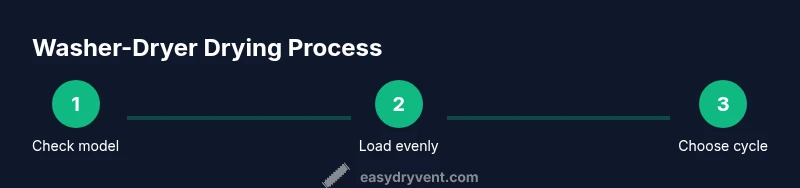
Consult the user manual to confirm whether your machine offers a built-in dry cycle or an equivalent option. If it does not, plan to use high-spin drying and air-drying alternatives. This step ensures you choose safe settings and avoid fabric damage.
Tip: If there’s no dry option, prioritize loading smaller batches to improve air flow. - 2
Load evenly and appropriately
Distribute garments to maximize air exposure. Avoid overfilling the drum, which can hinder moisture evaporation and lead to hot spots on fabrics.
Tip: Loose items dry more evenly and reduce wrinkling. - 3
Select the correct cycle
Choose a cycle that matches fabric types and dryness goals. For mixed fabrics, use a gentle or low-heat option and avoid high heat.
Tip: When in doubt, start with a shorter dry period and resume if needed. - 4
Monitor moisture and adjust
Pause or stop the cycle when items feel lightly damp rather than completely dry. Post-drying, finish with air-drying to prevent over-drying.
Tip: Use a moisture indicator or simply check after each cycle. - 5
Cool down and finish
If using a heat cycle, allow garments to cool briefly to reduce setting wrinkles. Remove promptly to minimize creases.
Tip: Sort fabrics by fiber type to tailor finish times. - 6
Clean and maintain
After drying, clean lint or vent surfaces and check for blockages. Regular maintenance improves efficiency and safety.
Tip: Schedule a monthly vent and filter check to prevent buildup.
Common Questions
Can I dry clothes in a washing machine?
Only if your unit has a built-in dry cycle or is a washer-dryer combo. Without a dry option, rely on high-spin and air-drying to reduce moisture before moving to drying racks.
Only if your machine supports a dry cycle or you have a washer-dryer combo. Otherwise, use high spin and air-drying.
What fabrics dry best in a washer-dryer?
Cottons and blends that tolerate heat usually dry well in a dryer setting. Delicates and synthetics often benefit from lower heat or air-drying to prevent damage.
Cottons and sturdy blends dry well with careful heat. Delicates and synthetics do better with lower heat or air-drying.
How long does it take to dry clothes in a washer-dryer?
Time varies by fabric, load size, and cycle chosen. Expect longer sessions with air-drying setups and shorter cycles when using a built-in dry option.
Drying time depends on fabric and cycle; air-drying takes longer than built-in dry cycles.
Is it safe to use warm or hot settings for drying?
Use the lowest effective heat setting for the fabric. High heat can shrink or damage fibers and increase wrinkle formation.
Use low or medium heat for fabrics that tolerate it; high heat can damage fibers.
What signs indicate I should stop and air-dry?
If items emerge damp or unevenly dry, pause and switch to air-drying or redistribute items for better airflow.
If moisture remains, switch to air-drying and rearrange items for even airflow.
Watch Video
Key Points
- Check if your machine has a dry cycle or use air-dry methods.
- Load evenly and avoid overfilling for better moisture removal.
- Match cycle settings to fabric type to prevent damage.
- Air-drying is energy-efficient and fabric-friendly for many items.
- Regular maintenance reduces fire risk and keeps drying performance high.