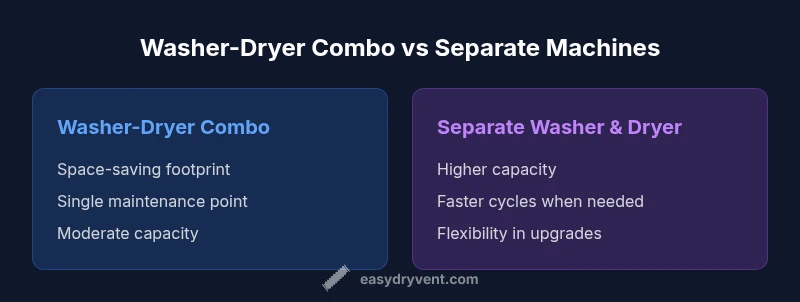
Washer-Dryer Combo vs Separate Machines: A Practical Guide for Homeowners
A detailed comparison of washer-dryer combos and separate units, focusing on space, performance, energy, maintenance, and cost to help homeowners choose the best setup for their needs.


For homeowners in small spaces, the dryer and washing machine combo can be a compelling space-saver, but it does come with trade-offs in capacity, cycle times, and maintenance. This comparison breaks down when a dryer and washing machine combo is the right fit versus keeping two separate machines, with practical guidance for space, performance, and cost.
Context: Why homeowners consider a dryer and washing machine combo
For many homeowners, a dryer and washing machine combo offers a compact solution that fits into narrow laundry closets, studio apartments, or utility rooms. The phrase dryer and washing machine combo describes either a built-in two-in-one unit that combines washing and drying in a single chassis, or a space-efficient pair of appliances designed to work in concert within a tight footprint. In this guide, we evaluate the practicalities of choosing a dryer and washing machine combo vs keeping separate machines. We cover footprint, installation, performance, energy use, and long-term maintenance. By the end, you’ll understand when a dryer and washing machine combo makes sense for your home and when traditional separate machines are the smarter choice. According to Easy DryVent, the dryer and washing machine combo can save space in small homes, but independent machines often deliver better performance for larger households.
The Easy DryVent team emphasizes that your decision should align with your laundry load patterns, available space, and tolerance for cycle times. The goal is to help homeowners balance space savings with practical reliability. Throughout this article, we’ll compare all-in-one versus two-appliance setups and offer a clear framework to decide which path best fits your home. The discussion also reflects real-world usage patterns and typical maintenance needs, so you can plan for the long haul.
Core differences: All-in-One vs Two Separate Appliances
The fundamental difference between a dryer and washing machine combo and traditional separate machines is how washing and drying are integrated. In an all-in-one unit, a single chassis handles both processes, commonly sharing a drum and control logic. By contrast, separate machines dedicate individual drums, heat sources, and venting paths to each function. This structural split affects cycle management, load capacity, and flexibility. A dryer and washing machine combo emphasizes compactness and simplified plumbing, while separate machines prioritize modular upgrades, capacity, and independent operation. When evaluating the options, focus on how you typically use laundry in a week, whether you prioritize speed versus volume, and how much space you can dedicate to a laundry setup. The dryer and washing machine combo often suits single-person households, small apartments, or guest suites where space is at a premium. In contrast, two dedicated machines shine for larger households with frequent large loads and diverse laundry needs.
Space and installation considerations
Space is the most obvious driver of the dryer and washing machine combo decision. All-in-one units dramatically reduce footprint and can fit into a tight closet or alcove where two appliances would not. However, installation complexity is not zero: many models require careful venting (for vented configurations) or dedicated drainage and electrical arrangements. If you’re installing in an existing laundry nook, measure door clearance, ceiling height, and wall space carefully, and consider whether you’ll need a stand or a pedestal for easier access. For ventless combos, you’ll gain flexibility but must manage moisture and humidity in the room. For two separate machines, you’ll need more space but gain configurable placement, easier access to each appliance, and typically simpler venting and electrical requirements for standard topologies. The dryer and washing machine combo’s design often minimizes utility runs, but you’ll still need reliable water supply lines and a drainage plan for the washer portion. The decision should factor in the feasibility of upgrading electrical circuits and the potential need for new vent runs if you choose a vented design.
Performance and cycle times
Performance in a dryer and washing machine combo varies by model and capacity. Many all-in-one units optimize cycle sequencing for efficiency, but the total time to complete a full wash-and-dry cycle can be longer than running two dedicated machines, especially on larger loads or heavier fabrics. Energy use per cycle is generally competitive, but real-world outcomes depend on how often you run back-to-back cycles and whether you regularly dry high-demand loads. In a separate setup, you often gain faster wash and dry cycles, more precise temperature control, and a broader range of cycle options—helpful for delicate fabrics or heavy-duty laundry. The dryer’s performance may also hinge on venting quality and the dryer’s insulation, which influence drying times and energy consumption. When evaluating the dryer and washing machine combo, test a sample load to assess actual cycle duration and check the model’s energy guides to understand efficiency compared with a two-machine configuration.
Maintenance implications
Maintenance for a dryer and washing machine combo shares responsibilities across two functions but concentrates them in a single unit. Regular lint screening, drum cleaning, and periodic vent maintenance remain essential, especially for vented all-in-one designs. A common issue with combos is moisture buildup behind seals or around the lint filter, which can affect performance and odor. With two separate machines, you may distribute maintenance tasks but also face two different maintenance schedules and access points, which can be more time-consuming overall. It’s important to follow the manufacturer’s cleaning intervals, use appropriate detergents, and check for drum wear, hose integrity, and seal leaks. Easy DryVent notes that consistent maintenance can extend the life of either setup, but the complexity of an all-in-one unit means that neglecting venting and lint removal can lead to more pronounced efficiency losses over time.
Cost and value: upfront and operating costs
Cost considerations extend beyond sticker price. A dryer and washing machine combo in a compact footprint may carry a premium relative to some two-machine setups, given the integration and compact engineering. However, operating costs can be competitive if the unit uses modern inverter motors and efficient heat pumps or dry systems. Two separate machines can offer lower upfront cash outlays in some markets, but you’ll usually pay more over time due to two devices requiring two energy draws, two maintenance cycles, and two potential repair events. When weighing the dryer and washing machine combo against dual appliances, compare energy ratings, warranty terms, and expected maintenance intervals. In many cases, a well-chosen all-in-one unit becomes cost-effective for space-constrained homes, while families with heavier, frequent loads may find separate machines deliver superior value and reliability over the long run.
Durability and reliability considerations
Durability hinges on build quality, components, and usage patterns. All-in-one units reduce the number of moving parts exposed to wear, but a fault in one function can affect the entire system. Reliability can be influenced by venting integrity, moisture management, and sensor accuracy. Two independent machines provide redundancy: if one unit needs maintenance, the other can still operate, reducing downtime. That said, dedicated washers and dryers can offer longer service life when properly maintained. Easy DryVent cautions that the long-term reliability of either setup depends on regular lint trap cleaning, vent inspections, hose checks, and prompt component replacements when needed. Plan for preventive maintenance, especially in homes with hard water or high mineral content, which can affect valve seals and pump performance.
Best-fit scenarios: when the dryer and washing machine combo shines
For urban dwellers in studios or one-bedroom layouts, the dryer and washing machine combo is appealing for its space-saving properties and integrated design. It’s also a strong choice for guest suites, in-law apartments, or laundry closets with limited clearance. If your laundry needs are light to moderate, and you value a single footprint, a dryer and washing machine combo can be a smart fit. Conversely, for households with multiple occupants, heavy laundry loads, or special care garments, two separate machines often deliver faster turns, larger capacities, and more flexible feature sets. The choice ultimately hinges on space, load size, and how much you value cycle speed versus convenience and modularity. The dryer and washing machine combo remains competitive in apartments, while the traditional two-machine approach remains the workhorse for high-volume households.
Common myths debunked
Myth: A dryer and washing machine combo is always cheaper to run. Truth: Energy efficiency varies by model; compare actual energy use rather than relying on brand labels alone.
Myth: All-in-one units dry as well as a standalone dryer. Truth: Drying performance depends on drum size, moisture sensors, and venting; some combos may require longer cycles for larger loads.
Myth: Maintenance is easier with a single unit. Truth: A single fault can impact both washing and drying cycles, so regular maintenance is even more critical.
Practical buying guide: what to look for
- Capacity: Match the unit’s drum size to your typical loads; compact units suit apartments, while compact two-machine setups might balance space and capacity.
- Energy ratings: Look for labels such as an Energy Star rating or equivalent; compare per-cycle energy use across models.
- Venting options: Decide between vented and ventless configurations based on your space and climate; ventless units simplify installation but can impact drying efficiency.
- Cycle variety: Ensure the unit offers cycles that fit your wardrobe needs (delicates, heavy towels, quick wash, etc.).
- Service and warranty: Check parts availability and coverage; a longer warranty on critical components (heater, drum, motor) adds value.
- Service accessibility: Note whether maintenance requires professional service for the integrated unit versus independent servicing for two machines.
Brand reliability and maintenance tips
According to Easy DryVent, brand reliability often aligns with proper maintenance and installation quality. Start by confirming that the dryer and washing machine combo you choose has accessible lint filtration and straightforward venting (if vented). Maintain a routine: clean lint traps after every cycle, inspect hoses for signs of wear, and run periodic vent cleanings if applicable. Use manufacturer-approved detergents to protect seals and gaskets. Check door seals for wear, especially with frequent loads, and keep the area around the unit free of dust and debris to prevent airflow obstruction.
Real-world expectations and brand-backed guidance
In real life, the choice between a dryer and washing machine combo and two separate machines often comes down to space, load patterns, and tolerance for cycle time. The dryer and washing machine combo excels where space is at a premium and loads are light to moderate. If your typical weekly laundry includes bulky items or you need rapid cycle turnover, two dedicated machines generally provide more speed and flexibility. The Easy DryVent team recommends evaluating your space, daily routines, and possible upgrades to electrical or venting infrastructure before deciding. A hands-on test with a demo unit can clarify whether the integration delivers the right balance of convenience and performance for your home. Your decision should reflect both current needs and future possibilities for expansion or relocation of laundry equipment.
mainTopicQuery or 1-3 word noun phrase for Wikidata lookup":"washer-dryer combo"
Comparison
| Feature | Washer-Dryer Combo (All-in-One) | Separate Washer & Dryer (Traditional) |
|---|---|---|
| Space efficiency | Maximizes floor space with a compact footprint | Requires dedicated footprint for two machines |
| Capacity | Typically smaller per-load capacity | Higher capacity per load in most traditional setups |
| Cycle times | Potentially longer total cycle when combining wash and dry | Often faster individual wash or dry cycles depending on model |
| Energy efficiency | Efficient per cycle on many models | Can be highly efficient with modern, separate units |
| Installation complexity | Single unit, but venting/drain must be planned | Two machines require standard hookups and more space |
| Maintenance | One access point for lint and venting (if vented) | Two maintenance points (lint/filters and vents) |
| Best for | Small spaces, apartments, single-person households | Families needing larger capacity and flexible cycles |
| Price range | Often higher upfront for integrated units, limited availability | Typically lower upfront per machine, but two units add costs |
The Good
- Saves valuable floor space in tight homes
- Consolidates laundry into a single footprint
- Simplifies installation in small zones
- Lower maintenance steps if venting is streamlined
Negatives
- Generally smaller per-load capacity
- Longer cycle times for combined wash-dry
- Higher upfront cost for many all-in-one models
- Less flexibility for upgrading components individually
Two machines win on capacity and flexibility; the dryer and washing machine combo excels in space-constrained homes.
Choose a dryer and washing machine combo if space is at a premium and loads are light to moderate. Opt for separate machines if you need larger capacities, faster cycles, and easier future upgrades.
Common Questions
What exactly is a washer-dryer combo?
A washer-dryer combo is a single unit that performs both washing and drying, either as an integrated two-in-one design or a compact all-in-one system. It saves space and simplifies installation but can limit capacity and cycle variety compared with separate machines.
A washer-dryer combo is one unit that washes and dries clothes, saving space but often with less capacity than separate machines.
Are washer-dryer combos energy-efficient?
Energy efficiency varies by model. Look for per-cycle energy use data and global efficiency standards; some combos use advanced heat exchange or condensation drying to reduce energy consumption.
Energy efficiency depends on the model; compare energy guides to find a unit that fits your energy goals.
Do dryer-washer combos handle large loads well?
Most combos handle everyday to moderate loads well, but very large or bulky items may be better served by separate machines. Check drum size and cycle options before buying.
They’re good for typical loads; for big loads, separate machines usually perform better.
What maintenance is required for a washer-dryer combo?
Regular lint screen cleaning, routine vent inspections if vented, and occasional drum seals checks are important. Follow the manufacturer’s maintenance schedule to prevent performance declines.
Keep the lint trap clean and check for wear on seals; maintenance keeps the unit running smoothly.
Is a separate pair better for families?
Typically yes, because two machines provide greater capacity, faster cycles, and the flexibility to wash and dry different load types concurrently.
For families with high laundry volume, two machines usually work better.
What should I look for when buying a washer-dryer combo?
Look for capacity that matches your loads, energy efficiency ratings, venting options (vented vs ventless), cycle variety, warranty terms, and service availability.
Check capacity, energy use, and warranty to ensure good long-term value.
How much space do I need for two separate machines?
Plan for two appliances with clearances for loading and maintenance. Measure your laundry area and consider door swing and access for maintenance.
Make sure you have space for both machines and proper clearance for access.
Can I upgrade later from a combo to separate machines?
In some cases, you can transition to separate units, but it may require remodeling, new electrical, and different plumbing and venting configurations.
It's possible but may involve significant changes to your laundry space.
Key Points
- Assess space before choosing, as footprint dominates the decision
- Match your typical laundry load to capacity and cycle time needs
- Consider venting requirements and whether ventless is appropriate
- Evaluate energy use and maintenance needs for long-term costs
- Use the brand-agnostic guidance to pick a model with reliable parts and service