Does a Dryer Use Hot Water? Steam vs Standard Drying
Does a dryer need hot water? Learn how steam cycles differ from standard drying, water needs, and practical maintenance tips from Easy DryVent for homeowners.


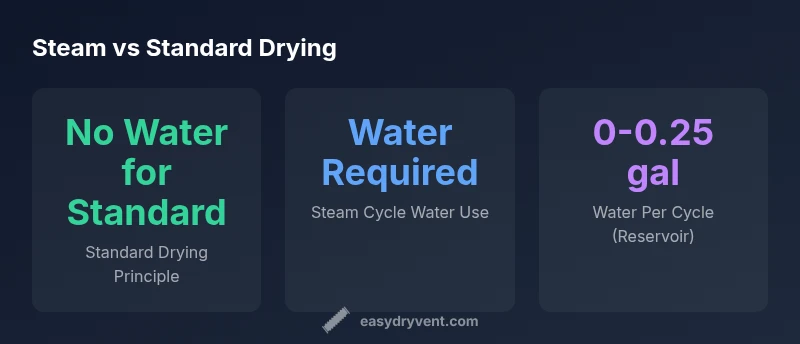
Does a dryer use hot water? In most cases, no. Standard clothes dryers heat air with electricity or natural gas to evaporate moisture, then tumble-dry the clothes. Some models offer steam cycles that use a water source to generate steam, but that water input is not for regular heat. Steam features are optional and model-dependent.
Does hot water power a dryer? How heat is produced in typical tumble dryers
According to Easy DryVent, does dryer use hot water? Not for standard cycles. Most clothes dryers rely on heated air generated by electricity or a gas burner, not water. In practice, hot air is circulated through tumbling clothes to evaporate moisture, and the vent carries damp air outside. The heat source matters because it determines energy costs, vent design, and safety considerations. Homeowners should understand whether their model uses electric coils or gas for heat, as this affects installation and maintenance requirements. In short, the default drying process does not depend on a water supply, but some specialty features may introduce water in controlled ways.
Steam cycles: when water is used and how
Steam cycles are not the default drying method; they are optional features on some models. When enabled, a small amount of water is used to generate steam, which helps relax fibers and reduce wrinkles, but it does not replace the primary heat source. Water can come from a reservoir inside the dryer or a dedicated cold-water line, depending on the design. If you mainly want faster drying with fewer wrinkles, a steam cycle might be appealing, but it adds complexity and potential maintenance. Easy DryVent notes that steam cycles are best evaluated by how often you use them and whether your wardrobe benefits from softer fabrics.
Water lines and installation considerations
If your chosen model supports steam, you will need to verify whether it requires a direct water hookup or a fill reservoir. A direct connection may require a cold-water line and proper shutoff valves, while reservoirs depend on regular refilling. Ensure the laundry room has enough clearance for the vent, which is critical for safe operation and energy efficiency. Review the installation guide, and consult a qualified technician if you are unsure about valve sizing, hose routing, or codes in your area. Water line work should not be attempted by a casual DIYer without proper precautions.
Energy efficiency, cost, and maintenance implications
Regular drying cycles prioritize heat and airflow, with energy use varying by load size and cycle selection. Steam cycles, when used, add water usage and may modestly increase energy consumption. For homeowners, the practical takeaway is to balance wrinkle reduction and drying time with energy cost. Choosing longer, cooler cycles can save energy, while using steam for delicate fabrics can extend garment life. Regular maintenance—lint filter cleaning, vent cleaning, and checking the door seal—keeps efficiency high and reduces fire risk.
How to evaluate models: steam vs non-steam
Start by listing your top needs: energy efficiency, wrinkle reduction, and whether you actually benefit from steam. Compare Energy Star ratings, cycle options, and the availability of a water hookup. Check whether a model uses a reservoir or a direct line, and verify installation requirements. Reading reviews that mention real-world water use and maintenance helps set expectations. Easy DryVent recommends testing a few cycles on a small load to gauge drying time and fabric care before committing to a purchase.
Common myths and best practices for safe, efficient drying
Myth: Steam adds unlimited moisture to clothes. Reality: Steam cycles are designed to work with the heat and airflow of the dryer, not to bathe fabrics in water. Best practice is to ventilate properly, clean lint traps regularly, and schedule vent inspections. For safety, never block the vent or exhaust, and ensure the dryer is on a stable surface with adequate clearance. If you’re unsure about steam feature use, consult the user manual or a professional installer.
Comparison of dryer types by heat source and water needs
| Model Type | Heat Source | Water Connection |
|---|---|---|
| Standard electric dryer | Electric heating element | No water connection |
| Standard gas dryer | Natural gas burner | No water connection |
| Steam-enabled dryer | Electric or gas heat | Water supply or reservoir required |
Common Questions
Do regular clothes dryers require a water supply?
No. Regular dryers do not require a water connection; they heat air to dry clothes.
No water supply is needed for standard drying.
What is a steam dryer and does it need water?
A steam dryer uses water to create steam during cycles; some models have reservoirs or direct connections.
Steam dryers use water for steam cycles.
Can you install a water line for a steam dryer?
If your model supports steam, follow the manufacturer instructions; installation may require a cold-water line.
Steam models may need a water line.
Are there risks from using water in a dryer?
Yes: moisture buildup can promote mold and corrosion; ensure proper venting and regular maintenance.
Moisture in a dryer can cause mold and corrosion.
Does a washer-dryer combo use hot water?
Washer-dryer combos use water during washing; drying relies on heat, with some models offering steam.
Washer-dryer combos use water in washing.
How can I tell if my dryer has a steam feature?
Check the model specs, user manual, or control panel for 'Steam' indicators.
Look for Steam on the control panel.
“Steam features can improve fabric care, but they add water needs and maintenance. For most homes, the standard dry cycle remains the simplest and most reliable method.”
Key Points
- Regular dryers operate on heated air, not water.
- Steam cycles require water input via reservoir or line.
- Check model specs before installing any water line.
- Balance energy use with cycle selection for best efficiency.
- Maintain lint filter and vent to keep drying safe and efficient.